Space
Space near Brighton: observatories, dark skies and stargazers
Herstmonceux’s observatory domes, the South Downs dark skies and the stargazing clubs near Brighton.
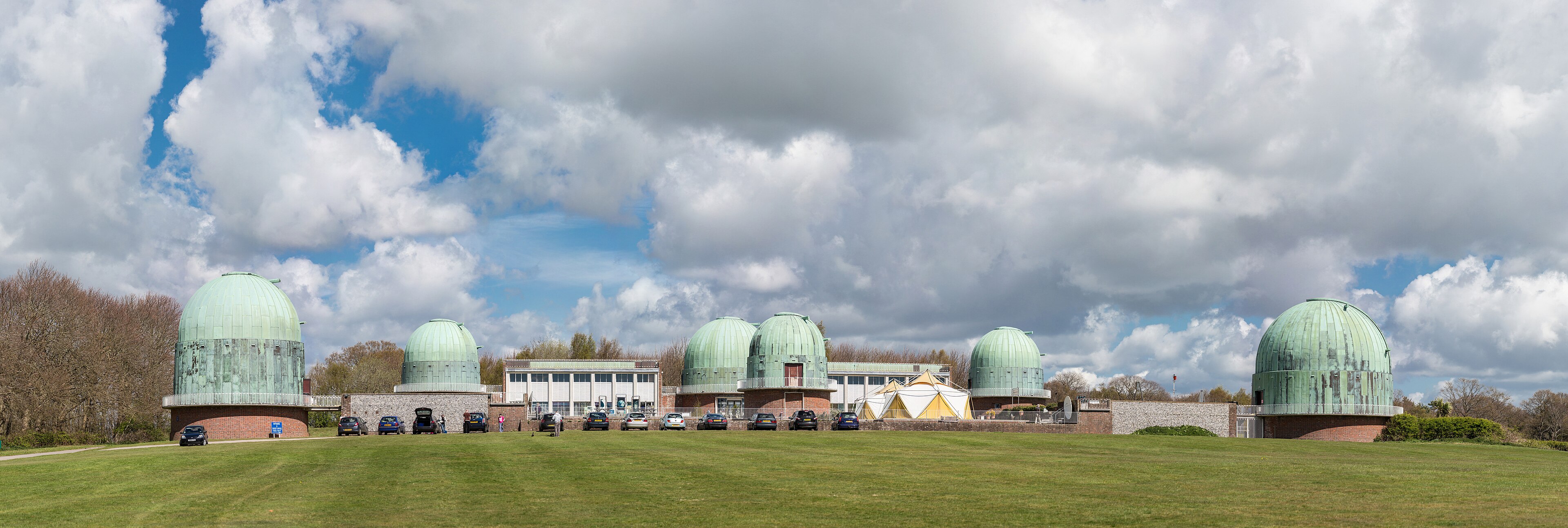
Photo Credit
Image courtesy of © Diliff, CC BY-SA 3.0, via Wikimedia CommonsThe Royal Observatory once fled London’s smoke and glare for the Sussex countryside, and Brighton has had good skies on its doorstep ever since. Here are the observatory domes at Herstmonceux, the South Downs International Dark Sky Reserve and the clubs that will lend you a telescope, all checked with the organisers.
Why the astronomers came to Sussex
By the 19th century, the Observatory Science Centre explains, London’s smoky air and bright lights meant astronomers could no longer study faint objects in the night sky. The decision to move the Royal Greenwich Observatory to Herstmonceux, in East Sussex, was announced in April 1946; the move began in 1947, and by 1958 the observatory was fully at work there.
The capital had simply outshone the stars, and the stars, sensibly, were followed to the country.
The Observatory Science Centre, Herstmonceux
The old observatory’s green copper domes now house the Observatory Science Centre, a hands-on science centre that sits, it notes, on Halley Road, like the comet. Inside the historic domes are telescopes the Royal Observatory once used, including the Congo Schmidt telescope in Dome F; the great Isaac Newton Telescope was also based here before it left. The domes look like a row of giant green acorns that have decided to study the heavens.
It opens to all visitors at weekends and during East Sussex school holidays, from 10 am to 4 pm, and is closed on 24, 25 and 26 December and 1 January. The winter holidays run from Saturday 19 December to Sunday 3 January, February half-term from 13 to 21 February 2027 and the Easter holidays from 26 March to 11 April 2027. Tickets are booked online; on weekdays in term time the centre is reserved for schools and groups.
The evenings are the real treat. Stargazing Evenings use the historic telescopes under the guidance of the centre’s astronomy team, with a planetarium alternative if the weather is poor, which in England is not a remote possibility. Over the festive season, a new planetarium show runs on dates through November, December and January. The address for the satnav is Halley Road, Herstmonceux, Hailsham BN27 1RN, with parking on the grass at no charge.
The South Downs International Dark Sky Reserve
On 10 May 2016 the South Downs National Park was named an International Dark Sky Reserve, only the second in England, and it celebrates its tenth anniversary in 2026. A reserve does not switch the lights off; it protects a core of genuinely dark sky through careful lighting, so that the Milky Way, which most city dwellers know only from screensavers, can still be seen from the hills above Brighton.
The park has named Dark Sky Discovery Sites, and three are close to the city. Ditchling Beacon is the highest point in East Sussex, with panoramic 360-degree views. From Devil’s Dyke, John Constable described the panorama as ‘the grandest view in the world’, and he only saw it by day. Birling Gap, above the Seven Sisters cliffs, offers big coastal skies.
None of the sites allows camping, most have few facilities and the car parks are basic; the park asks visitors not to park on verges when they are full.
Check the Moon before you drive up the Downs: a new Moon turns a good night into a great one.
Further west, Bignor Hill, between Arundel and Petworth, is one of the darkest places in the reserve; the park says the Milky Way shows there on clear nights. Take warm layers, a red torch and patience: eyes need time to adjust to the dark, and the sky rewards the ones who wait.
The Dark Skies Festival, February 2027
The South Downs Dark Skies Festival runs from Thursday 11 to Sunday 21 February 2027, with evening star- and Moon-gazing across the park, weather permitting, night walks, talks, storytelling, a new Dark Skies quiz and a chance to meet nocturnal creatures. A month-long astrophotography exhibition is planned for Brighton seafront through February. In-person events may be cancelled at short notice if the weather turns.
February on the Downs is cold, but the nights are long, which is rather the point.
Clubs that will lend you a telescope
Brighton Astro charges nothing and is open to everybody, from the beginner who has just found Orion to the expert with firm views on eyepieces. It meets on Thursday evenings at Wagner Hall, 2 Regency Road, in the city centre: arrive at 7 pm for a talk at 7.30; the next meeting is on Thursday 3 December. The organisers ask for a donation of a few pounds towards the hall.
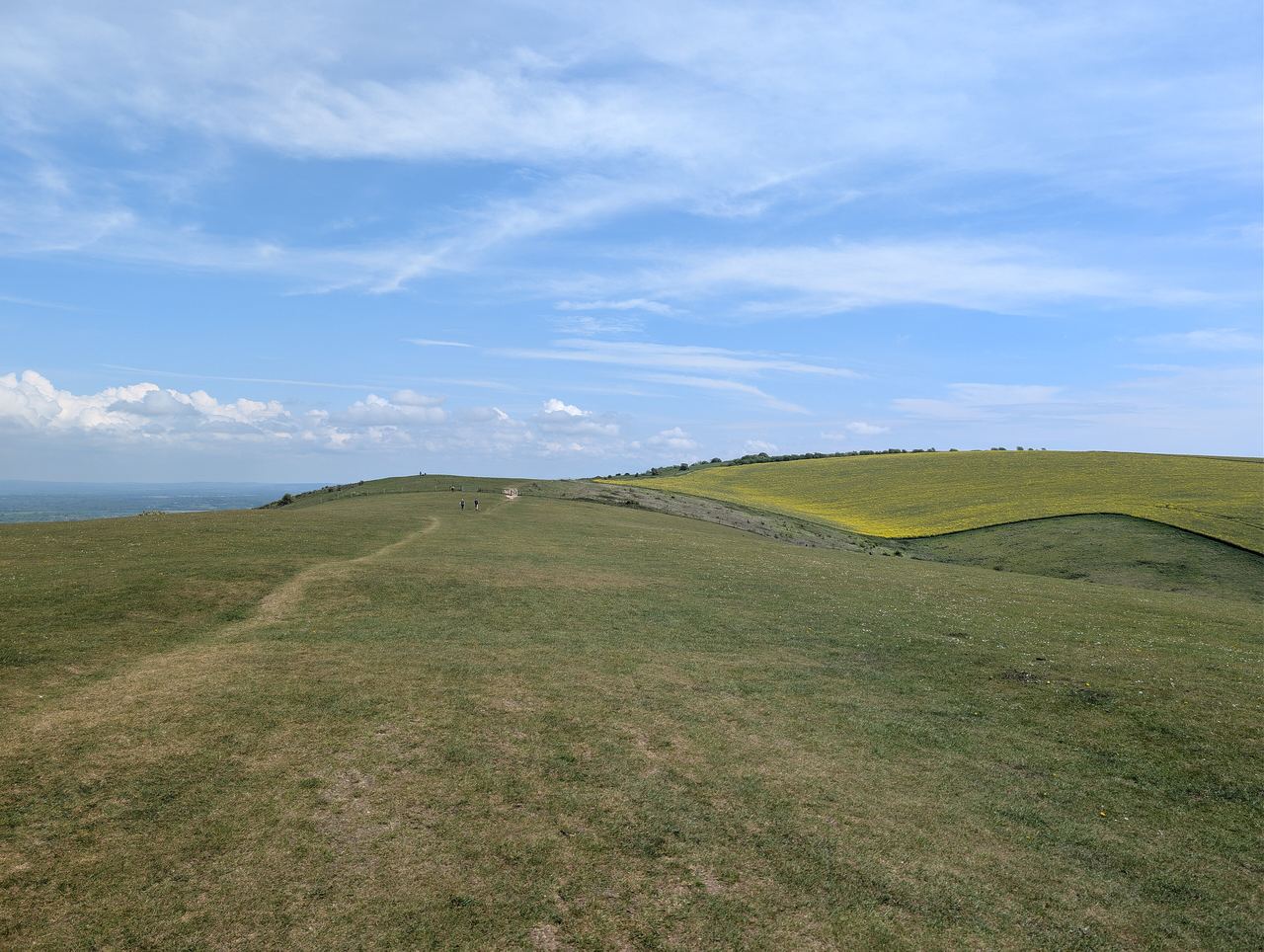
Photo Credit
Image courtesy of © Andy Li, CC0, via Wikimedia CommonsAlong the coast, Eastbourne Astronomical Society brings its telescopes to public stargazing, at no charge, at Helen Garden, Eastbourne, with sessions listed for 16 January 2027 (5 to 7 pm), 13 February (6 to 8 pm) and 13 March (7 to 9 pm). As the organisers say, stargazing will not go ahead if it rains.
Why the dark is worth keeping
Herstmonceux exists because a city once grew too bright for its own astronomers. Seventy years on, the South Downs is trying to stop the same story repeating on a larger scale. A visit to the domes in the afternoon and the Beacon after dark makes the argument better than any leaflet: one shows what astronomers had to escape, the other what is still there to see.
Why it's on our list
- The Observatory Science Centre at Herstmonceux
- Stargazing evenings with historic telescopes
- Ditchling Beacon, Devil’s Dyke and Birling Gap after dark
- The Dark Skies Festival, February 2027
- Club talks in Brighton
Location
The map comes from Google Maps, which sets its own cookies once it loads.
More in depth
 ScienceAI in space: the machines that land, steer and exploreSelf-landing rockets, Starship, Artemis and the AI driving Perseverance: space exploration in 2026.
 SpaceHubble, Webb and the great telescopesFrom Hubble’s flawed mirror to Webb, Roman, Rubin and the ELT: how telescopes changed our place.
 SpaceLook up: the great observatories, planetariums and science museumsObservatories, planetariums and space galleries from London to Maunakea, and how to visit them.