Space
Hubble, Webb and the great telescopes
From Hubble’s flawed mirror to Webb, Roman, Rubin and the ELT: how telescopes changed our place.
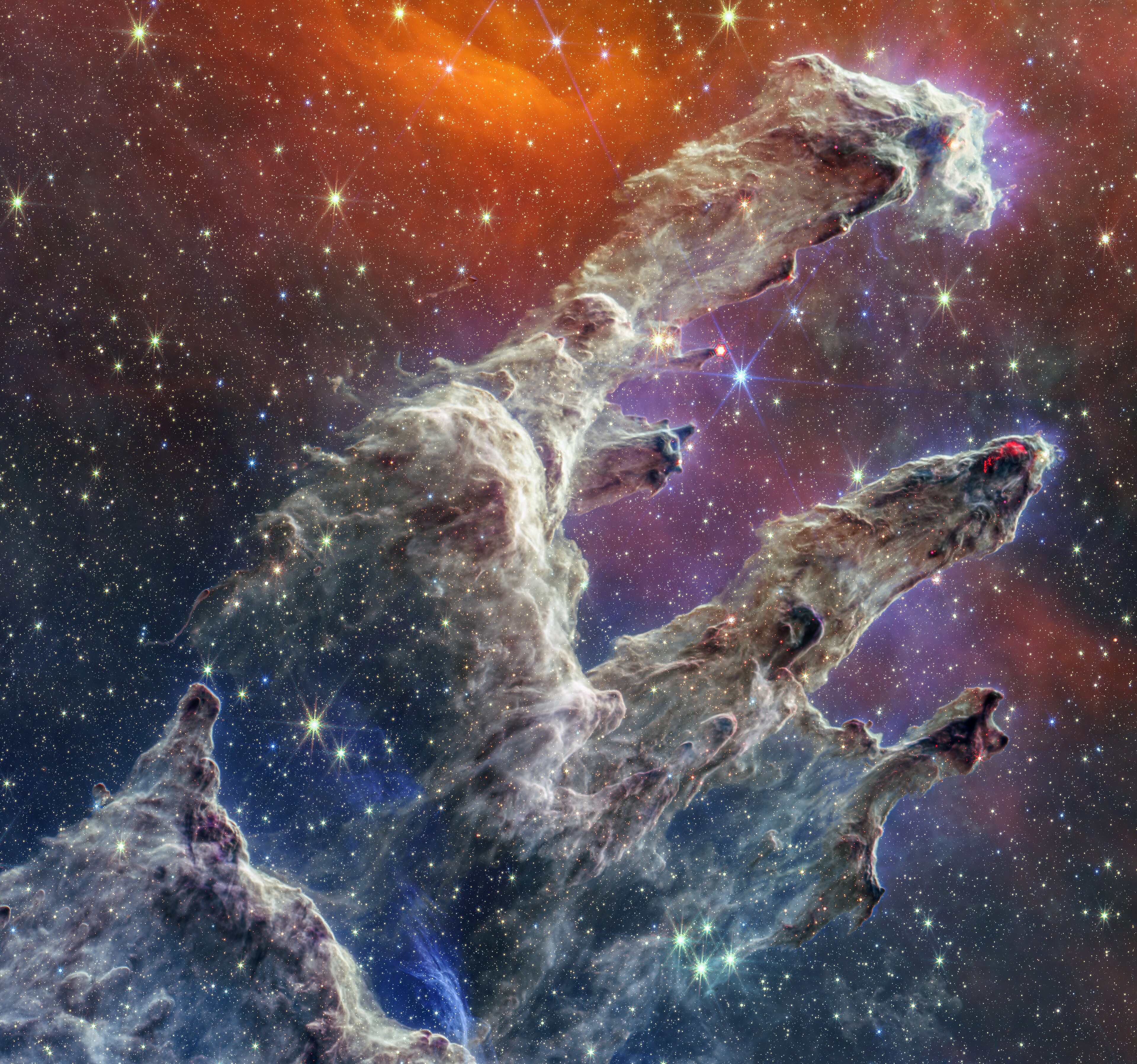
Photo Credit
Image courtesy of © NASA, ESA, CSA, STScI; J. DePasquale, A. Koekemoer, A. Pagan (STScI)In 1990 one of the most celebrated telescopes ever built went into orbit with a mirror ground very slightly wrong. Its rescue began an era that has filled the dark with galaxies, found carbon dioxide on a distant world and, this year, sent another telescope on its way to deep space. Here is the story of Hubble, Webb and the great telescopes coming next, from the official record.
Why put a telescope in space
From the ground, every telescope looks up through a restless ocean of air that blurs starlight and swallows much of the infrared. Put the telescope above it and the stars stop twinkling, which is lovely for poets and useless for astronomers. Since 1990 a handful of instruments in orbit and beyond have rewritten humanity’s cosmic address, and the next generation, on mountains in Chile and on its way into deep space, is already at work.
Hubble: a famous flaw
The Hubble Space Telescope went up aboard the shuttle Discovery on 24 April 1990, carrying a 2.4-metre primary mirror. On 27 June 1990, two months after launch, NASA announced the telescope was flawed. The mirror’s curve was off by ten times the specified tolerance, a tiny error with an ugly result: spherical aberration, giving the mirror more than one focal point and blurring every image. Humanity’s great eye in orbit needed glasses.
It got them. In December 1993 astronauts on the first servicing mission installed a corrective optics package called COSTAR and a new camera, WFPC2. The pictures sharpened, and Hubble went from punchline to one of the most celebrated scientific instruments ever built, a rehabilitation few public figures ever manage.
The Deep Field
Between 18 and 28 December 1995, Hubble stared at an apparently empty patch of sky near the Big Dipper, in Ursa Major, for 342 exposures. NASA compares the patch to the width of a dime seen from 75 feet away. When the image came back it held about 3,000 galaxies, each a city of stars. The first count had been 1,500; the universe, it turned out, had been rather modestly underestimated.
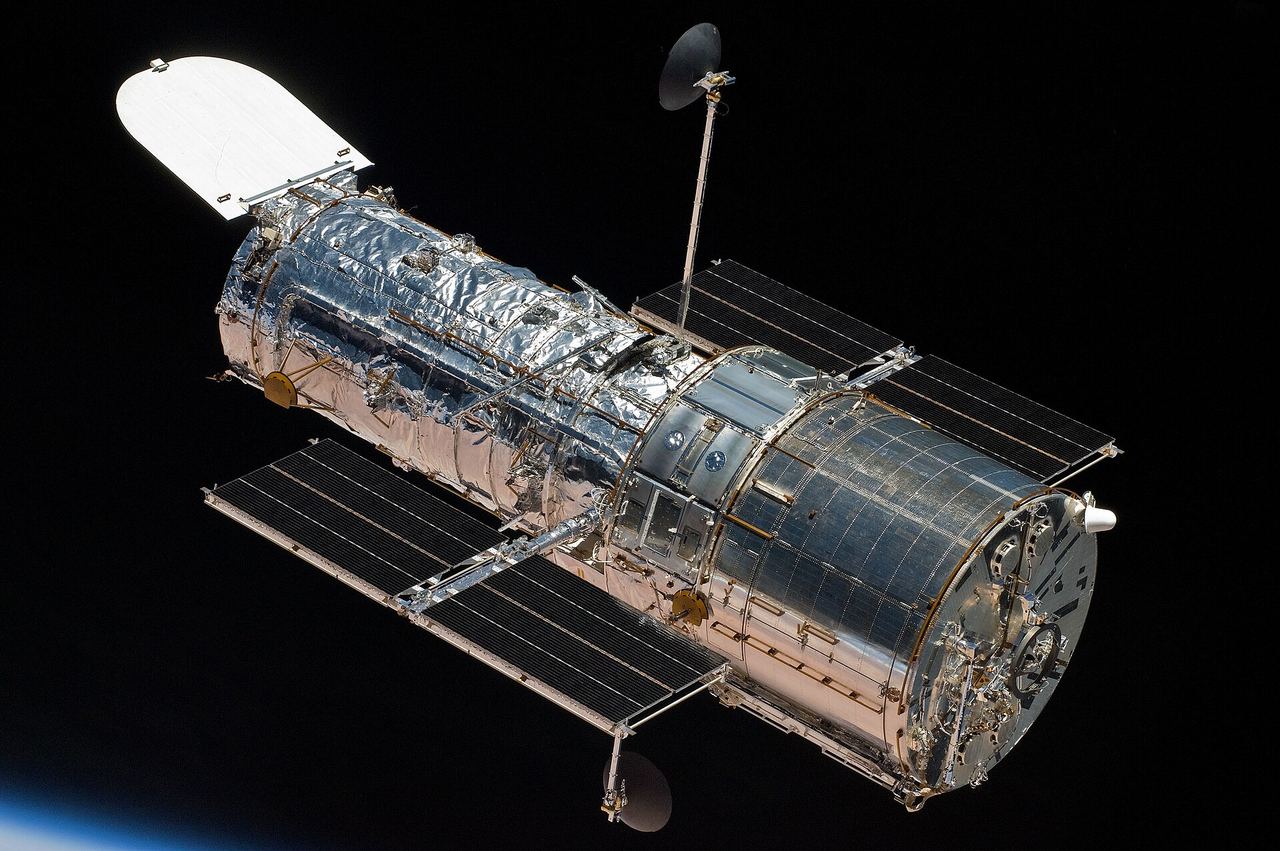
Photo Credit
Image courtesy of © NASAThe Deep Field changed the scale of the question. If a speck that small holds thousands of galaxies, the whole sky must hold a number so large it stops meaning anything, and our own galaxy becomes one lamp in a very long street. Few photographs have done more to make humans feel both tiny and lucky.
Hubble today
Hubble is still working, more than three decades on and with fewer moving parts than it would like. Since June 2024 it has pointed itself with a single gyroscope, keeping another in reserve, after a faulty one sent it repeatedly into safe mode. The Space Telescope Science Institute reports that the change costs only a little observing efficiency and that performance has been better than anticipated, with no safe-mode anomalies since.
NASA has given a better than 70 per cent probability of at least one gyro still working through 2035.
James Webb: the gold flower
The James Webb Space Telescope launched on Christmas Day 2021 and now works about 1.5 million kilometres from Earth, at the second Lagrange point, L2. Its primary mirror is 6.5 metres across, made of 18 hexagonal beryllium segments each coated with a layer of gold about 100 nanometres thick, and it sits behind a five-layer sunshield the size of a tennis court.
It is a parasol and a jewel box in one, built to keep a telescope cold enough to see heat from the edge of time.
Because Webb sees in infrared, it can look through dust and back towards the first galaxies, whose light has been stretched into red on its long journey. Its first deep field, released in July 2022 after 12.5 hours of exposure, covers a patch of sky about the size of a grain of sand held at arm’s length, yet holds thousands of galaxies.
The mass of the cluster SMACS 0723 acts as a gravitational lens, bending more distant galaxies into glowing arcs: a cosmic hall of mirrors.
Look at a Deep Field image for one full minute: almost every speck in it is a galaxy, not a star.
What Webb has found
In 2022 Webb produced the first clear evidence of carbon dioxide in the atmosphere of a planet beyond the solar system, the hot gas giant WASP-39 b, and later found sulphur dioxide there too. Nobody expects to live on WASP-39 b. The point is the method: NASA says the same technique may one day measure the thinner air of smaller, rocky worlds, and that is where the question of whether we are alone becomes a matter of chemistry.
Webb has also broken its own distance record. In January 2026 NASA described the galaxy MoM-z14, seen as it was only about 280 million years after the Big Bang, as one of an emerging population of early galaxies that are unexpectedly bright. Astronomers expected the infant universe to be dim and slow; it seems to have been in more of a hurry. Theorists are rewriting their notes.
Nancy Grace Roman: Hubble’s sharpness, a hundred times wider
NASA’s Nancy Grace Roman Space Telescope launched on a SpaceX Falcon Heavy from Kennedy Space Center on 30 August 2026, more than eight months ahead of its previously planned May 2027 date. Its primary mirror is 2.4 metres wide, the same as Hubble’s, but its 288-megapixel camera covers a field of view at least 100 times larger with similar sharpness. NASA says Roman can survey the sky up to 1,000 times faster than Hubble.
Same size of mirror, a very different job: Hubble studies the tree, Roman maps the forest.
Roman is heading to L2 and has a commissioning period of about three months; NASA expects to release its first images by early 2027. Its main tasks include exploring the nature of dark energy, the mysterious something behind the universe’s accelerating expansion, a force with a name and no explanation, and a microlensing survey of the inner Milky Way that NASA expects to find more than 1,000 planets.
Vera C. Rubin Observatory: the universe as a film
High on Cerro Pachón in Chile, the Vera C. Rubin Observatory revealed its first images on 23 June 2025. Its LSST Camera, at 3,200 megapixels the largest digital camera in the world, is roughly the size of a small car and weighs about 2,800 kilograms; each image covers an area of sky as big as 45 full Moons. The first release included an image of the Trifid and Lagoon nebulae built from several hundred exposures.
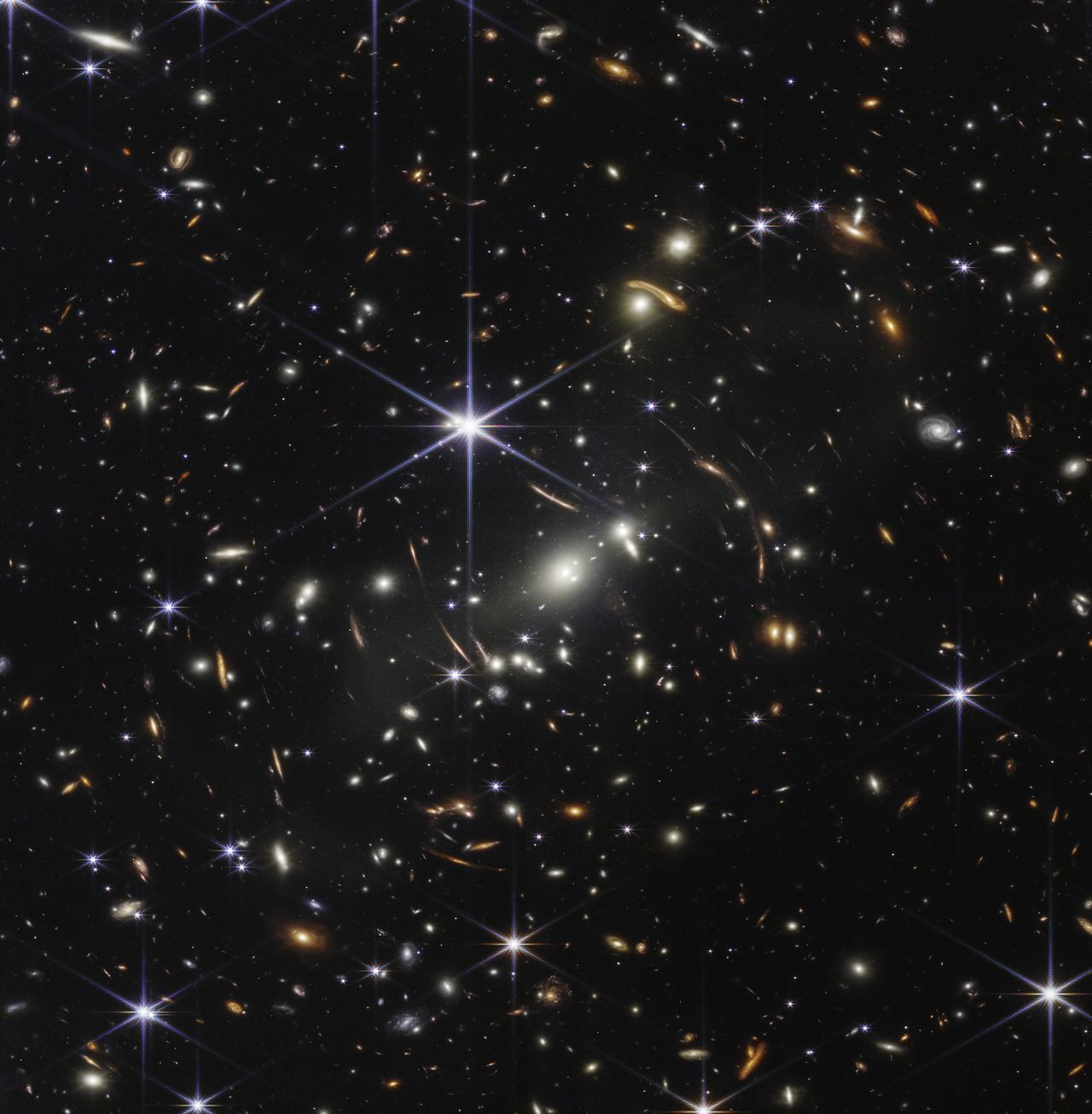
Photo Credit
Image courtesy of © NASA, ESA, CSA, and STScIRubin sent its first scientific alerts on 24 February 2026, about 800,000 of them in a single night, and its ten-year Legacy Survey of Space and Time officially began in June 2026. It will photograph the entire southern sky every few nights, revisiting each point about 800 times over a decade, and can produce as many as seven million alerts a night. Hubble and Webb take portraits; Rubin is shooting the film.
The Extremely Large Telescope
On Cerro Armazones in Chile’s Atacama Desert, at 3,046 metres, the European Southern Observatory is building the Extremely Large Telescope, whose main mirror will be 39 metres across, made of 798 hexagonal segments, with 931 made in all so that spares can be recoated. In October 2026 ESO reported the project more than 75 per cent complete.
Its official timeline puts telescope first light in March 2029 and the first scientific observations in December 2030. Thirty-nine metres is less a mirror than a floor of glass, which is why the spares matter.
What the telescopes have changed
Each great telescope has moved humanity a little further from the centre of things. Hubble filled the dark with galaxies; Webb is reading the air of other worlds and finding the young universe busier than predicted; Roman and Rubin will measure forces nobody yet understands. The questions they raise are old ones made precise: are we alone, how did it all begin, and what is the universe actually made of? The honest answer, for now, is that we are finally equipped to find out.
Why it's on our list
- Hubble’s mirror flaw and the 1993 rescue
- The Deep Field that filled the dark with galaxies
- What James Webb has found
- Roman, launched August 2026
- Rubin’s survey and Chile’s Extremely Large Telescope
Location
The map comes from Google Maps, which sets its own cookies once it loads.
More in depth
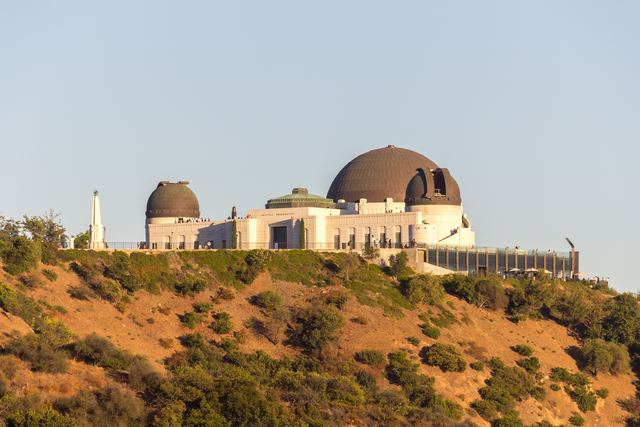 SpaceLook up: the great observatories, planetariums and science museumsObservatories, planetariums and space galleries from London to Maunakea, and how to visit them.
 RailFrom Stephenson’s Rocket to the bullet trainTwo centuries of rail, from Locomotion No. 1 and Rocket to the Shinkansen, TGV, maglev and Eurostar.
 ScienceTesla, Edison and the inventors who wired the worldAC v DC, Niagara, the light bulb and Tesla’s lightning: the inventors who wired modern life.