Science
AI in space: the machines that land, steer and explore
Self-landing rockets, Starship, Artemis and the AI driving Perseverance: space exploration in 2026.
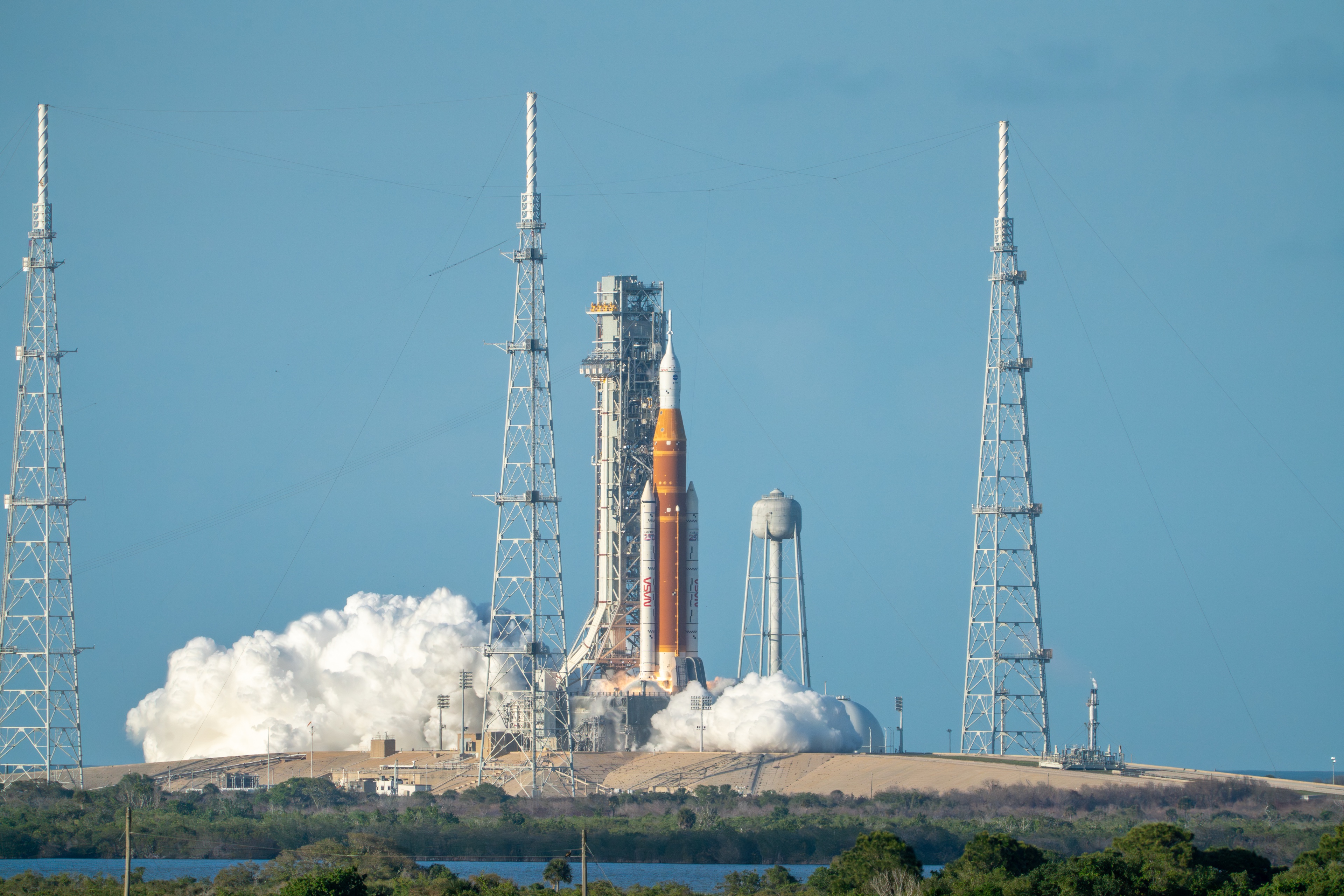
Photo Credit
Image courtesy of © NASA/Brandon Hancock (public domain)The further a machine travels from Earth, the less use a joystick becomes, so the future of exploration is being written in autonomy. From Falcon 9 boosters that land themselves to a Mars rover that now plans most of its own driving, here is how artificial intelligence is helping humanity return to the Moon and look towards Mars, with every date and claim checked.
Why space needs machines that think
Mars is, on average, about 140 million miles from Earth. At that distance a radio command takes minutes to arrive, so a rover cannot be steered like a toy car, and a rocket falling back through the atmosphere has no time to wait for instructions at all. Spaceflight has quietly become one of the most demanding classrooms for artificial intelligence and autonomy, and 2026 has been a remarkable term.
Falcon 9: the rocket that lands itself
When a Falcon 9 booster returns, no pilot is involved. Lars Blackmore of SpaceX has explained that the landing trajectory must be computed ‘autonomously, in a fraction of a second’, using high-speed onboard convex optimisation. The target for landing on a ship at sea is ten metres or better. The rocket is solving a hard maths problem while falling tail-first towards a ship, which is more than most of us manage at a desk.
The ships themselves are autonomous spaceport drone ships, named with a wink after the starships of the novelist Iain M. Banks: Of Course I Still Love You, A Shortfall of Gravitas. Reuse has become routine. One booster, B1067, flew for a record 37th time in August 2026, and Falcon boosters have now landed more than 600 times.
Rocket stages used to be thrown away after a single flight; these come home to fly again, more like aircraft than fireworks.
Starlink: a constellation that steers itself
More than 10,000 Starlink satellites now circle the Earth, and SpaceX says over 12 million active customers use the service in more than 160 countries and territories. Each satellite carries an autonomous collision-avoidance system. In the six months to May 2026, SpaceX reported 207,152 avoidance manoeuvres to its regulator, the Federal Communications Commission: low orbit’s busiest roundabout, with no human at the wheel.
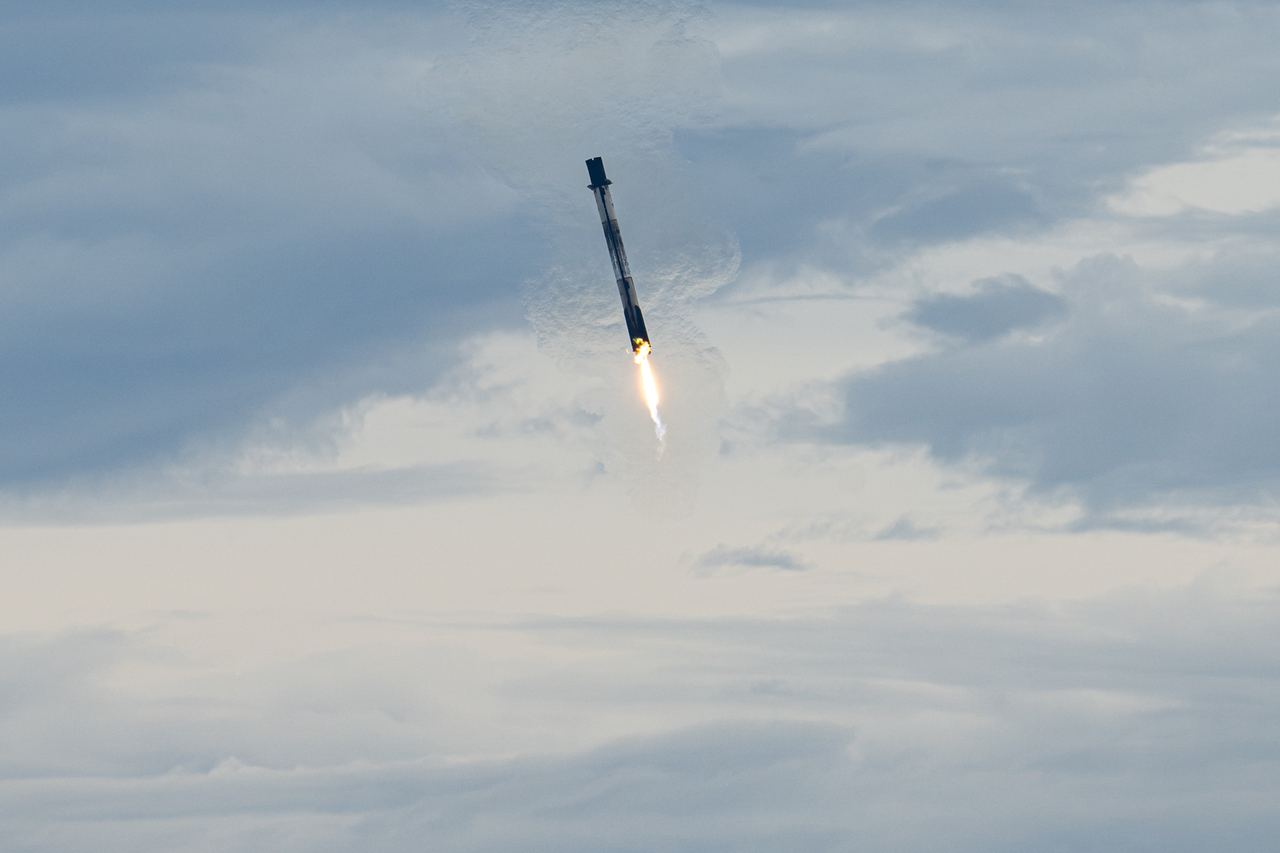
Photo Credit
Image courtesy of © NASA/John Kraus (public domain)Not everyone is reassured. Hugh Lewis, a space-sustainability expert at the University of Birmingham, credits SpaceX with ‘doing an excellent job’ but expects a collision involving an operational satellite eventually, because each manoeuvre leaves a small residual risk.
Tommaso Sgobba of the International Association for the Advancement of Space Safety argues that adding satellites multiplies the possible collisions, and that regulators should ask for predicted manoeuvre counts before approving new constellations.
Starship: fifteen flights in
Starship is the largest rocket ever flown, and its progress has been a public education in learning by failure. Its first flight, in April 2023, ended in an explosion. In October 2024 the Super Heavy booster was caught by the launch tower’s mechanical arms, a feat that looked like science fiction on live television. On 28 September 2026, on its 14th flight, the ship reached orbit for the first time.
Flight 15, launched on 13 November 2026, went further. Ship 42 deployed 26 Starlink satellites, circled the Earth for about 22 hours, then flew home to Starbase in Texas and was caught by the tower arms: the first time a Starship upper stage has been recovered from orbit. The booster, short of fuel, called off its own catch and was lost in the Gulf of Mexico.
Still to come is the step NASA needs most: transferring propellant between ships in orbit.
Artemis II: the return to the Moon
On 1 April 2026 NASA’s SLS rocket lifted off from Kennedy Space Center carrying Reid Wiseman, Victor Glover and Christina Koch of NASA and Jeremy Hansen of the Canadian Space Agency. Their Orion capsule swung around the Moon and reached 252,756 miles from Earth, the farthest any humans have travelled, breaking the record Apollo 13 set in 1970. They splashed down off San Diego on 10 April. It was the first crewed voyage to the Moon in more than half a century.
Out there, autonomy is not a luxury: when the nearest engineer is millions of miles away, the machine has to think for itself.
Artemis III and the Starship lander
Artemis III, planned for 2027, will stay in low Earth orbit. NASA says Orion will rendezvous and dock first with a test version of Blue Origin’s Blue Moon lander, then nose-to-nose with a test version of SpaceX’s Starship lander, a 171-foot spacecraft; astronauts will enter Blue Moon but not Starship.
The rehearsal is meant to prove both landers before NASA’s planned crewed landing near the lunar South Pole in 2028: a dress rehearsal staged close to home on purpose, where a fumbled docking is a lesson rather than an emergency.
Mars: what has officially been said
NASA says its long-term goal includes sending the first astronauts to Mars, and presents the Moon as the proving ground. SpaceX’s ambitions are larger and its timetable has moved; in spaceflight, timetables are written in pencil.
In February 2026 Elon Musk, its chief executive, wrote that the company had ‘already shifted focus to building a self-growing city on the Moon’, which he called faster, while still aiming to begin a Mars city in about five to seven years. No Starship launch to Mars has been announced for the late-2026 window.
Perseverance: the rover that drives itself
On 11 October 2026 NASA’s Perseverance passed Opportunity’s record to become the vehicle that has driven farther than any other on another world, 45.22 km (28.10 miles) in all. JPL says more than 90% of that distance was driven using AutoNav, which maps the terrain and picks a safe path on board; the original mission called for no more than about 20 km.
As JPL’s Mark Maimone put it: ‘Perseverance is a better driver than the one that landed, and we’re not done.’
AEGIS, short for Autonomous Exploration for Gathering Increased Science, lets a rover choose its own science targets. It takes a picture, finds the rocks that best match what scientists have asked for, and aims an instrument at them, all without waiting for Earth. It has run on Curiosity since 2016 and first steered Perseverance’s SuperCam laser in May 2022, so the rover keeps doing science while its human team is asleep.
In December 2025 JPL went a step further. Working with Anthropic, it used Claude vision-language models to study orbital images and terrain data and plan two drives, of 210 metres and 246 metres, without human route planners. Before anything was sent to Mars, every command was run through JPL’s digital twin of the rover, checking more than 500,000 telemetry variables.
Vandi Verma of JPL said generative AI was ‘showing a lot of promise’ for longer drives with less operator workload.
What do the Moon and Mars really mean?
Why go back to the Moon at all, more than half a century after Apollo? NASA’s answer is preparation: a place a few days away to practise living, landing and working before a journey measured in months. The deeper answer is autonomy. Every step outward stretches the gap between a problem and a human who can fix it, so the rockets, satellites and rovers must decide more for themselves. AI here is less a buzzword than a survival skill.
The proven list is long and genuinely thrilling: boosters that land themselves, a ship caught from orbit, humans farther from home than ever, a rover that drives itself across Mars. The promised list is equally clear: orbital refuelling, a crewed lunar landing in 2028, and one day a crewed journey to Mars. The gap between the two lists is where the next decade of exploration will be won, one autonomous decision at a time.
Why it's on our list
- How Falcon 9 lands itself
- Starlink’s self-steering satellites
- Starship after 15 test flights
- Artemis II and what comes next
- Mars: official plans only
- Perseverance, AutoNav and AEGIS
Location
The map comes from Google Maps, which sets its own cookies once it loads.
More in depth
 SpaceHubble, Webb and the great telescopesFrom Hubble’s flawed mirror to Webb, Roman, Rubin and the ELT: how telescopes changed our place.
 SpaceLook up: the great observatories, planetariums and science museumsObservatories, planetariums and space galleries from London to Maunakea, and how to visit them.
 RailFrom Stephenson’s Rocket to the bullet trainTwo centuries of rail, from Locomotion No. 1 and Rocket to the Shinkansen, TGV, maglev and Eurostar.