Space
Look up: the great observatories, planetariums and science museums
Observatories, planetariums and space galleries from London to Maunakea, and how to visit them.
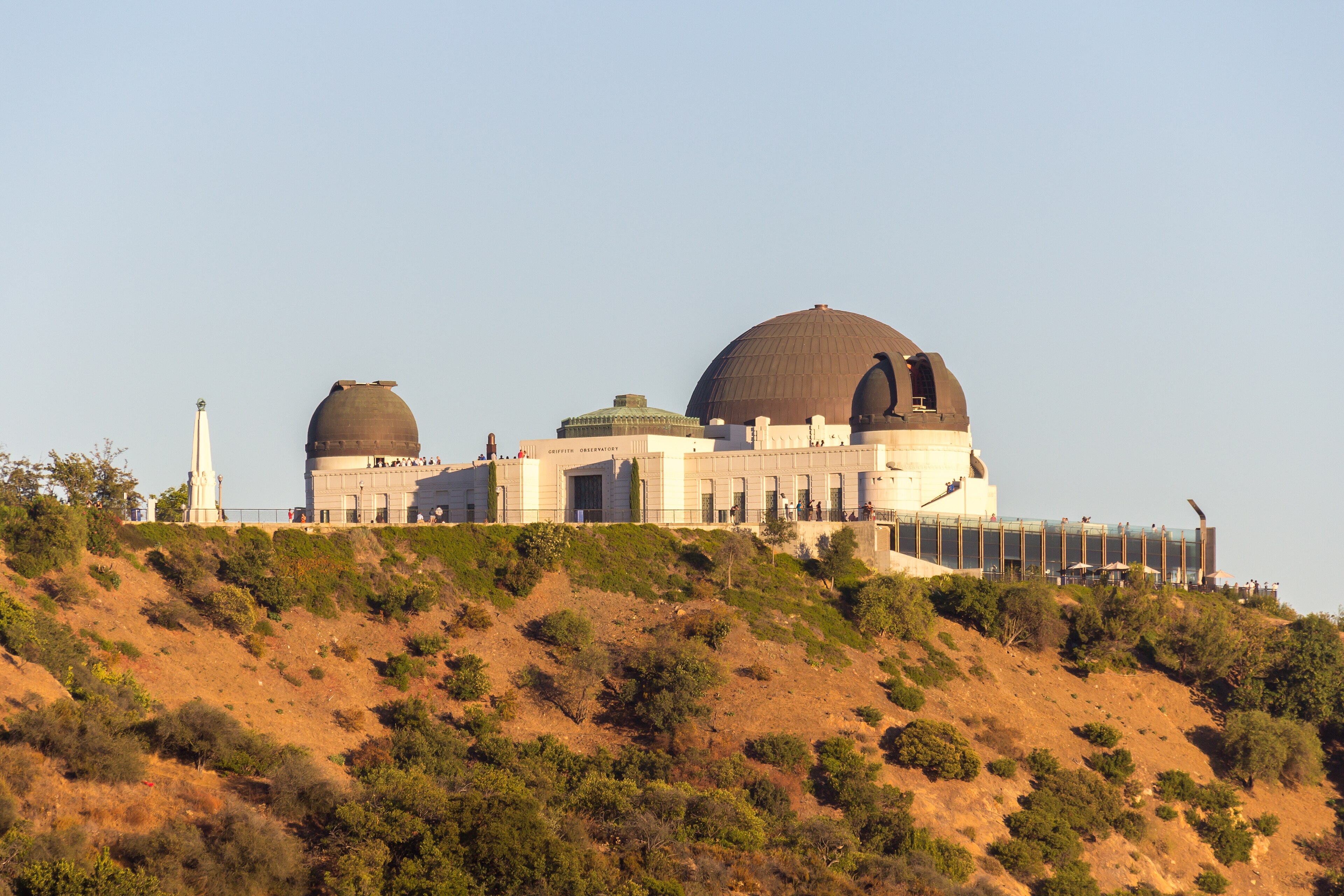
Photo Credit
Image courtesy of © Mike Peel (www.mikepeel.net), CC BY-SA 4.0, via Wikimedia CommonsFrom a dome on Mount Hollywood that charges nothing to a radio dish that tracked Sputnik’s rocket, these are the places where the universe is put on public view. Here are the great planetariums, space galleries and working observatories across our cities and beyond, with how to visit each, every detail checked against the venue’s own pages.
Why we keep looking up
Every civilisation has read the sky, and most of them built something to read it with. The places in this guide are the modern descendants of those stone circles: domes where the stars are switched on at the press of a button, museums holding rocks that fell from Mars, and mountain-top observatories where the telescopes are bigger than the houses of the people who work them.
Each one tells the same quietly humbling story, that our planet is one small address in a very large neighbourhood.
There is a second story running underneath, and it is about darkness. Royal astronomers left Greenwich after the Second World War because, as the Observatory Science Centre at Herstmonceux puts it, London’s smoky air and bright lights meant faint objects could no longer be studied. Kitt Peak lets only registered night visitors onto the mountain after 4 pm.
Darkness has become something an astronomer has to protect, and something a traveller now goes looking for.
London: Greenwich, the Science Museum and the Natural History Museum
The Royal Observatory Greenwich, home of the Prime Meridian, closed on 2 November 2026 for a £77 million transformation; Royal Museums Greenwich lists it as temporarily closed for a major restoration project. The astronomers have simply walked down the hill.
At the National Maritime Museum, Astronomers Take Over, open from 27 March 2026 until 2028, puts working Royal Observatory astronomers in a hands-on gallery with a planetarium where shows are led live. Entry to the museum costs nothing; the experience with a planetarium show is listed at £18 for adults, and booking is recommended.
The Science Museum’s Space gallery, its first new space gallery in nearly 40 years, sets an Apollo 10 command module beside a Soyuz, two rival answers to the same terrifying question. Neil Armstrong’s Apollo 11 radio headset is here, as is Helen Sharman’s Sokol spacesuit and a sample of asteroid Ryugu about the size of a grain. Entry costs nothing, daily from 10:00 to 18:00, but book a general admission ticket first.
Across Exhibition Road, the Natural History Museum keeps one of the great meteorite collections, about 5,000 pieces from 2,000 meteorites. The Vault shows a piece of Winchcombe, the first meteorite fall recovered in the UK for 30 years, and a slice of Sayh al Uhamir 008, blasted off Mars about 800,000 years ago, greets visitors at the entrance to the From the Beginning gallery. Entry costs nothing, with a ticket booked online.
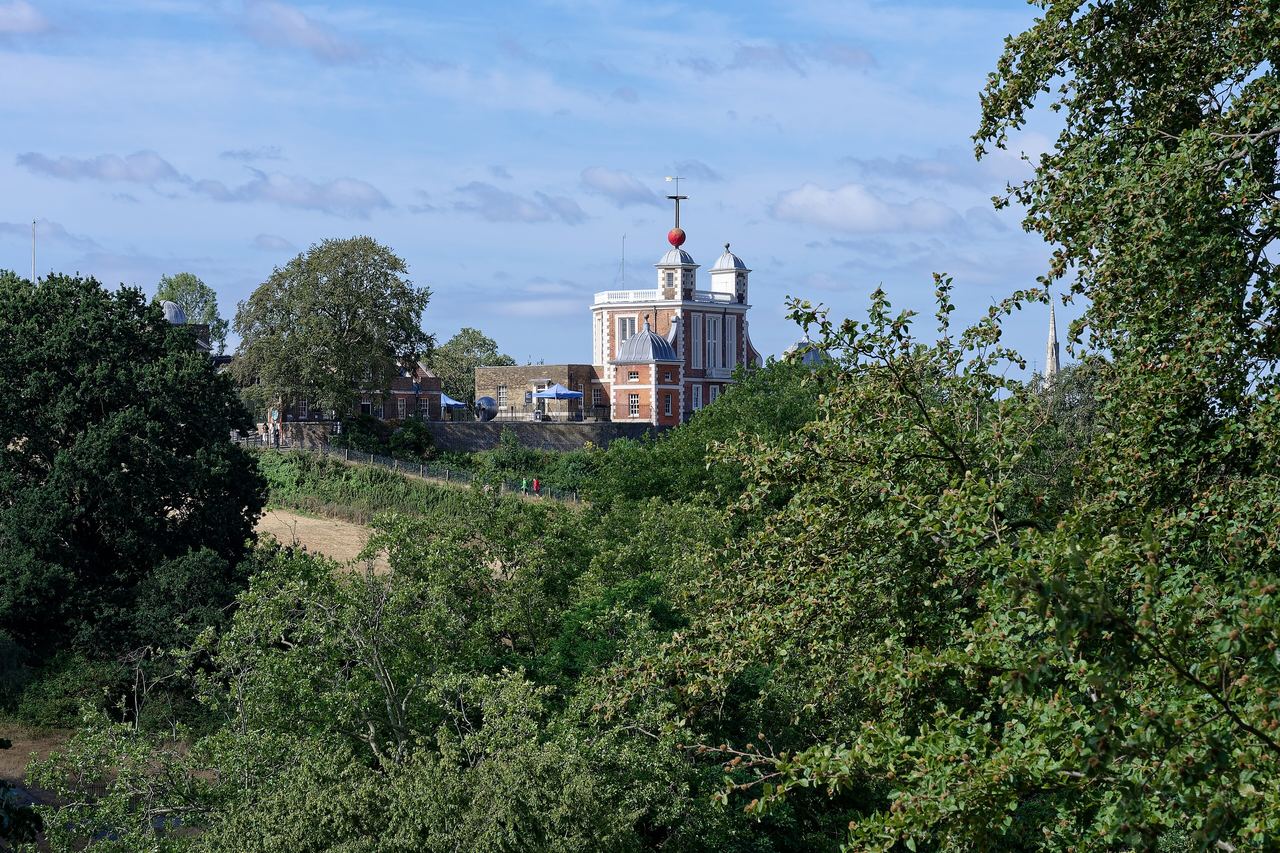
Photo Credit
Image courtesy of © Jakub Hałun, CC BY 4.0, via Wikimedia CommonsNew York: the Hayden Planetarium
The Hayden Sphere is 87 feet across and appears to float inside the glass cube of the American Museum of Natural History’s Rose Center for Earth and Space, as if someone had boxed a small moon for safekeeping. The Space Theater fills its upper half. The current Space Show, Encounters in the Milky Way, runs 24 minutes, and it needs a ticket on top of general admission, so add it when booking.
Downstairs waits the 15.5-ton Willamette meteorite, the largest found in the United States.
Los Angeles: Griffith Observatory
Dedicated on 14 May 1935 on the south slope of Mount Hollywood, Griffith Observatory is the rare great observatory that charges nothing to walk in. Visitors may look through telescopes, watch daily Tesla coil demonstrations, which crackle like a summer storm trapped in a cage, and see live shows in the Samuel Oschin Planetarium. It opens from noon to 10 pm Tuesday to Friday and 10 am to 10 pm at weekends, closed on Mondays.
Parking nearest the building is paid; the city below supplies the light pollution at no extra cost.
San Francisco: Morrison Planetarium and Chabot
The Morrison Planetarium at the California Academy of Sciences sits under a 75-foot dome, one of the largest all-digital domes anywhere, built from 100 per cent recycled steel and tilted to match the Earth’s own axis. Reservations, at no charge, are required for every show and are made on site: scan the QR code in the lobby as soon as you arrive, because the good times go first.
Across the bay in the Oakland hills, Chabot Space & Science Center opens Wednesday to Sunday, 10 am to 5 pm, with adult admission listed at $24. Its best offer costs nothing: telescope viewings on Friday and Saturday nights from 7:30 to 10:30 pm, when the volunteers will happily show you Saturn and then let you show it to your children.
Book the planetarium seat the moment you arrive: in San Francisco and Miami the shows are reserved on the day.
Miami: the Frost Planetarium
The Frost Planetarium at Phillip and Patricia Frost Museum of Science has a 67-foot dome tilted forward at 23.5 degrees, 250 seats, surround sound and a 16-million-colour 8K system driven by six 3D-capable projectors: a cinema that has decided the ceiling is the screen. The Explorer ticket includes one planetarium show, but seats are reserved on the day, at the planetarium kiosk or on your phone, first come, first served.
The museum opens every day, 10 am to 5 pm Monday to Thursday and to 6 pm Friday to Sunday; buying tickets in advance is recommended.
Athens: the Observatory on the Hill of the Nymphs and the Eugenides Planetarium
The National Observatory of Athens began in 1842 with a gift from George Sinas, in a building by the Danish architect Theophil Hansen on the Hill of the Nymphs, facing the Acropolis across a few hundred metres of history. The Thiseio Visitor Center is a ten-minute uphill walk from Thissio metro; its evening tours include the Museum of Geoastrophysics and, weather permitting, a look through a historic telescope. Days and tickets change with the season, so check noa.gr before you climb.
Down by the sea in Palaio Faliro, the Eugenides Foundation has run a planetarium since 1966; its digital planetarium opened in November 2003 under a 24.5-metre dome with 278 seats. Tickets are listed at €7, €5 reduced, and weekday sessions until 15:30 are reserved for schools, so the public calendar is the one to read. Down here the stars come to you, no climb required.
Paris: the Cité des sciences
At the Cité des sciences et de l’industrie in La Villette, the planetarium projects 360-degree computer-generated skies in half-hour shows, the whole cosmos with time left for lunch, and astronomy specialists give illustrated talks. The Cité opens from 9.15 am to 6 pm; sessions are chosen and booked through its ticket office online.
The working giants: Jodrell Bank
In 1957 the Lovell Telescope in Cheshire was unfinished and far over budget. In October the Soviet Union launched Sputnik 1, and the half-built dish turned out to be the only instrument in the West able to track the carrier rocket.
The 76.2-metre telescope still works, at the heart of a UNESCO World Heritage Site, and the First Light Pavilion beside it is a grass-topped dome of the same 76-metre span, as though the dish had lain down in the field. Jodrell Bank opens Tuesday to Sunday, 10 am to 4 pm.
Kitt Peak, Arizona
At 2,100 metres in the Quinlan Mountains, on the Tohono O’odham Nation, Kitt Peak gathers 22 optical and radio telescopes, which the observatory calls the most diverse gathering of astronomical instruments in the northern hemisphere. The Nightly Observing Program runs year round: 4.5 hours, a light meal, binoculars, then a dome and a telescope, for up to 45 people at $89 each.
Book at least a month ahead, wear trousers and closed shoes, and expect the desert to be colder than it looks. Members of the Tohono O’odham Nation join at no charge.
Maunakea, Hawaii
The summit of Maunakea is crowded with observatory domes, but visitors do best at the Visitor Information Station, at about 2,800 metres. It opens 9 am to 9 pm every day, and the stargazing talk after twilight needs no reservation and costs nothing. Arrive 90 minutes to two hours before sunset to acclimatise to the altitude: the thin air makes itself felt well before the stars come out.
The nightly public telescopes ended in 2019; a monthly telescope evening now requires a booking.
La Palma and Tenerife
On La Palma, the Roque de los Muchachos Observatory holds the Gran Telescopio Canarias, whose 10.4-metre mirror is made of 36 hexagonal segments. Visits are led by Starlight guides and booked through the Starlight Foundation: about 90 minutes, in daylight, in small groups. On Tenerife, guided tours of the Teide Observatory are booked through Volcano Teide.
Both observatories suspend visits from December to March because of the weather, so this is a spring-to-autumn pilgrimage.
What the domes are really for
A planetarium can show a sky no city dweller has seen in a lifetime, and that is both its gift and its quiet reproach. Come out of the dark into the lights of Los Angeles, Miami or London and the real sky has gone. The best of these places send visitors home with two things: a sense of scale, and the wish to see the real thing somewhere dark enough to deserve it.
Why it's on our list
- Griffith Observatory, open to all at no charge
- London’s Space gallery and the Mars meteorite
- Planetariums in Miami, San Francisco, Athens and New York
- Jodrell Bank, Kitt Peak and Maunakea
- The great telescope of La Palma
Location
The map comes from Google Maps, which sets its own cookies once it loads.
More in depth
 RailFrom Stephenson’s Rocket to the bullet trainTwo centuries of rail, from Locomotion No. 1 and Rocket to the Shinkansen, TGV, maglev and Eurostar.
 ScienceTesla, Edison and the inventors who wired the worldAC v DC, Niagara, the light bulb and Tesla’s lightning: the inventors who wired modern life.
 ScienceRobots, algorithms and the new medicineSurgical robots, AI that reads scans, AlphaFold and new drugs: the gains, the limits, the questions.