Science
AI and wildlife: the machines that listen for the wild
Camera traps, whale codas, ranger dashboards and satellites: how AI is changing conservation.
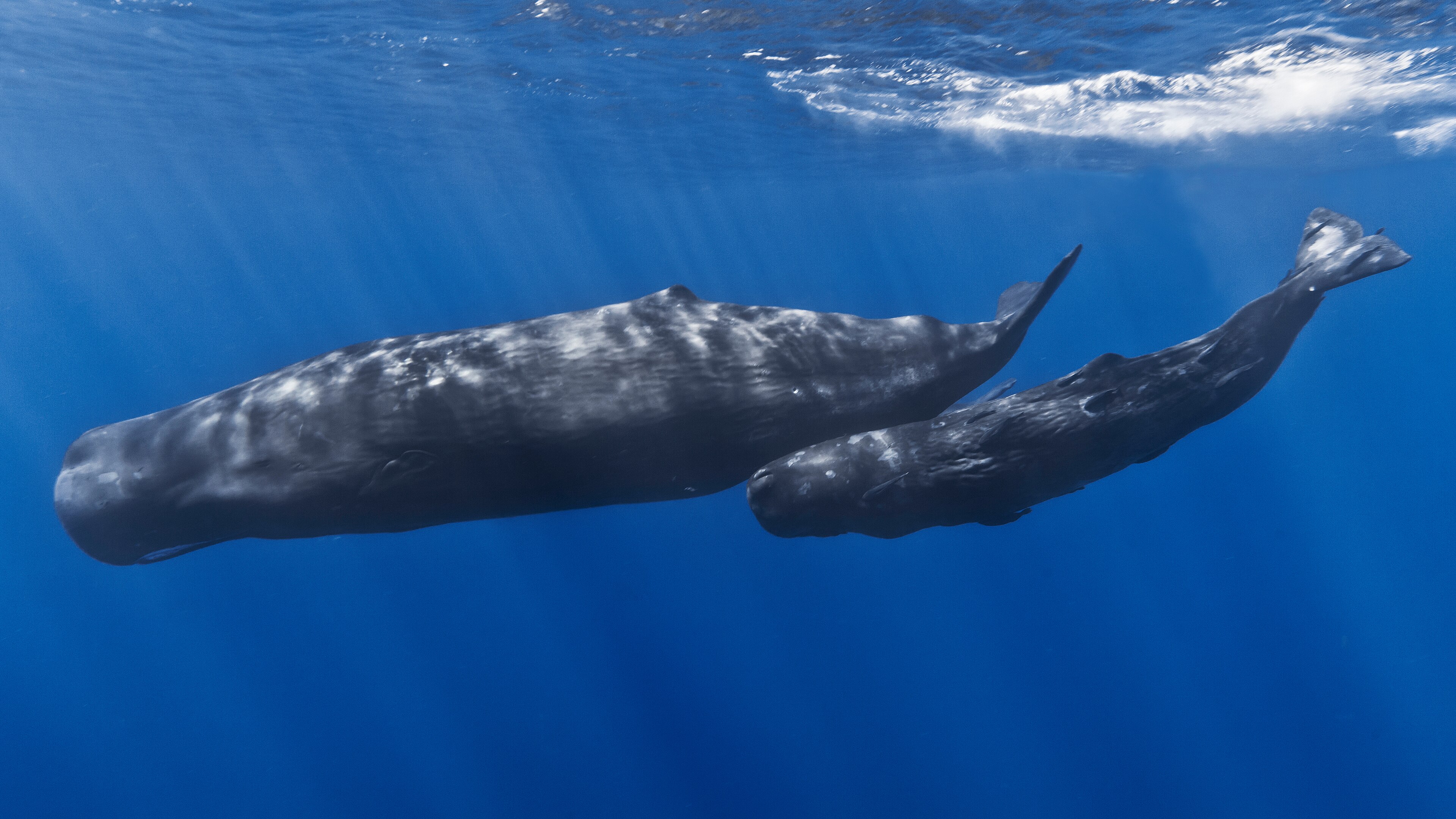
Photo Credit
Image courtesy of © Gabriel Barathieu, CC BY-SA 2.0, via Wikimedia CommonsConservation drowns in data: millions of blank camera-trap frames, years of forest sound, oceans of satellite pixels. Artificial intelligence now does the first sift, from MegaDetector and BirdNET to EarthRanger, Project CETI and Global Forest Watch, leaving people the decisions. Here is what it has achieved, where it falls short, and how a traveller’s phone can help.
A census nobody could finish by hand
Conservation has always been a counting problem. Every season, field teams strap cameras to trees, hang recorders in the canopy and drop microphones into the sea, then come home to millions of photographs and thousands of hours of sound. For decades most of it was sifted by students with strong coffee and weakening eyesight. Artificial intelligence has changed the arithmetic: machines now do the first, tedious pass, and people keep the judgement.
The interesting question is no longer whether this helps, but what it is quietly changing.
Camera traps: the end of the empty frame
The camera trap’s open secret is that it mostly photographs nothing. Microsoft’s AI for Good Lab, which maintains the open-source MegaDetector, notes that 70 to 95 per cent of camera-trap images are blank, set off by wind, sun or swaying grass. MegaDetector finds the animals, people and vehicles in a frame, scores its confidence in each and lets researchers set the rest aside.
Its makers are candid about the weak spots: very small, well-camouflaged or rarely seen species are harder to catch.
Naming the animal comes next. Google’s SpeciesNet, which has run inside the Wildlife Insights platform since 2019 and went open source in 2025, recognises 2,498 animal categories after training on more than 65 million labelled images. On Google’s held-out test it found 99.4 per cent of the images containing animals; it offered a species 83 per cent of the time, and 94.5 per cent of those names were right.
A standard laptop gets through about 30,000 images a day. Its users call it a first pass, which is exactly the right modesty.
Listening to the forest
Sound reaches where lenses cannot: through dense canopy, at night, round corners. BirdNET, led by Stefan Kahl at Chemnitz University of Technology with the Cornell Lab of Ornithology, began by recognising 984 birds of North America and Europe. Its newest form, BirdNET Live, released in July 2026, runs on a phone with no signal at all and knows 8,927 bird species, plus mammals, insects and amphibians: almost 10,000 animals in all.
The project counts more than two million active users. A rucksack, it turns out, makes a perfectly good field station.
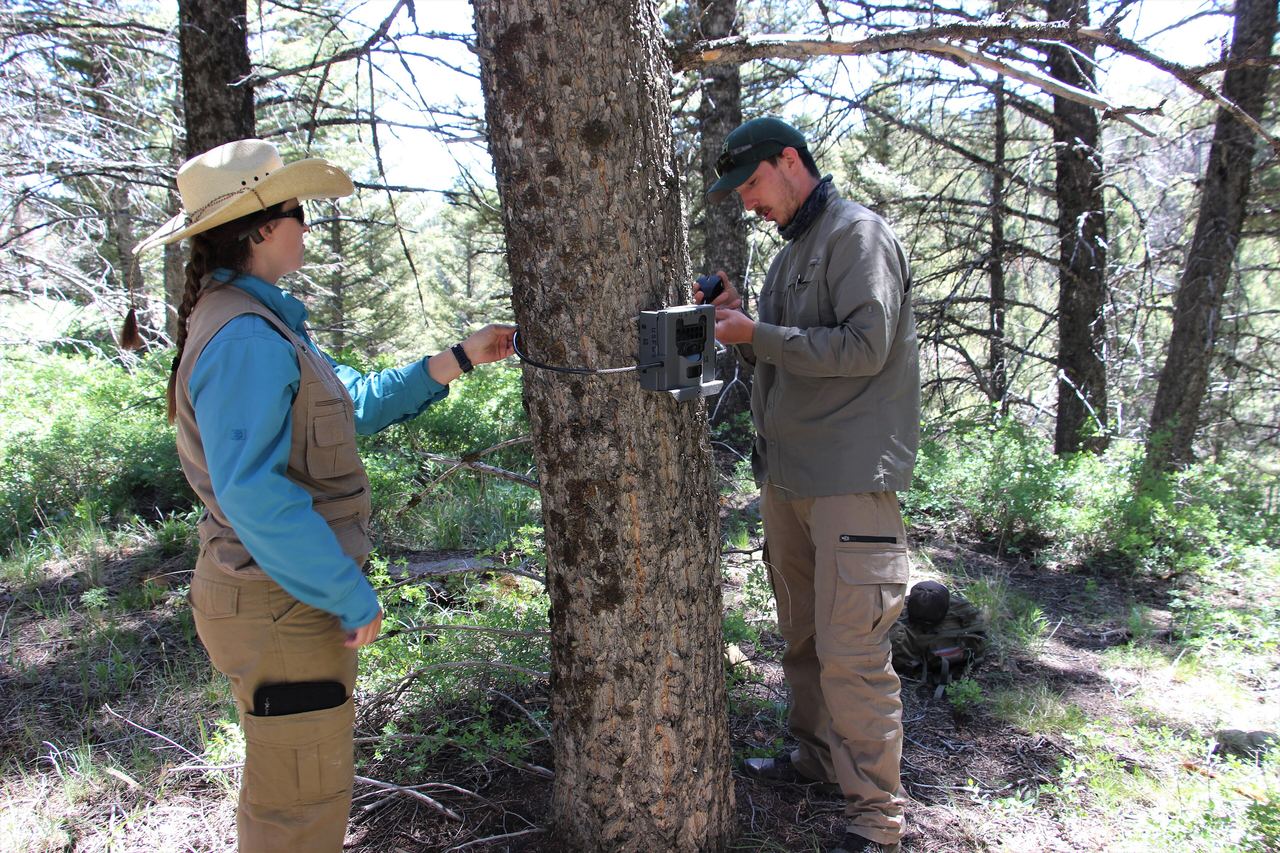
Photo Credit
Image courtesy of © USFWS (public domain), via Wikimedia CommonsRainforest Connection turned the same idea into a burglar alarm. Its founder, Topher White, began by hanging old mobile phones, solar-powered, high in the canopy, streaming audio to the cloud, where software listens for chainsaws, trucks and motorbikes. He has said that on the second day of testing in Indonesia a device caught chainsaw noise and the loggers were confronted. Today’s Guardians are purpose-built, the latest with three microphones.
There is a certain poetry in it: the most distracting object of modern life, finally paying attention.
Can we talk to whales?
Project CETI, the Cetacean Translation Initiative, works off Dominica with sperm whales, whose clicks come in short rhythmic bursts called codas, tapped out in the deep like a private Morse.
In May 2024 a team led from MIT’s computer science laboratory used machine learning on more than 8,700 codas from Eastern Caribbean families and reported in Nature Communications that rhythm, tempo, rubato and ornamentation combine into a large repertoire: a ‘sperm whale phonetic alphabet’. Later work led by Gašper Beguš at UC Berkeley described vowel-like and diphthong-like patterns hidden inside the clicks.
Here honesty matters as much as excitement. The researchers stress that they have found structure, not meaning; nobody yet knows what a coda says, and some experts suspect it is closer to music than to language. Still, the questions are irresistible. If we did one day understand a whale, what would we owe it? And would hearing it in words persuade us more than the evidence we already have? The animal that inspired Moby-Dick may yet have the last word.
The ranger’s new dashboard
Anti-poaching work is mostly logistics: where are the patrols, the collared elephants, the reported shot? EarthRanger, run by the Allen Institute for AI (Ai2), puts those feeds on one live map at more than 900 protected areas in 95 countries; in Thailand’s Kuiburi National Park, AI cameras on 32 farms alert community rangers who turn out within minutes.
In March 2026 EarthRanger and SMART, a patrol-data tool used at about 1,200 sites, were announced as merging into one platform, SERCA. For rangers juggling two systems, no small mercy.
TrailGuard AI, from the non-profit RESOLVE, puts the intelligence inside a concealed camera. It sends an image only when it sees a person, a vehicle or a chosen species, over mobile, long-range radio or satellite links; a study in BioScience reported about 30 seconds from trigger to phone. RESOLVE says installations span 15 countries, from the Serengeti to tiger habitats in India and Nepal.
In a West Bengal elephant corridor it logged 266 elephant events, with alerts arriving in about 42 seconds on average rather than the hours older workflows could take. Seconds, not hours: the difference between a report and a rescue.
The view from orbit
Satellites have turned the census into spot-the-difference on a planetary scale. In 2021 a team led by Isla Duporge, then at Oxford, showed a neural network could count African elephants in very high-resolution WorldView imagery as accurately as human observers in low-flying aircraft.
In 2025 the same approach, turned on the Masai Mara, produced a startling result: between about 503,000 and 533,000 wildebeest in 2023, against an aerial estimate of 1.3 million that had barely moved since the 1970s.
Let the apps listen, but keep your own ears open: a sighting with a place and a date is worth more than a beautiful photograph.
Which number should a park manager believe? The authors are careful. At 30 to 60 cm a pixel, each wildebeest is only six to twelve pixels, the models cannot reliably tell it from a zebra or an eland, and the herds may simply have changed route, so a lower count is not proof of collapse. The real gift of the new method may be the doubt it casts on the old one. Science advances as much by awkward questions as by tidy answers.
Not every orbital census needs a neural network. The British Antarctic Survey finds emperor penguin colonies by their guano, brown smudges on white ice in Sentinel-2 images: 11 new colonies in 2020, four more in 2024, bringing the known total to 66. In 2025 an analysis of 16 colonies photographed from 2009 to 2024 estimated a 22 per cent fall, mainly linked to shrinking sea ice. Few creatures have served science so well by their droppings.
Forests are watched the same way. Global Forest Watch’s integrated alerts combine Landsat and Sentinel-2 optical systems with RADD, which reads Sentinel-1 radar through cloud, and since January 2026 a fourth system, DIST-ALERT, covering every kind of vegetation, far beyond the tropics. In the Amazon basin in 2021 the combined alerts flagged forest loss about nine days earlier, on average, than any single system.
The limit is plain: an alert says that something changed, not who did it, or why.
Reefs and rivers: listening and sampling
Coral reefs are noisy places, all crackles, grunts and pops, and their soundscape carries news of their health. SurfPerch, a model from Google Research and DeepMind announced in June 2024, was fine-tuned on more than 400 hours of reef audio labelled by members of the public on the Calling in Our Corals website, clicking whenever they heard a fish.
Its first trials picked out differences between protected and unprotected reefs in the Philippines and tracked restoration in Indonesia. Oddly, training on bird recordings made it better at fish.
Environmental DNA takes a different route: every creature sheds traces of itself, and a bottle of seawater can be filtered and sequenced. UNESCO’s pilot eDNA Expeditions at 21 marine World Heritage sites detected more than 4,400 species, 120 of them on the IUCN Red List, and a second phase runs from 2026 to 2028 at 25 sites.
The method has honest limits: DNA cannot say how many animals there are, whether they live there or merely passed by, or whether they were alive. Think of it as a guest book, not a census.
The traveller as field assistant
This is where the reader comes in. Cornell’s Merlin Bird ID covers more than 10,000 species and identifies birdsong in real time; BirdNET Live does it with no signal, which suits safaris, ships and mountain lodges. iNaturalist, for anything that crawls, flowers or swims, suggests an identification from your photograph, then human experts confirm it; the platform passed 250 million verifiable observations in 2025. A holiday walk can become a data point, which is a better souvenir than most.
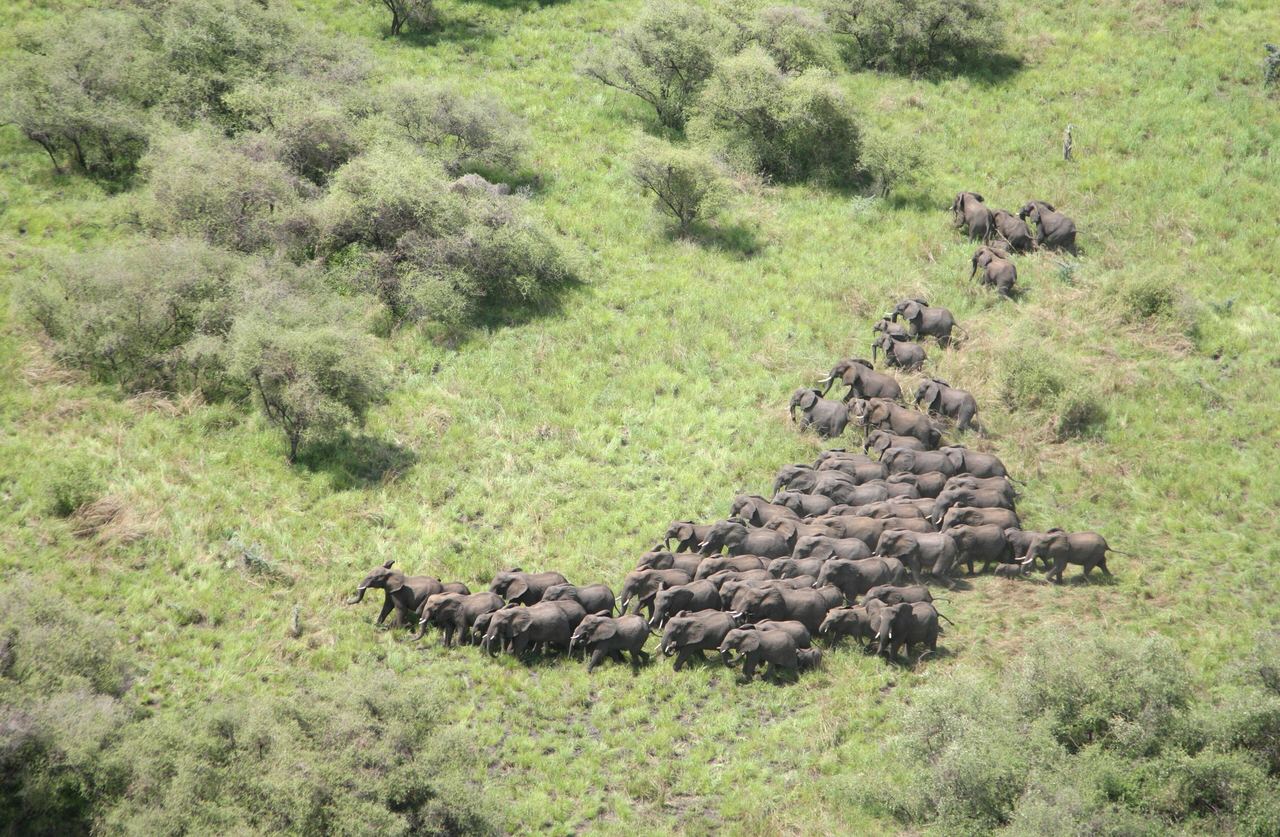
Photo Credit
Image courtesy of © WCS / USAID (public domain), via Wikimedia CommonsThe practical rules are simple. Keep location and time on, because a sighting without place and date is just a nice picture. Record the sound, not only the bird. Photograph the whole animal, and let others confirm before you treat the app’s first guess as gospel. Keep a respectful distance; no observation is worth disturbing a nest or a den. And remember the apps learn from you: every honest record makes them a little better for the next visitor.
What the machines cannot do
The limits deserve as much attention as the triumphs. Models learn from what people have already labelled, so the well-studied birds of Europe and North America came first, and rare, small or tropical species lag behind. Hardware has to be bought, powered, guarded and repaired, often far from a signal. An algorithm can flag a chainsaw in seconds; someone still has to drive there, and someone has to pay for the fuel.
Then there is the question of who else is being watched. A 2024 Cambridge study led by Trishant Simlai, based on 14 months of fieldwork and 270 interviews around Corbett Tiger Reserve in India, found camera traps and drones used to monitor and intimidate local women, including a camera-trap image shared online to humiliate one.
Women told researchers they now talked and sang less in the forest, which can make surprise encounters with elephants and tigers more likely. A sensor meant for tigers sees everyone.
So does AI save wildlife? Not on its own. What it buys is time and attention: fewer empty frames, faster alerts, bigger maps, and a richer record of what is out there. The deciding still falls to rangers, scientists, communities and governments, and the caring to everyone else. Next time you hear an unfamiliar call on a terrace in the tropics, the question is simple: will you just listen, or will you also record it?
Why it's on our list
- Camera traps without the blanks
- BirdNET, chainsaws and whale codas
- Ranger dashboards and AI cameras
- Counting herds and penguins from space
- Reef sound and eDNA
- Limits, cost and who gets watched
Location
The map comes from Google Maps, which sets its own cookies once it loads.
More in depth
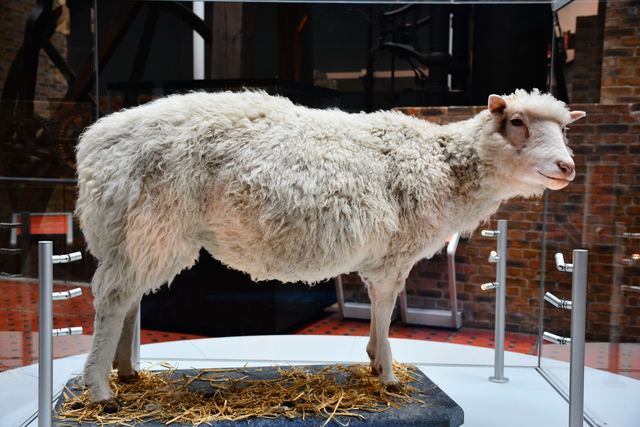 ScienceShould we edit life? The ethics of genetic engineeringFrom Dolly to CRISPR cures, gene drives and mammoths: the questions behind the science.
 ScienceTraditional, alternative and modern medicine: where they meetArtemisinin, aspirin and acupuncture: what tradition gave medicine, and what the evidence says.
 SpaceSpace near Brighton: observatories, dark skies and stargazersHerstmonceux’s observatory domes, the South Downs dark skies and the stargazing clubs near Brighton.