The Observatory
Eleven minutes, or a fortnight: the people who sell you the sky
Suborbital hops, private orbits, a stratospheric balloon: who flies, from where, and when.
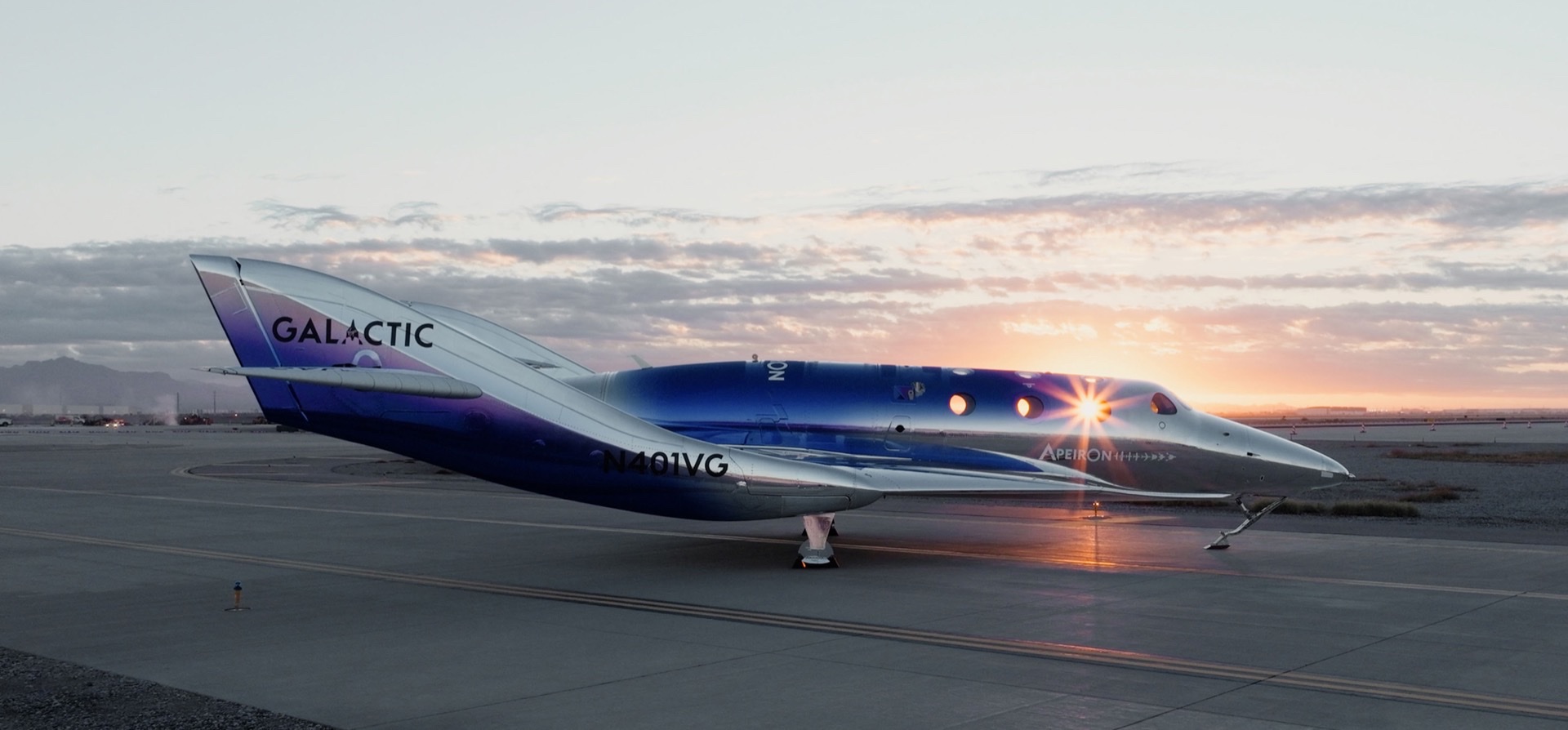
Photo Credit
Image courtesy of © Virgin GalacticFor a price, the edge of space now has a timetable, if a fickle one. Rockets that fly themselves, a spaceship dropped from a jet, private crews in orbit and a balloon for the slower traveller: here is who is flying paying passengers, who is testing and who has paused, checked against the companies’ and agencies’ own pages in November 2026.
Eleven minutes over West Texas
Picture a gumdrop with a picture window, fired straight up from the scrub of West Texas. Blue Origin’s New Shepard is fully autonomous, with no pilots on board: six passengers ride at more than three times the speed of sound, cross the Kármán line at 100 km, float weightless for several minutes and drift home under parachutes. Its windows make up a third of the capsule’s surface, and the whole flight lasts about 11 minutes.
The record is long, and the safety story is told plainly. Development tests ended in 2021 after 16 consecutive successful flights, three of them capsule-escape tests. Blue Origin says New Shepard has since flown 38 times in all and carried 98 people above the line, among them, on NS-37, the first wheelchair user to cross it. In 2022 the uncrewed NS-23 lost its booster to an engine-nozzle failure; the escape system landed the capsule safely.
Then, in January 2026, came a pause. Days after NS-38, the first flight of the year, left Launch Site One on 22 January, the company announced that New Shepard would stop flying for no less than two years, its resources moved to the company’s human lunar programme. It cites a multi-year backlog of customers. For now the queue for eleven minutes is measured in years, which is at least on the right scale for space.
The spaceship that falls from a jet
Virgin Galactic does things the aviator’s way. Its spaceship is carried aloft beneath a mothership, Eve, released high over New Mexico, and then lit for the climb. The first ship, VSS Unity, made its final commercial flight, Galactic 07, on 8 June 2024, with two pilots and four private astronauts aboard: released at 44,562 feet, it reached 54.4 miles, closing a career of 32 flights, 12 of them to space.
Its successor is the first of the Delta class, revealed on 28 October 2026 and named Apeiron, ancient Greek for “the boundless”, after a public vote drawing people from more than 80 countries. That same day Eve carried it from the factory in Mesa, Arizona, to Spaceport America. The company expects a first glide flight in January and the first commercial spaceflight in early Q2 2027, with a second ship following in late Q2 or early Q3.
So the stage is “in testing”, and the price is one of the few in this business published by the maker itself: Virgin Galactic says it has begun booking a limited tranche of seats at $850,000 each. Each Delta ship is designed to carry up to six private astronauts, and more than 100 future astronauts have begun their preparations, with more cohorts to follow. “The ship is magnificent,” said Michael Colglazier, the chief executive.
Orbit, for the very determined
Orbit means days, not minutes, aboard SpaceX’s Dragon. Inspiration4 opened the door on 15 September 2021, the first all-civilian mission to orbit, raising funds for St. Jude Children’s Research Hospital. Its commander, Jared Isaacman, was also its benefactor; Hayley Arceneaux, a St. Jude physician assistant who had been treated there for bone cancer as a child, flew as medical officer, the first person in space with a prosthesis.
For now the queue for eleven minutes is measured in years, which is at least on the right scale for space.
Isaacman returned with Polaris Dawn, launched from Launch Complex 39A at Kennedy Space Center on 10 September 2024. Dragon climbed to an apogee of 1,408.1 km, the farthest humans had travelled from Earth since Apollo ended in 1972, and the crew made the first commercial spacewalk. Sarah Gillis, a mission specialist, played the violin in orbit, beamed home over Starlink lasers: room service has never had a harder act to follow.
Fram2, in 2025, turned the map on its side: launching south from Florida into a 90° orbit at about 430 km, it became the first human spaceflight over the polar regions. Its commander, Chun Wang, an entrepreneur from Malta; his crew were Norway’s Jannicke Mikkelsen, Germany’s Rabea Rogge and Australia’s Eric Philips. Florida, it turns out, is a fine place to set off for the poles.
Axiom Space flies private crews to the International Space Station aboard Dragon: four so far, between April 2022 and July 2025, of nine to 22 days each. Ax-4 was commanded by Peggy Whitson, holder of the record for the longest cumulative time in space by an American. Ax-5 is announced for no earlier than January 2027, for up to 14 days, crew to be named; Axiom publishes no price. Private stations and orbital hotels belong to a companion feature.
Balloons, and a gentler ascent
Not every trip needs a rocket. Zephalto, created in 2016 by Vincent Farret d’Astiès, its founder and chief pilot, plans six-hour balloon flights to 25 km, in the stratosphere rather than space: an hour and a half up, three hours aloft, an hour and a half down, four guests in the Céleste capsule. Its roadmap lists public flights in 2027, and its dream, in his words, is “travelling to the stars, in harmony with the elements”.
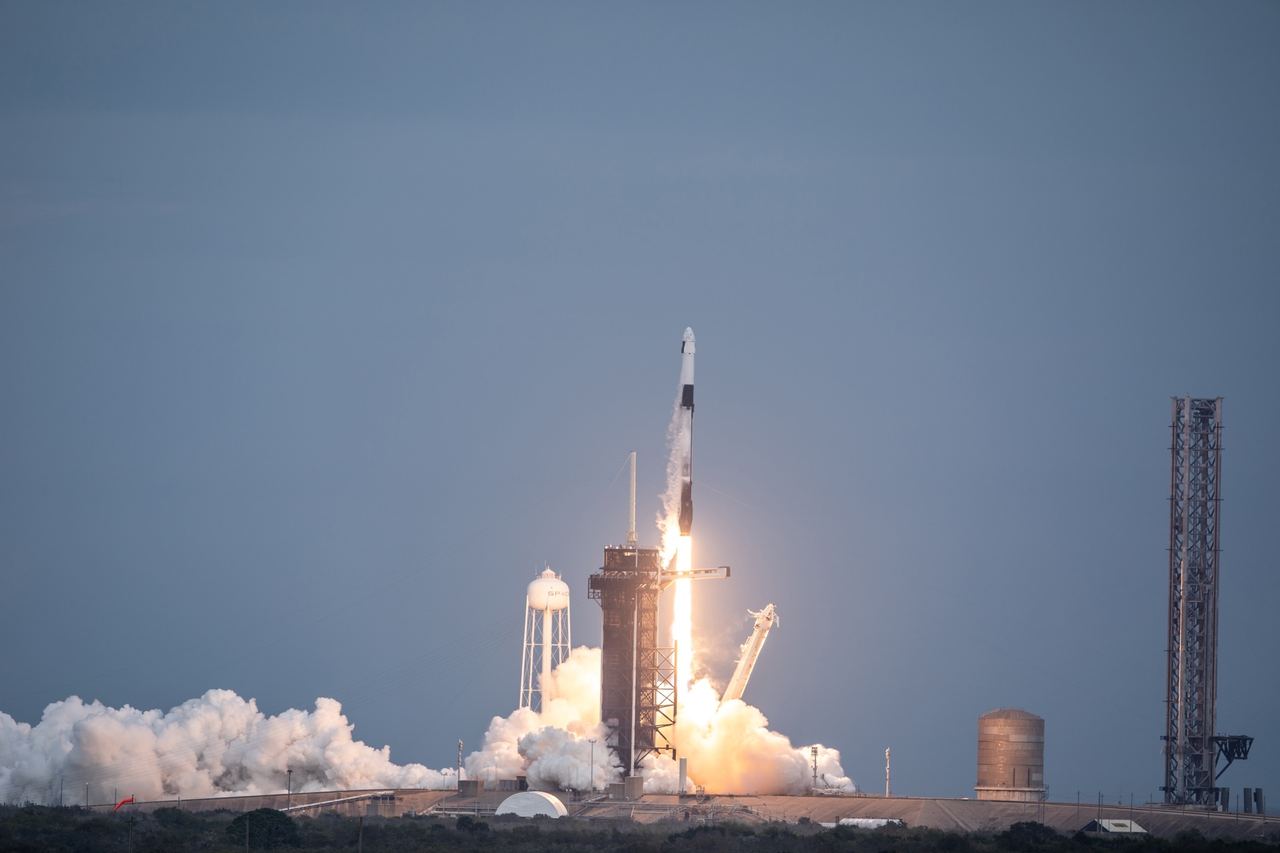
Photo Credit
Image courtesy of © NASA/Chris SwansonOur advice: check each company’s own newsroom for the current stage before you plan around a date; schedules in this field move. Ask what training and medical checks are required and what happens to a deposit if a flight slips. Florida’s Space Perspective still shows its Spaceship Neptune balloon on its site, but publishes no current flight date. To watch a Dragon crew launch, follow NASA’s and Axiom’s mission pages for the date.
Closer to home: Brighton
Brighton City Airport at Shoreham, still Shoreham Airport to most people, calls itself the oldest licensed airport in the UK. The first recorded flight from the field was in 1910, and its Art Deco terminal opened on 13 June 1936. The flight schools on the airfield offer trial lessons for aeroplanes and helicopters.
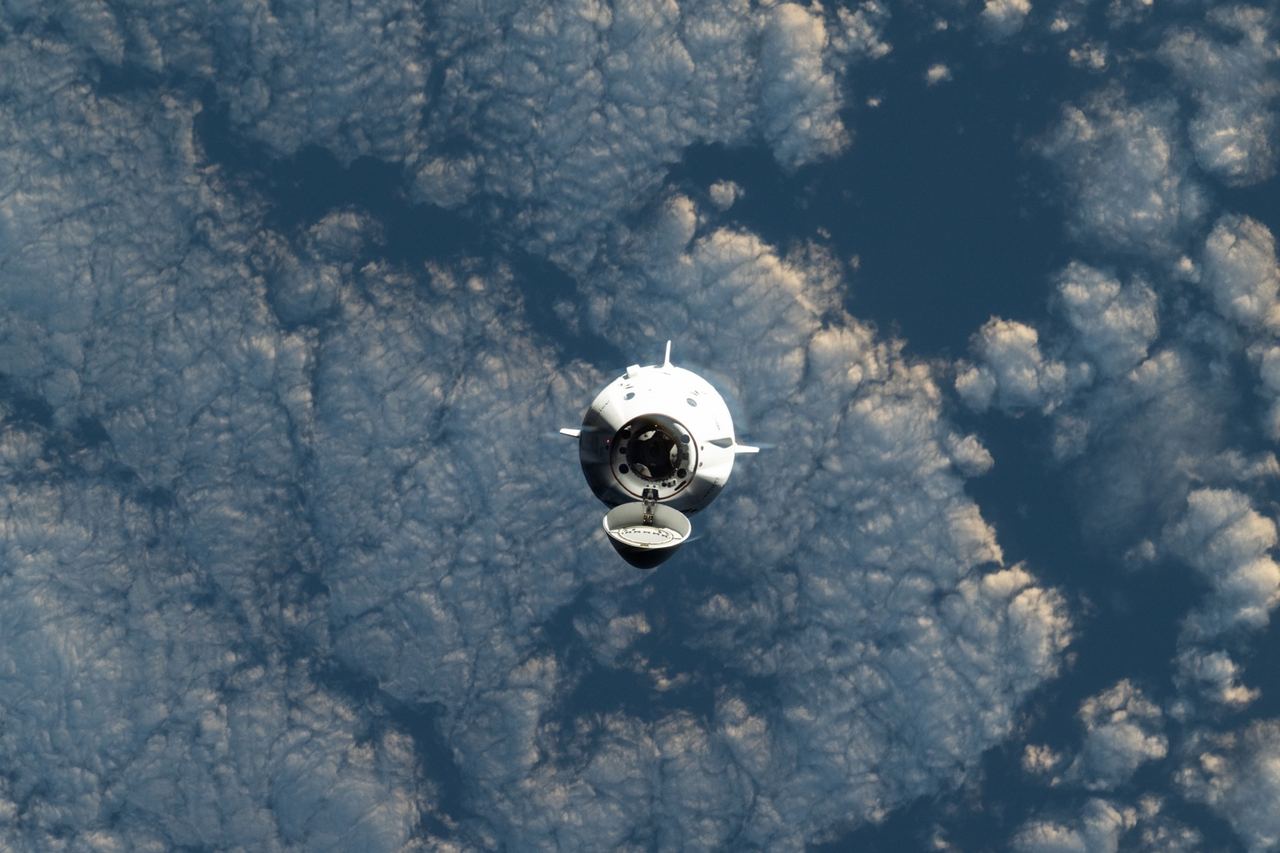
Photo Credit
Image courtesy of © NASAAt Gatwick, the Northern Runway project will move the existing standby runway 12 metres so that it can work as a second runway alongside the main one. Consent was granted on 21 September 2025; after the Court of Appeal dismissed the remaining challenge on 4 August 2026, the airport says the £2.2 billion, privately financed scheme is moving into delivery. It has not yet given an opening date.
Why it's on our list
- Eleven minutes over West Texas
- The spaceship that falls from a jet
- Orbit, for the very determined
Location
The map comes from Google Maps, which sets its own cookies once it loads.
More in depth
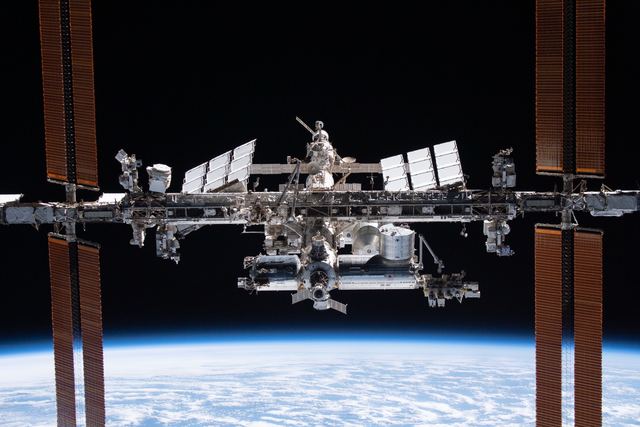 The ObservatoryRooms with a view of everything: the race to build hotels in orbit and on the MoonPrivate stations, a Hilton cookie, a hotel on the Moon: who is building what, and how far along.
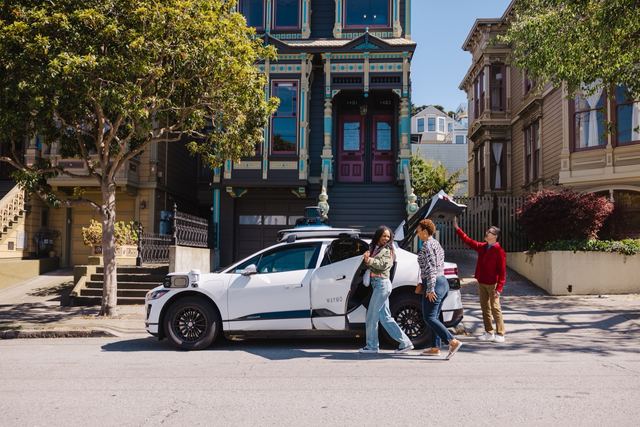 The ObservatoryNobody at the wheel: who is really driving the robotaxi?Waymo, Tesla, Zoox, Wayve and Apollo Go: who drives itself, who is supervised, and where they run.
 The ObservatoryClockwork boys and iron arms: how the robot learned to walkAl-Jazari’s elephant clock, a Swiss boy with a quill, Unimate’s first shift and the humanoid race.