The Observatory
Clockwork boys and iron arms: how the robot learned to walk
Al-Jazari’s elephant clock, a Swiss boy with a quill, Unimate’s first shift and the humanoid race.
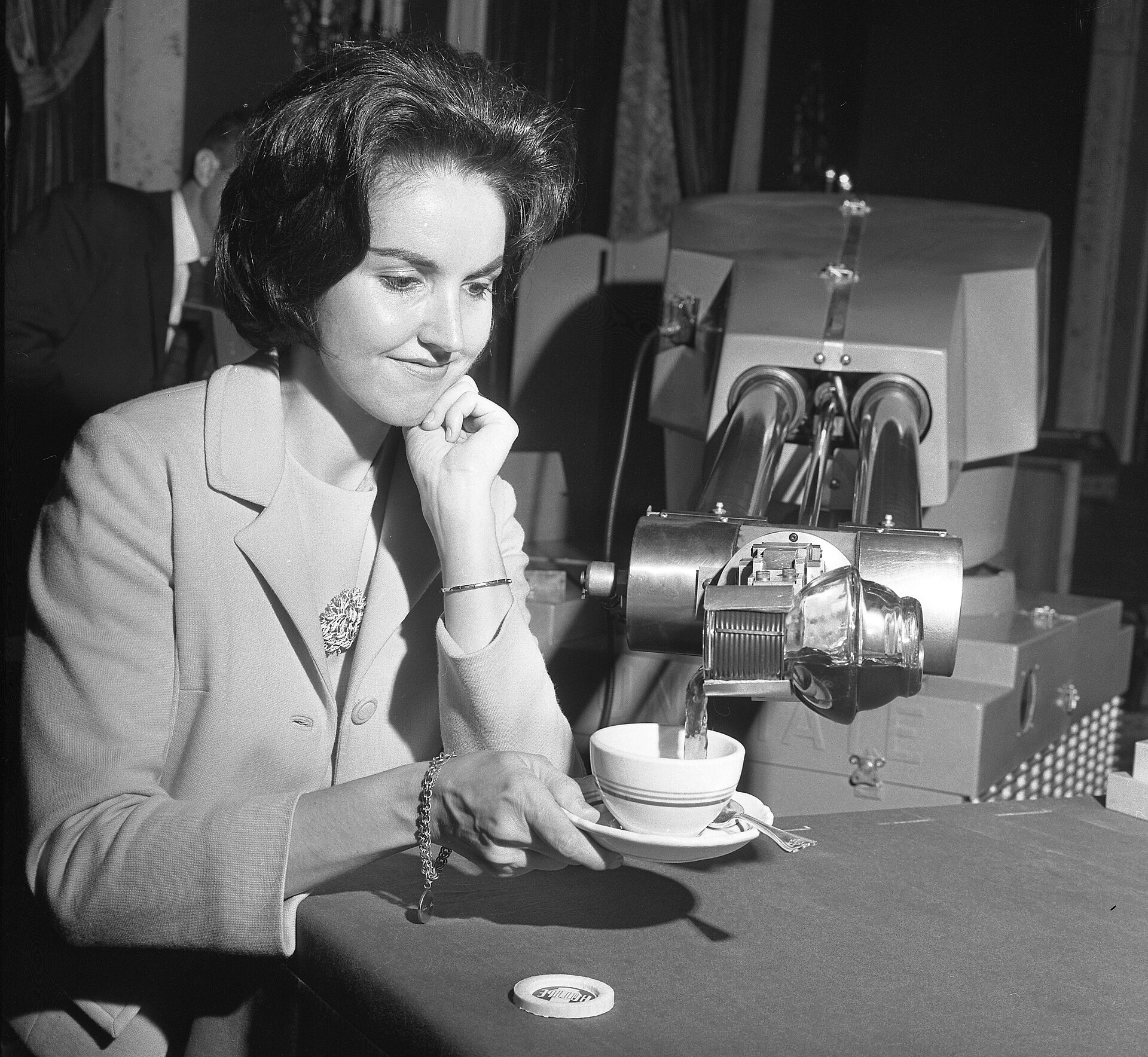
Photo Credit
Image courtesy of © Frank Q. Brown, Los Angeles Times, CC BY 4.0, via Wikimedia CommonsLong before anyone said “robot”, craftsmen built machines that wrote, drew and told the time with a dragon. From a medieval treatise and three Swiss automata to the first factory arm, Honda’s walkers and Boston Dynamics’ Atlas, here is how the humanoid arrived, checked against the museums’, universities’ and companies’ own pages in November 2026.
Clockwork with manners
In a darkened gallery of the Musée d’art et d’histoire in Neuchâtel sit three small figures in velvet coats: the Writer, the Musician and the Draughtsman. They were made in La Chaux-de-Fonds between 1768 and 1774 by three watchmakers, Pierre Jaquet-Droz, his son Henri-Louis and Jean-Frédéric Leschot. They are older than the French Revolution, better dressed than most of its participants, and still among the museum’s masterpieces.
After a long journey around Europe, the automata were given to the City of Neuchâtel on 1 May 1909. The museum runs public demonstrations on the first Sunday of every month at 2pm, 3pm and 4pm. It also warns that the Writer is not working for now, because of a defective part that will take several specialists to repair. Two and a half centuries on, even an automaton can be left waiting for a part.
The idea is far older than Swiss watchmaking. The Metropolitan Museum of Art in New York holds a page, dated 1315, from a copy of a treatise first written at the beginning of the 13th century by Badi‘ al-Zaman al-Jazari (1136–1206). The Met counts this copy, by the calligrapher Farrukh ibn ‘Abd al-Latif, among the most accomplished, and says the book describes fifty mechanical devices made for princely entertainment.
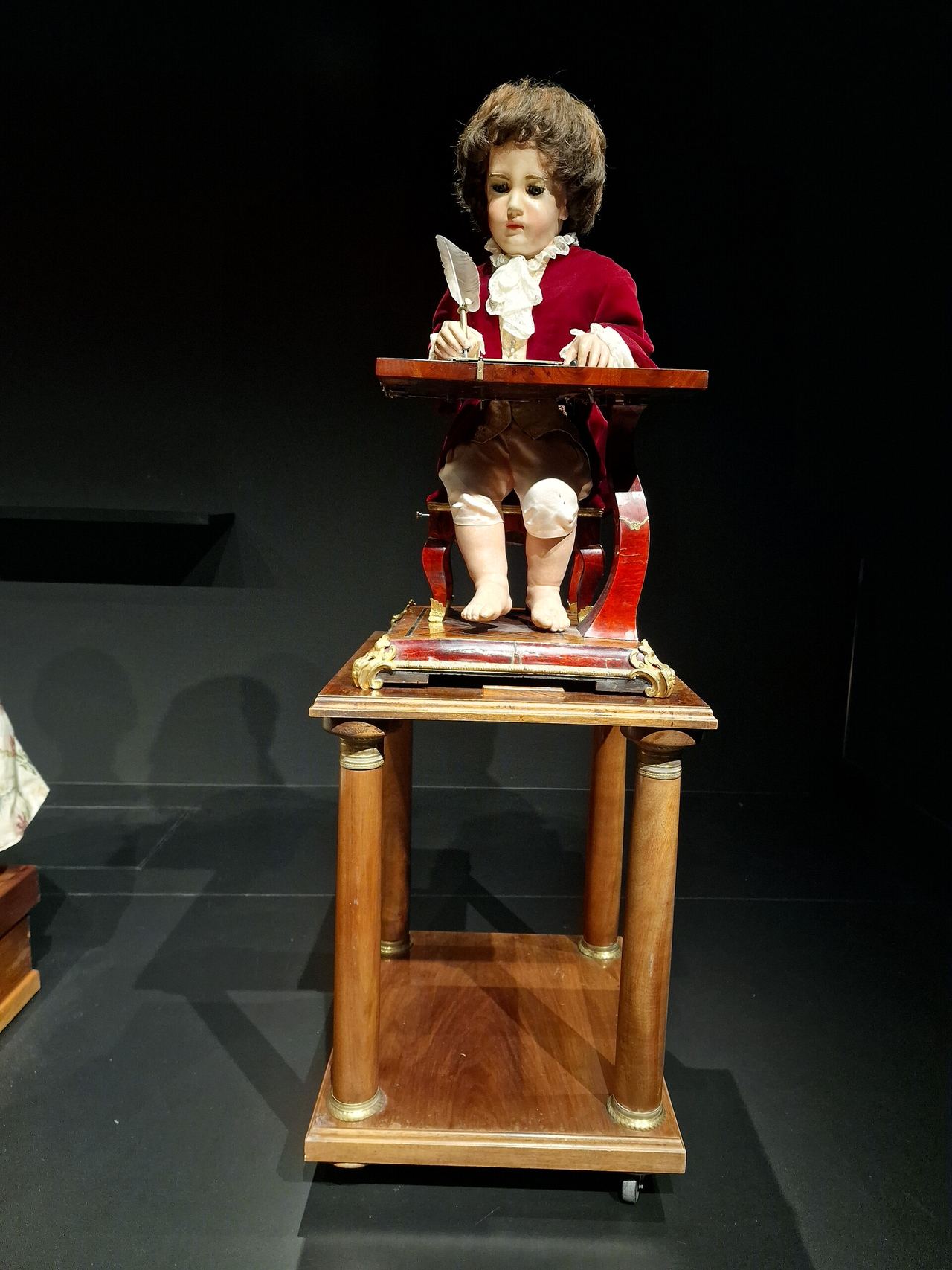
Photo Credit
Image courtesy of © Gre regiment, CC BY-SA 4.0, via Wikimedia CommonsThis page shows the Elephant Clock. Every half hour, the Met explains, a bird whistles on the dome, a figure drops a ball into a dragon’s mouth and the driver strikes the elephant with a goad. Timekeeping, in other words, as theatre: the hour announced not by a bell but by a small, well-rehearsed drama in which the elephant is the only member of the cast not enjoying himself.
The arm that went to work
The robot that changed working life had no face at all. The Henry Ford museum in Michigan calls Unimate robots the world’s first successful industrial robots, built for tasks that were difficult, dangerous or monotonous for people. Its collection holds the first Unimate ever used on an assembly line, installed at a General Motors plant in Trenton, New Jersey, in 1961 to unload a die-casting press.
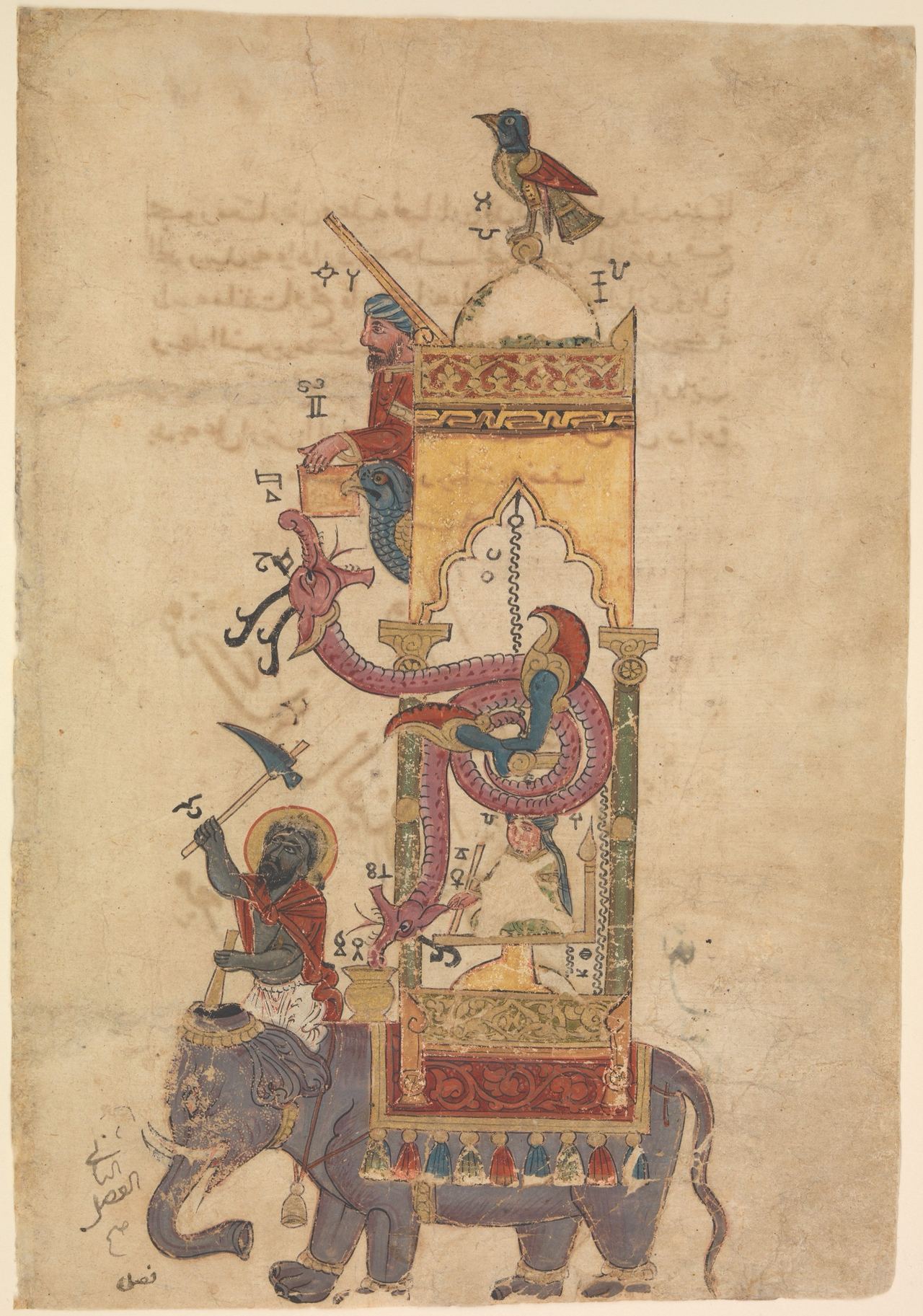
Photo Credit
Image courtesy of © The Metropolitan Museum of Art, Bequest of Cora Timken Burnett, 1956, public domain (CC0)The museum credits George Devol with the invention, and much of its Unimate archive came from Devol’s family. It is worth noticing what the industrial robot left out: legs, eyes and conversation. For half a century the most useful machines in factories looked nothing like us, and were all the better for it, doing one job with tireless precision while the humanoid stayed in the laboratory.
Two and a half centuries on, even an automaton can be left waiting for a part.
Japan kept the human shape alive. At Waseda University in Tokyo, the WABOT project began in the early 1970s under the late Professor Ichiro Kato, and WABOT-1, completed in 1973, could walk on two legs, grasp objects and speak in simple Japanese. Waseda says its researchers compared its abilities to those of a child of one and a half, which, for anyone who has met one, is no small compliment.
Walking, then running
Honda began its own study of two-legged walking with a robot called E0 in 1986. Its P2, announced in December 1996, could walk freely, climb up and down stairs and push carts, wirelessly and automatically, and Honda calls it the world’s first bipedal humanoid walking robot. ASIMO, smaller and lighter, followed in 2000 and became, for a generation, the friendly white face of the whole idea.
Then came something less friendly-looking. On 11 July 2013 the US research agency DARPA unveiled Atlas, built by Boston Dynamics of Waltham, Massachusetts, for a disaster-response challenge: six feet two, 330 pounds, 28 hydraulic joints and a tether to an off-board power supply. DARPA described it as essentially a physical shell for the software that the competing teams would write.
For the 2015 finals, DARPA had Boston Dynamics make Atlas untethered, with onboard battery power and wireless communication, because the robots had to work with no power cords, fall arrestors or communication cables at all. It was, in effect, the moment the humanoid was asked to leave home and fend for itself, a test that every robot in this section is still taking.
For more than a decade the hydraulic Atlas was a research robot, and Boston Dynamics notes that by the end of 2024 it could still do a backflip. In April 2024 the company introduced an all-electric Atlas, which it calls a decisive reset, and in January 2026 it unveiled a production-ready version with Hyundai Motor Group: 56 degrees of freedom, a 50 kg lift and the knack of swapping its own batteries.
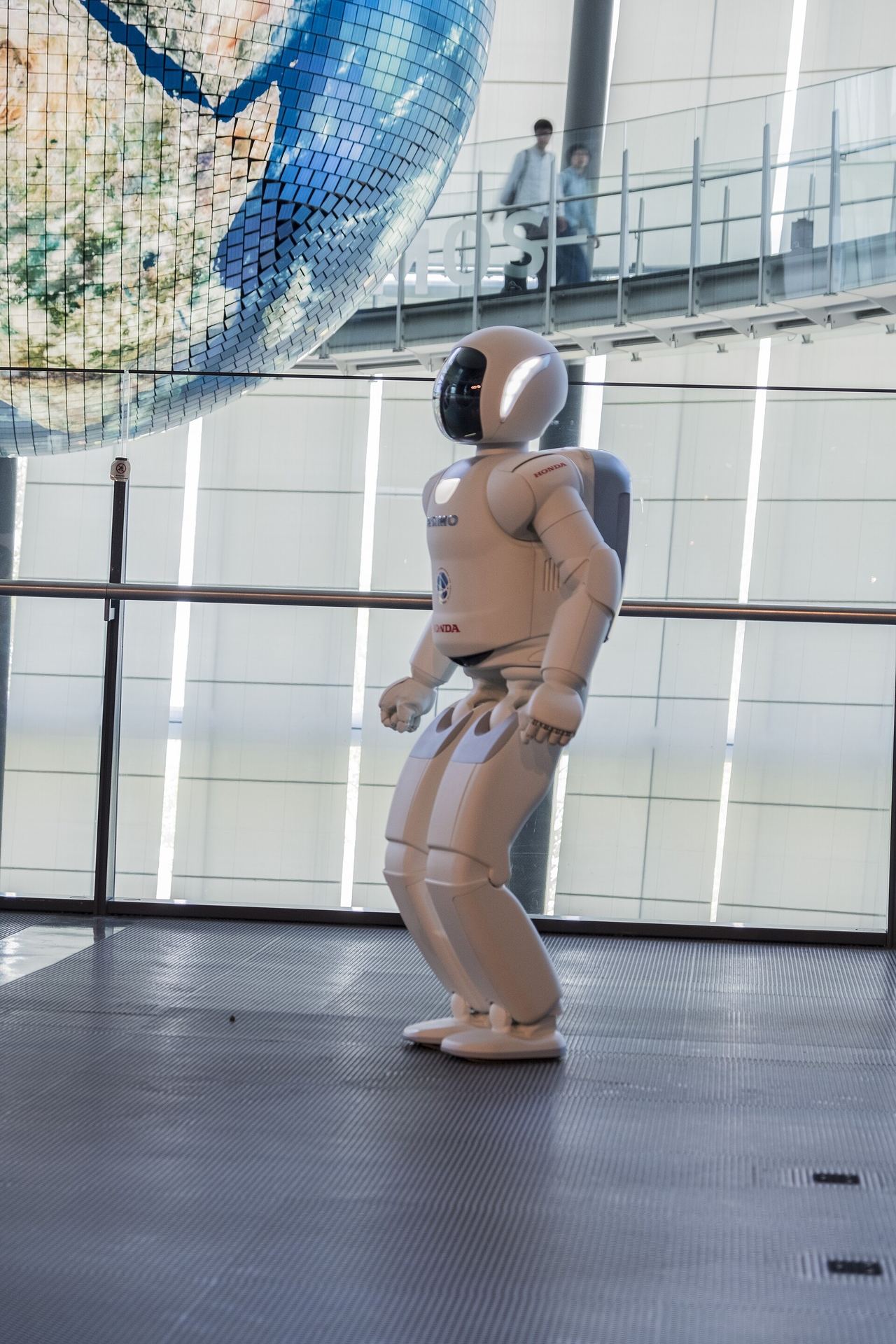
Photo Credit
Image courtesy of © Davide Mauro, CC BY-SA 4.0, via Wikimedia CommonsThe Writer’s every stroke was settled in a workshop in the 1770s; Boston Dynamics says a task learned by one Atlas can be copied to the whole fleet. That is the real line between an automaton and a robot. Our advice: visit Neuchâtel on the first Sunday of the month, check mahn.ch for news of the Writer before you go, and in Tokyo find WABOT-1 in the lobby of Waseda’s Building 63.
Why it's on our list
- Clockwork with manners
- The arm that went to work
- Walking, then running
Location
The map comes from Google Maps, which sets its own cookies once it loads.
More in depth
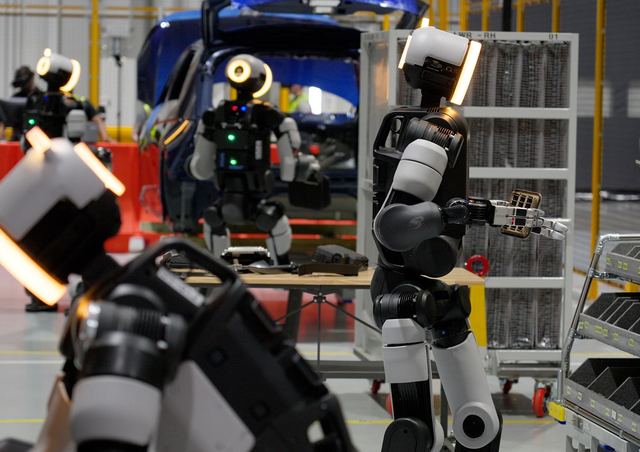 The ObservatoryShift work for humanoids: who is really on the factory floorAtlas, Figure, Digit, Apollo, Optimus and NEO: where each robot works and what it can do today.
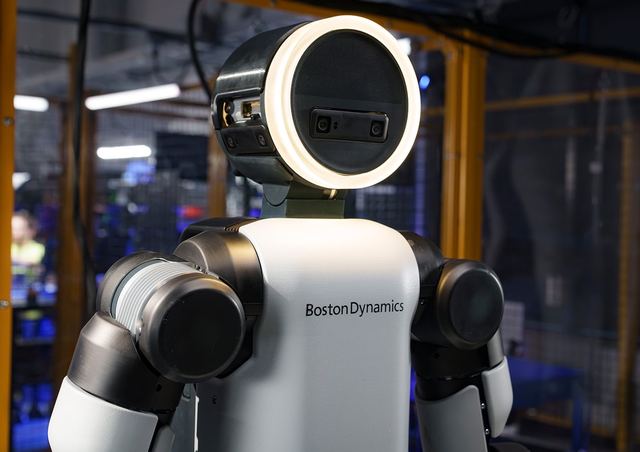 The ObservatoryThe robot will see you in 2027: what the makers promise, and whenFactory dates, home dates, prices and rent-or-buy: each maker’s published roadmap, dated.
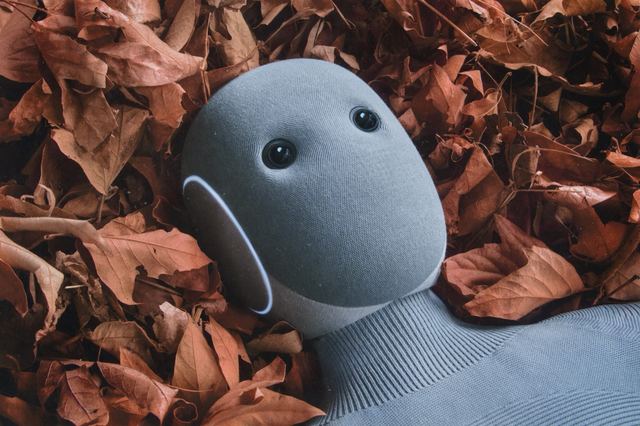 The ObservatoryWhen will robots become sentient? The honest answer is a questionIntelligence is not feeling: what Tesla, Hinton, Bengio, Kurzweil, Sheffield and Cambridge say.