The Observatory
London to New York in two hours? The long, quiet road back to supersonic
Concorde’s legacy, NASA’s quiet X-59, Boom’s Overture and the hypersonic dreamers, by status.
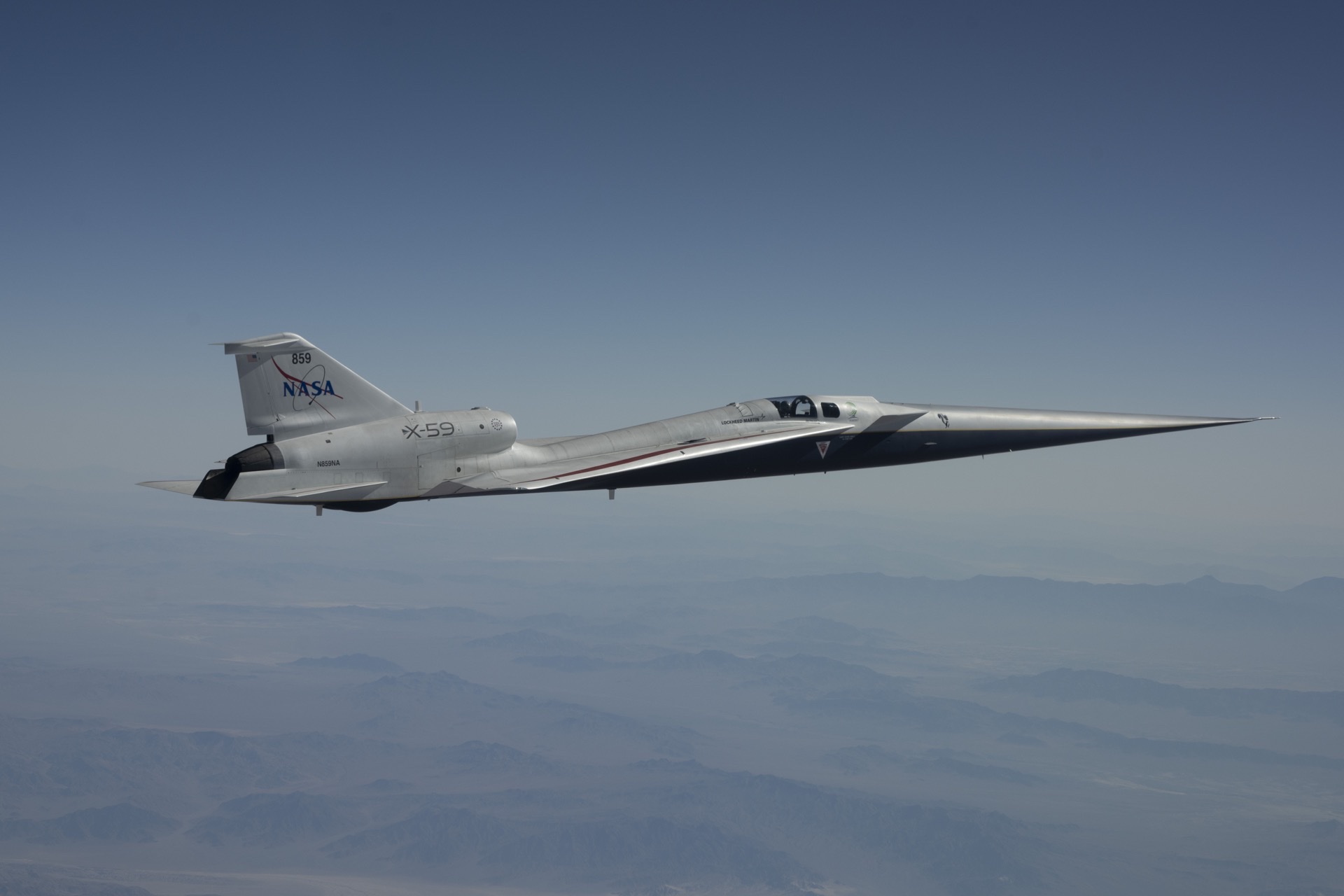
Photo Credit
Image courtesy of © NASA/Jim RossTwenty-three years after Concorde’s last flight, the fastest seat you can book is slower than it was in 1976. Supersonic flight is coming back, quietly: NASA’s X-59 is testing a softer boom, Boom Supersonic is building an airliner, and hypersonic research promises more. Here is what is flying, what is in testing and what is still on paper, checked against the makers’ and regulators’ own pages in November 2026.
The aircraft that outran the sun
On 21 January 1976, at 11:40, two Concordes took off at the same moment: Air France’s from Paris for Rio, British Airways’ from Heathrow for Bahrain. For the next 27 years a fortunate few cruised at Mach 2.02, about 1,320 mph, at 60,000 feet, high enough, in Aerospace Bristol’s words, to “sip Champagne on the edge of space”. It was never a crowd: the Smithsonian notes it was designed for up to 100 passengers.
The physics was theatrical. Outside, the air at cruise could be colder than –56°C; the Smithsonian notes that the aluminium skin heated to over 120°C, the window grew warm to the touch and the whole aircraft stretched by about 8 inches. Brooklands Museum adds that it could overtake the sun, so in some months passengers landed before they had left. Few seats have offered time travel; only one came with extra legroom for the fuselage.
Aerospace Bristol records the fastest crossing, New York to London in under 2 hours 53 minutes, flown by G-BOAD in February 1996; she now rests beside the Intrepid in Manhattan. After the crash near Paris on 25 July 2000 the airworthiness certificate was withdrawn; the fleet flew again, the last commercial flights landed on 24 October 2003, and on 26 November Concorde 216 flew to Filton, the last flight of a supersonic airliner to date.
The quiet thump
NASA’s answer looks like a needle that someone remembered to put a pilot in. The X-59, built with Lockheed Martin Skunk Works, is 99.7 feet long and 29.5 feet wide, and its nose makes up almost a third of that length. The cockpit sits so far back that it has no forward-facing window: the pilot looks ahead through the eXternal Vision System, high-resolution cameras feeding a 4K monitor. It is, in effect, a supersonic jet flown by television.
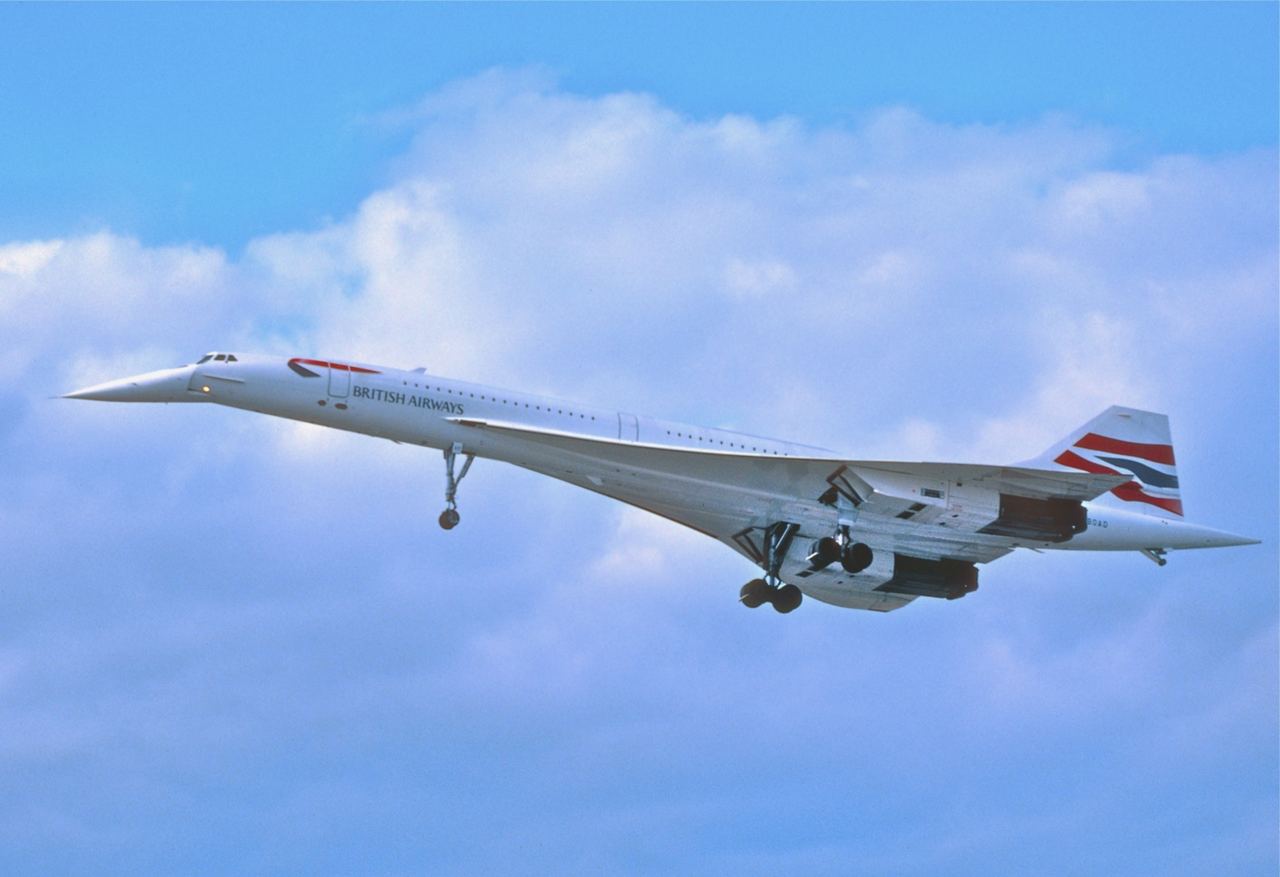
Photo Credit
Image courtesy of © Aero Icarus, CC BY-SA 2.0Status: in testing. Test pilot Nils Larson flew it first on 28 October 2025, from Palmdale to NASA’s Armstrong Flight Research Center, 67 minutes with the wheels down. “There is a time when you realize the weight of the moment,” he said. Jim “Clue” Less took it supersonic, about Mach 1.1, on 5 June 2026; on 12 June it reached Mach 1.4 at 55,000 feet, the conditions of its mission, and Mike Lippert joined the roster on 21 October.
The point is not speed but sound. The X-59 is designed to turn the sonic boom into a soft “thump”; after acoustic checks, NASA plans flights over several US communities to ask residents what they heard, and to share the answers with regulators. The FAA has prohibited civil supersonic flight over US land since 1973. Its proposed rule, published in July 2026, would allow it if the boom at the surface stays at or below 0.11 pounds per square foot.
Boom, and an airliner in waiting
Boom Supersonic’s XB-1 has already done its job. The small white demonstrator first flew on 22 March 2024, and on 28 January 2025 chief test pilot Tristan “Geppetto” Brandenburg took it through the sound barrier over the Mojave, at Mach 1.122; its fastest flight, on 10 February, reached Mach 1.18. In “Boomless Cruise” it went supersonic six times with no boom reaching the ground. Status: flown, and now retired to Boom’s Denver headquarters.
Few seats have offered time travel; only one came with extra legroom for the fuselage.
“XB-1’s supersonic flight demonstrates that the technology for passenger supersonic flight has arrived,” said Blake Scholl, Boom’s founder and chief executive. The airliner it serves, Overture, is designed for Mach 1.7 at 60,000 feet, a 4,250-nautical-mile range and 60–80 passengers, without the afterburners that made Concorde’s take-offs so loud. United, American and Japan Airlines between them account for 130 orders and pre-orders.
Status: in development. Boom’s Superfactory in Greensboro, North Carolina, was completed on 17 June 2024, with a first line planned for 33 aircraft a year and a second to take that to 66. In October 2026 the first prototype core for Symphony, Overture’s engine, shipped to a Colorado test site, with first firing expected before Thanksgiving. Boom’s pages publish no first-flight or service date, so neither do we.
Hypersonic: the two-hour promise
Further out, the timetables thin. JAXA is researching a Mach 5-class passenger aircraft that could cross the Pacific in two hours; its pre-cooled turbojet has run combustion tests simulating Mach 4 on the ground, and Japanese universities share the design work. Venus Aerospace announced the first US flight test of its rotating detonation rocket engine in May 2025; its Stargazer M4 is described as a Mach 4 passenger aircraft, with no date given.
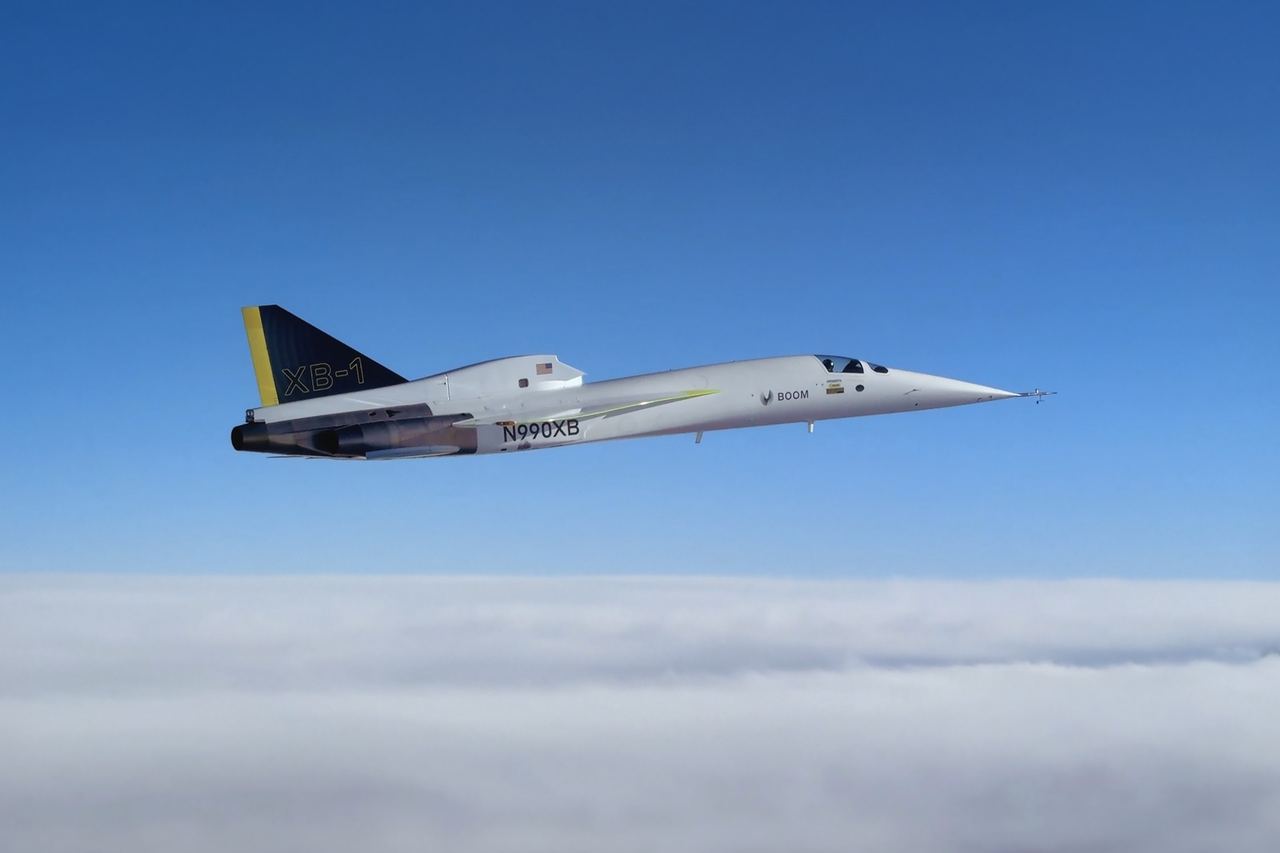
Photo Credit
Image courtesy of © Boom SupersonicHermeus, in California, flies uncrewed: its Quarterhorse Mk 1 first flew in May 2025, a later version reached Mach 1.6 in 2026, another began flying in September to prove propulsion for beyond Mach 2, and the company’s own pages describe no passenger aircraft. Britain’s Reaction Engines has been in administration since 31 October 2024, says Companies House. For now the two-hour Atlantic is a wind-tunnel figure, not a timetable.
Our advice: see the real thing first. Concorde 216 is preserved at Aerospace Bristol in Filton, where she landed for the last time, Concorde 202 is at Brooklands Museum in Surrey, G-BOAD offers a 20-minute guided tour at the Intrepid in New York, and Air France’s F-BVFA stands at the Smithsonian’s Udvar-Hazy Center near Washington Dulles. To follow what comes next, read NASA’s Quesst blog, Boom’s newsroom and FAA docket FAA-2026-6935.
Closer to home: Brighton
Brighton City Airport at Shoreham, still Shoreham Airport to most people, calls itself the oldest licensed airport in the UK. The first recorded flight from the field was in 1910, and its Art Deco terminal opened on 13 June 1936. The flight schools on the airfield offer trial lessons for aeroplanes and helicopters.
At Gatwick, the Northern Runway project will move the existing standby runway 12 metres so that it can work as a second runway alongside the main one. Consent was granted on 21 September 2025; after the Court of Appeal dismissed the remaining challenge on 4 August 2026, the airport says the £2.2 billion, privately financed scheme is moving into delivery. It has not yet given an opening date.
Why it's on our list
- The aircraft that outran the sun
- The quiet thump
- Boom, and an airliner in waiting
Location
The map comes from Google Maps, which sets its own cookies once it loads.
More in depth
 The ObservatoryEleven minutes, or a fortnight: the people who sell you the skySuborbital hops, private orbits, a stratospheric balloon: who flies, from where, and when.
 The ObservatoryRooms with a view of everything: the race to build hotels in orbit and on the MoonPrivate stations, a Hilton cookie, a hotel on the Moon: who is building what, and how far along.
 The ObservatoryNobody at the wheel: who is really driving the robotaxi?Waymo, Tesla, Zoox, Wayve and Apollo Go: who drives itself, who is supervised, and where they run.