The Observatory
Earthset, and the long road back to the Moon
Artemis II’s record flight, a rehearsal in Earth orbit, and the many roads to the lunar south pole.
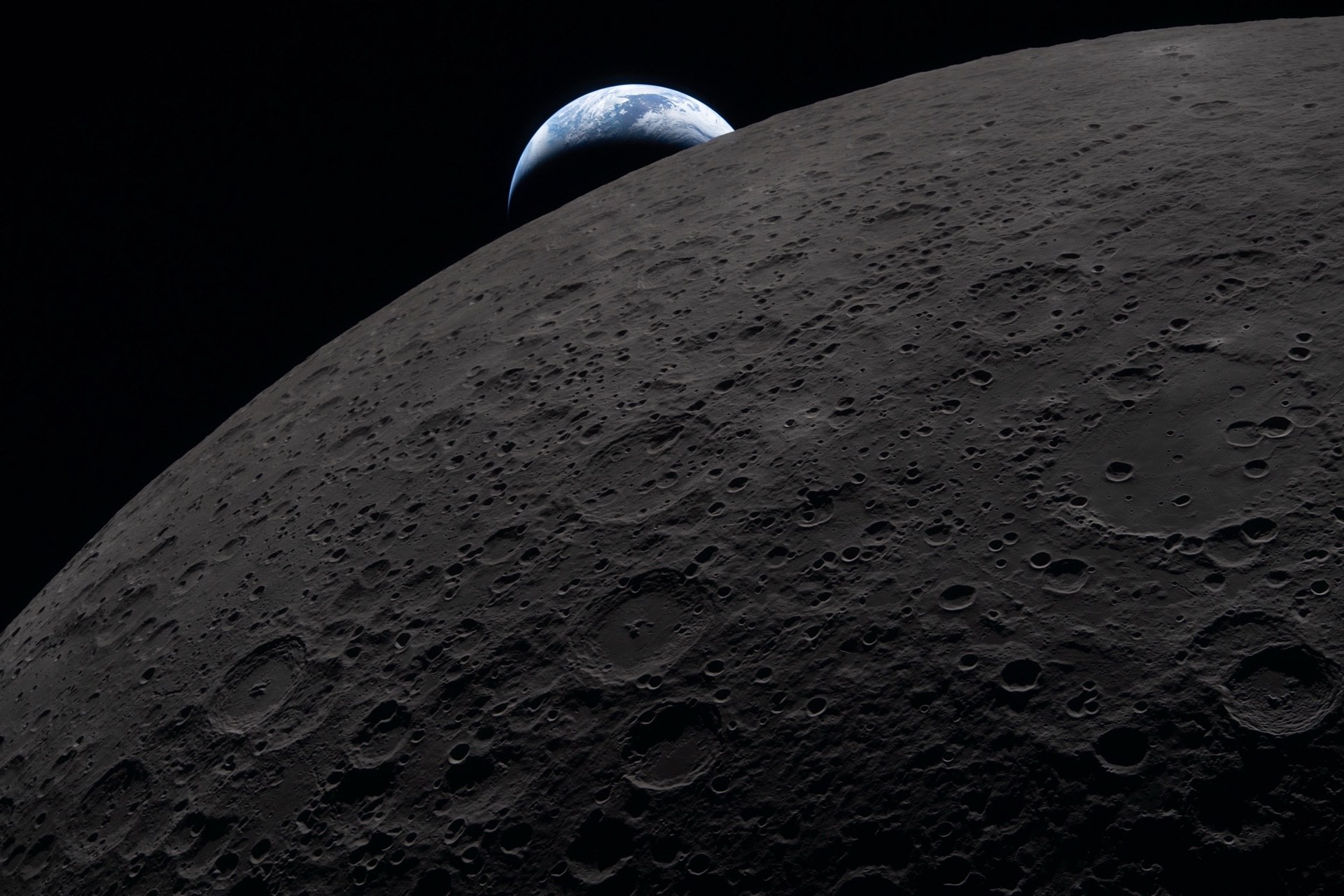
Photo Credit
Image courtesy of © NASAFifty-eight years after Earthrise, four astronauts watched the Earth set behind the Moon. Here is where the new Moon missions really stand: NASA’s Artemis, Europe’s engines, China’s Chang’e and crewed plans, India’s Chandrayaan and Gaganyaan, and SpaceX’s Starship, every date checked against the agencies’ and companies’ own pages in November 2026.
Four people behind the Moon
At 6:41 p.m. Eastern time on 6 April 2026, a camera at an Orion window caught the Earth sinking behind the cratered far side of the Moon: a muted blue crescent, clouds swirling over Australia, half of it already in night, over far-side ground parts of which no human eye had seen before. Apollo 8 brought home Earthrise in 1968. Fifty-eight years later Artemis II brought home Earthset, and it is no less humbling for being the sequel.
The flight began on 1 April 2026, when NASA’s SLS rocket lifted off from Launch Complex 39B at Kennedy Space Center at 6:35 p.m. Eastern time. Aboard the Orion capsule, which its crew named Integrity, were commander Reid Wiseman, pilot Victor Glover and mission specialist Christina Koch of NASA, with mission specialist Jeremy Hansen of the Canadian Space Agency. NASA logs the mission at 9 days, 1 hour and 32 minutes.
On 6 April the crew passed Apollo 13’s 1970 record of 248,655 miles from Earth, and Orion went on to about 252,756 miles (406,770 km), the farthest any people have travelled, after passing about 4,067 miles above the surface. Behind the Moon they watched the Sun vanish for nearly an hour, an eclipse that lasts minutes from Earth, with Venus and Saturn either side of the dark disc. They splashed down off San Diego on 10 April, after 695,081 miles.
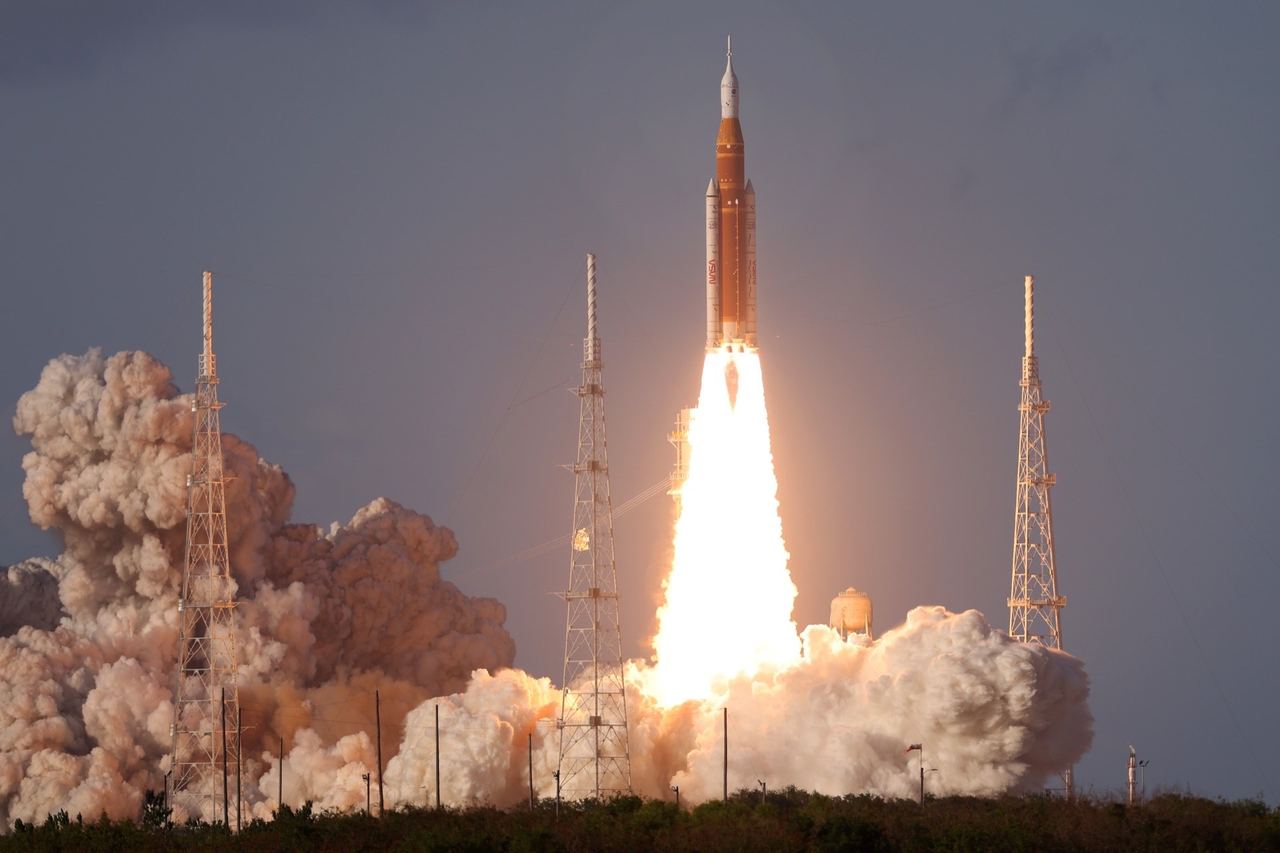
Photo Credit
Image courtesy of © NASA/Michael DeMockerA rehearsal in Earth orbit
The next flight will not land. Under NASA’s plan of 23 October 2026, Artemis III becomes a 14-day crewed test flight in low Earth orbit in 2027. Commander Randy Bresnik, pilot Luca Parmitano of the European Space Agency (ESA) and mission specialists Frank Rubio and Andre Douglas will dock Orion with test versions of both commercial landers: Blue Origin’s Blue Moon Mark 2 and SpaceX’s Starship Version 3.
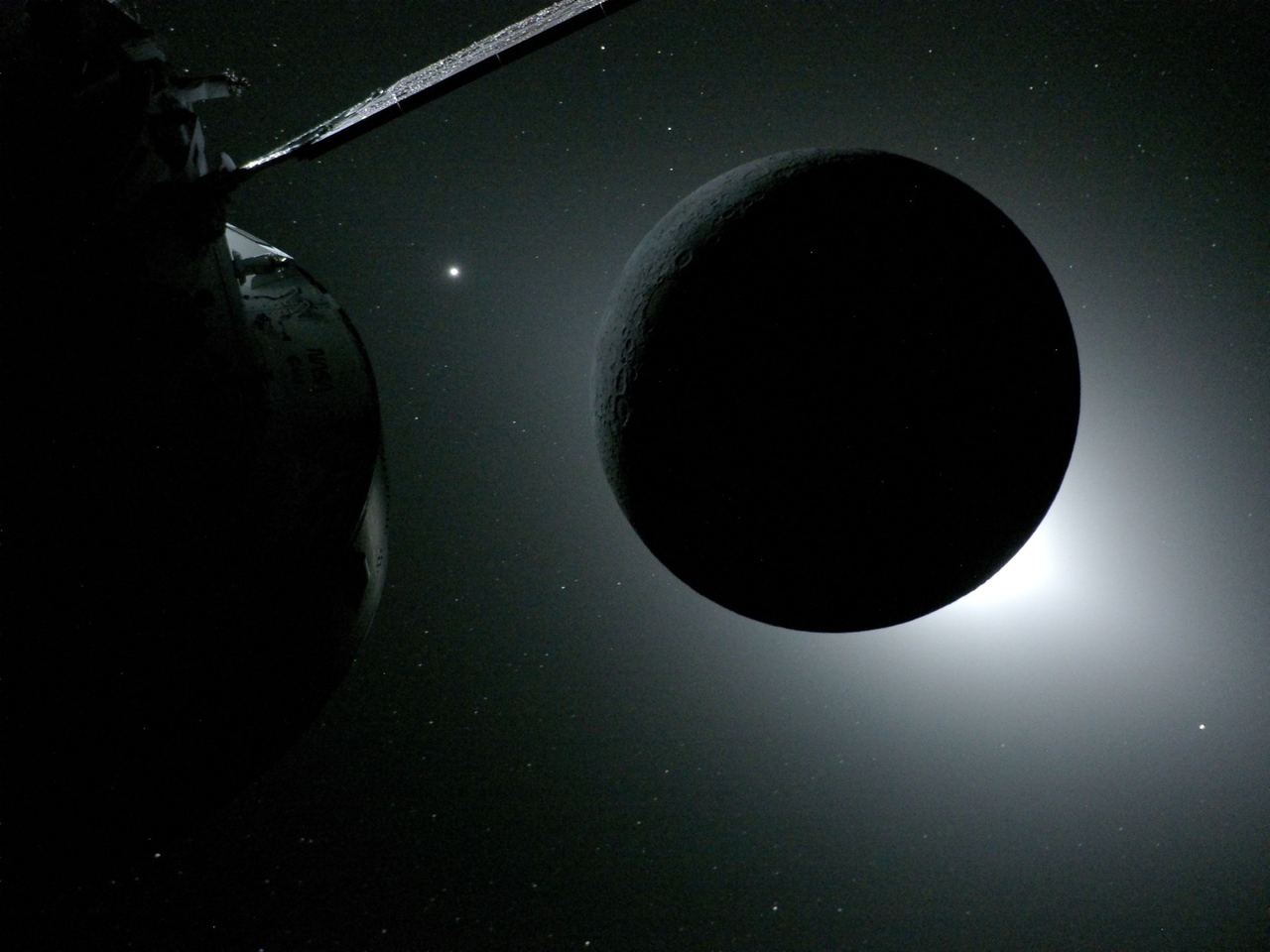
Photo Credit
Image courtesy of © NASABlue Moon goes up first, to a circular orbit about 273 miles high, where it can wait up to 30 days. Orion follows on SLS, docks, and the crew spends about two days inside the lander testing its cabin, controls and life support. Then Orion docks with a Starship test article for up to two hours; nobody goes aboard. Up to five more days of tests follow before splashdown off California. Call it a test drive in the car park before the long road.
“Every piece of this mission in Earth orbit is designed to reduce risk before we put astronauts back on the Moon,” says Jeremy Parsons, NASA’s Artemis program manager. The first landing is now Artemis IV, near the south pole in 2028, with Artemis V that year too; NASA calls Mars “our horizon goal for human exploration”. Starship made its first orbital flight on 28 September 2026, deploying 26 Starlink satellites.
Europe already rides on every Orion. The European Service Module, built by European industry led by ESA, with 13 member states and over 100 suppliers, provides power, propulsion, thermal control, air and water; the first two flew on Artemis I and II. Parmitano, an Italian Air Force test pilot with 366 days in space and six spacewalks, will share the most complex manoeuvres. “As a test pilot, this is truly a dream mission,” he says.
Call it a test drive in the car park before the long road.
Many roads to the south pole
China Manned Space Agency’s target is to land Chinese astronauts on the Moon before 2030, with a Long March 10 rocket, a Mengzhou crew ship and a Lanyue lander. Tests completed include two Mengzhou abort tests, a Lanyue landing-and-takeoff test, and a tethered firing and a low-altitude demonstration flight of Long March 10. Closer to home, Shenzhou-23 lifted off for Tiangong on 24 May 2026, one of its crew planned for a year-long stay.
The robots go first. Chang’e-6 brought home 1,935.3 grams from the far side’s Apollo Basin in 2024, the first samples ever taken there. Chang’e-7, bound for the south pole with an orbiter, lander, rover and relay among its parts, was moved to the pad at Wenchang in August; on 23 August a notice on the China National Space Administration (CNSA) website said it could not fly in this year’s window. No new date has been published.
Photo Credit
Image courtesy of © NASAIndia’s Chandrayaan-3 set its Vikram lander down near the south pole on 23 August 2023, making India the fourth country to land on the Moon and the first near the southern polar region. On 2 September it relit its engines and hopped about 50 cm, a small jump that rehearsed the lift-off a sample return needs. Chandrayaan-4, a sample return, was approved in 2024; ISRO says Gaganyaan’s first uncrewed flight, G1, is “targeted for launch in 2026”.
Others keep their own rhythm. Japan’s SLIM landed on 20 January 2024 about 55 m from its target, inside its 100 m goal, though it came to rest at an unplanned angle with its solar cells facing west: precision of a very particular kind. In low orbit, Roscosmos’s Soyuz MS-29 left Baikonur on 14 July 2026 with cosmonauts Pyotr Dubrov and Anna Kikina and NASA’s Anil Menon, for about eight months aboard.
Our advice: treat every date here as a target, not a promise; launch windows move for weather and hardware, and the agencies say so themselves. Follow nasa.gov/artemis, esa.int, isro.gov.in, cnsa.gov.cn, en.cmse.gov.cn and spacex.com, and watch launches live on NASA+. To see SLS fly from Florida’s Space Coast, book only once NASA has posted a launch date, and keep the booking flexible.
Closer to home: Brighton
The University of Sussex’s Astronomy Centre studies the early Universe, observational cosmology and how galaxies form and evolve, and its researchers are active members of the Rubin Telescope’s LSST, Euclid and 4MOST. East of the city, the green domes of the former Royal Greenwich Observatory still stand at Herstmonceux, now the Observatory Science Centre, with stargazing evenings on its historic telescopes.
Why it's on our list
- Four people behind the Moon
- A rehearsal in Earth orbit
- Many roads to the south pole
Location
The map comes from Google Maps, which sets its own cookies once it loads.
More in depth
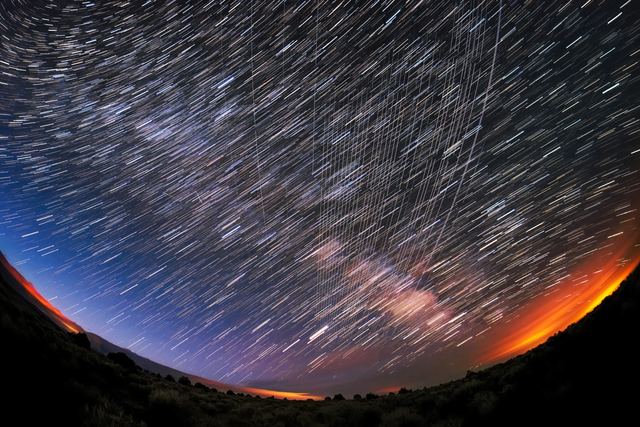 The ObservatoryPearls on a thread: the satellites that wired the skyStarlink, OneWeb, Amazon Leo and China’s networks: internet from orbit, and the night sky’s cost.
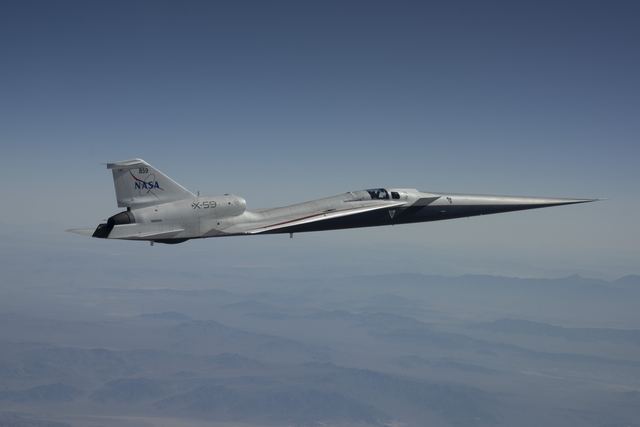 The ObservatoryLondon to New York in two hours? The long, quiet road back to supersonicConcorde’s legacy, NASA’s quiet X-59, Boom’s Overture and the hypersonic dreamers, by status.
 The ObservatoryEleven minutes, or a fortnight: the people who sell you the skySuborbital hops, private orbits, a stratospheric balloon: who flies, from where, and when.