Science
Robots, algorithms and the new medicine
Surgical robots, AI that reads scans, AlphaFold and new drugs: the gains, the limits, the questions.
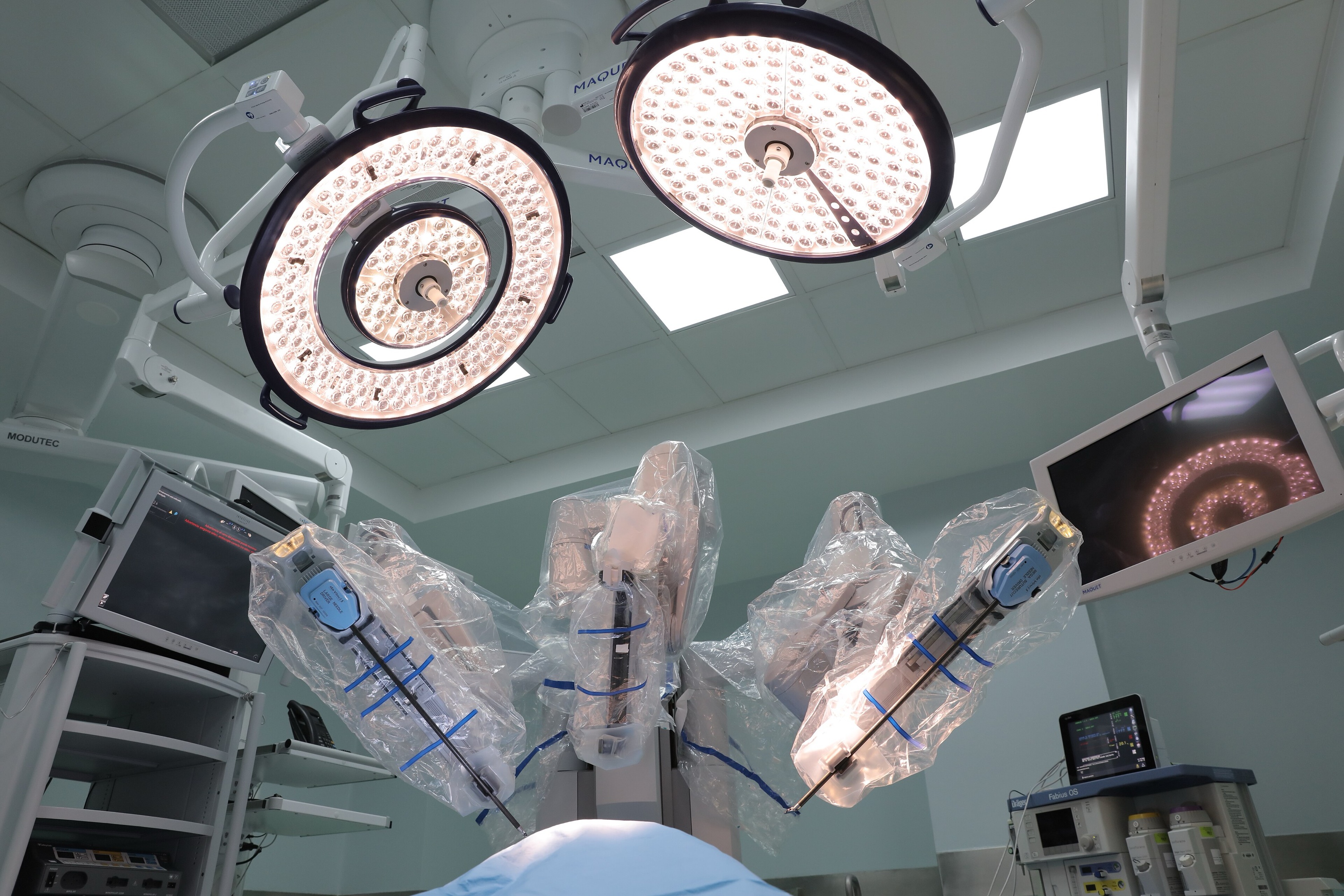
Photo Credit
Image courtesy of © Hospitalhoms, CC BY-SA 4.0, via Wikimedia CommonsOn an average day in 2026, surgeons around the world performed more than 10,000 operations through da Vinci robots, by the maker’s own count, while software quietly read mammograms and brain scans alongside them. Here is what robots and AI already do in medicine, what the evidence shows, and the questions every patient may one day want to ask.
The surgeon at the console
Robotic surgery is not a robot operating on its own. The surgeon sits at a console a few metres from the patient, looks into a magnified three-dimensional view of the operating field and moves a pair of hand controls. The system turns those movements into the motions of slender instruments passed through small incisions.
It does nothing the surgeon does not ask of it, which is the first answer to the question most patients have, and the reason the word “robot” is slightly misleading.
Intuitive, the Californian company behind the da Vinci, dominates the field. By 30 September 2026 it counted 12,094 da Vinci systems installed around the world, and in the third quarter of the year alone it placed 546 more. Its da Vinci procedures grew by about 14 per cent on a year earlier; its chief executive told investors that customers performed, on average, more than 10,000 procedures a day.
At the end of 2025 the company marked 20 million patients treated with da Vinci since 1997.
The newest model, the da Vinci 5, was cleared by the US Food and Drug Administration in March 2024. It gives back something surgeons lost when they traded open hands for keyhole tools: a sense of touch. Optional Force Feedback instruments let the surgeon feel the push on tissue, and in Intuitive’s own preclinical trials surgeons using them exerted up to 43 per cent less force.
Intuitive says the system has more than 10,000 times the computing power of the da Vinci Xi before it.
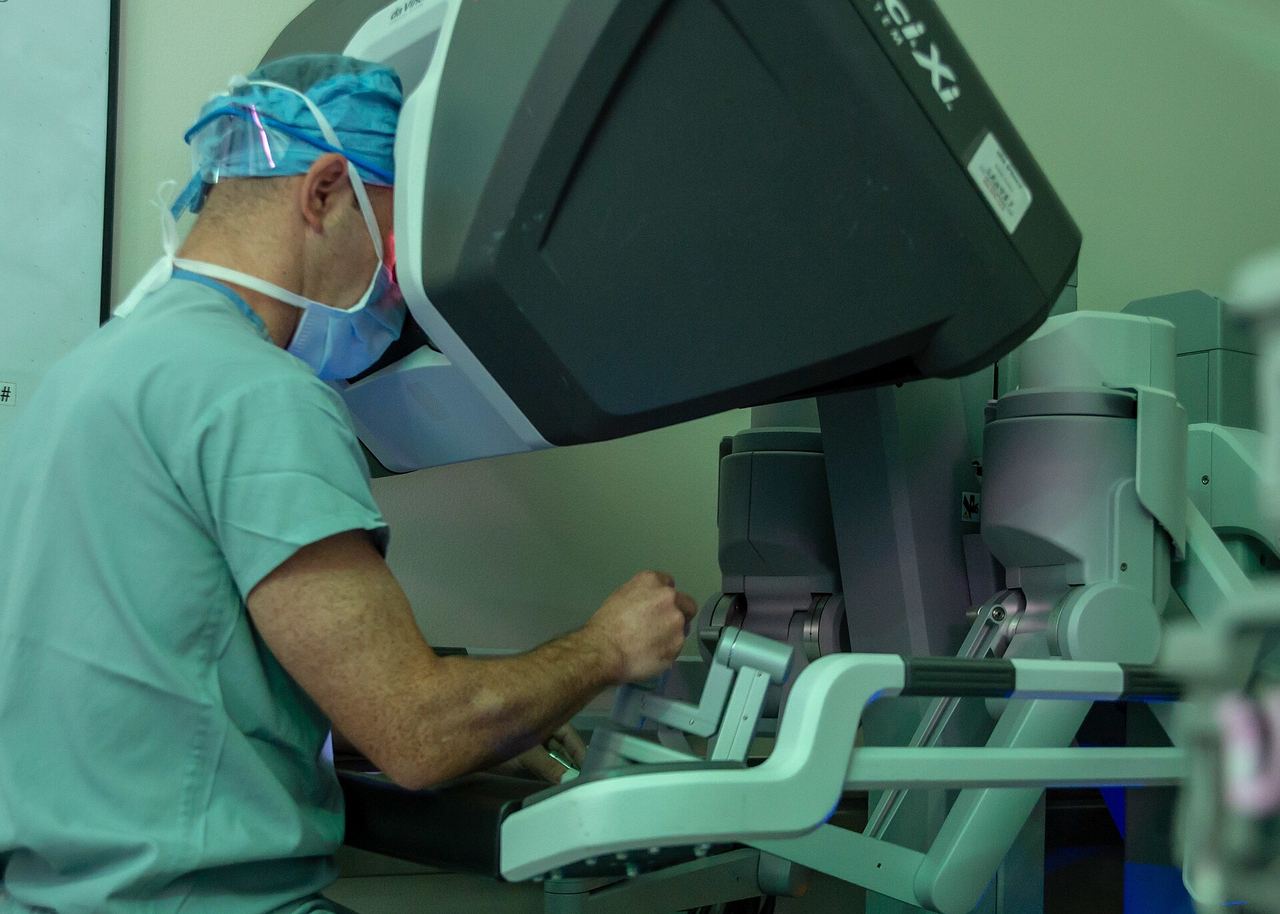
Photo Credit
Image courtesy of © U.S. Navy Medicine, public domain, via Wikimedia CommonsThe challengers: Versius and Hugo
Britain’s contender comes from Cambridge, and it is built to travel. CMR Surgical’s Versius is modular: each arm stands on its own wheeled cart, so a hospital can move it between theatres. NHS early adopters include Milton Keynes University Hospital, Manchester Royal Infirmary and the Western General in Edinburgh, and Wales has used it in its national robotic surgery programme.
In January 2026 it gained CE and UKCA marks for children’s surgery, and in March CMR said more than 45,000 patients had been treated with Versius around the world.
America is now open to both challengers. In December 2025 the FDA cleared CMR’s Versius Plus for gallbladder removal in adults, and CMR began its US launch in March 2026. The same month as the Versius clearance, Medtronic announced FDA clearance of its Hugo system for urological surgery, including removal of the prostate, kidney and bladder; Hugo had already been used in more than 30 countries.
For hospitals, a choice of makers is welcome news in a market one company has long led.
What the evidence says about robots
The honest answer is more modest than the brochures. A 2023 review in Surgical Endoscopy pooled 45 randomised trials covering 7,364 patients across abdominal and pelvic operations: death and complication rates were largely similar for robotic and conventional keyhole surgery, while robotic operations often took longer and cost more. Some trials found benefits in recovery and in how patients felt afterwards.
The robot is a tool whose value depends on the operation and the hands at the console.
Britain’s ROLARR trial of rectal cancer surgery, with 471 patients, makes the point precisely. Robotic surgery did not clearly reduce the chance of converting to open surgery, it cost about £980 more per patient even before the price of the robot itself was counted, and long-term survival was the same in both groups. None of this makes robots a mistake.
It means the gains are real in some operations, unproven in others, and worth asking about in yours.
The machine that reads the scan
Most of the AI that actually reaches patients is quieter than a robot. It reads images. The FDA keeps a public list of AI-enabled medical devices it has authorised, and an analysis of its March 2026 update counted 1,163 radiology devices, about three-quarters of the total. The FDA itself warns that the list is not comprehensive, since it is built largely by searching device summaries for AI terms.
The direction is clear all the same: the radiologist’s reading room is where AI has arrived first.
The strongest evidence so far comes from breast screening. In Sweden’s MASAI trial, a randomised study of 105,934 women published in The Lancet Digital Health in February 2025, screening supported by AI found 29 per cent more cancers than standard reading by two radiologists, and cut the radiologists’ reading workload by 44 per cent. In absolute terms that was 6.4 cancers found per 1,000 women against 5.0.
The trial’s main measure, cancers that appear between screens, awaits a two-year follow-up.
Britain is now testing the idea at scale. The EDITH trial, announced in February 2025 with £11 million through the National Institute for Health and Care Research, involves nearly 700,000 women at 30 screening sites. Today two specialists read every mammogram; EDITH asks whether one reader working with AI can do the job as well, freeing radiologists for other patients.
Its results are not yet published, and the trial exists precisely because hope is not the same thing as evidence.
Ask your surgeon how many robotic operations they have done, not which robot the hospital owns.
In stroke care, where minutes matter, Brainomix’s e-Stroke software helps doctors read brain scans and share them with specialists elsewhere. In December 2022 the UK government reported that, across stroke networks using it, the time from arrival to transfer for treatment fell from 140 to 79 minutes, and the share of patients regaining independence in daily life rose from 16 to 48 per cent.
It was an early analysis rather than a controlled trial, a distinction worth keeping in mind with every headline here.
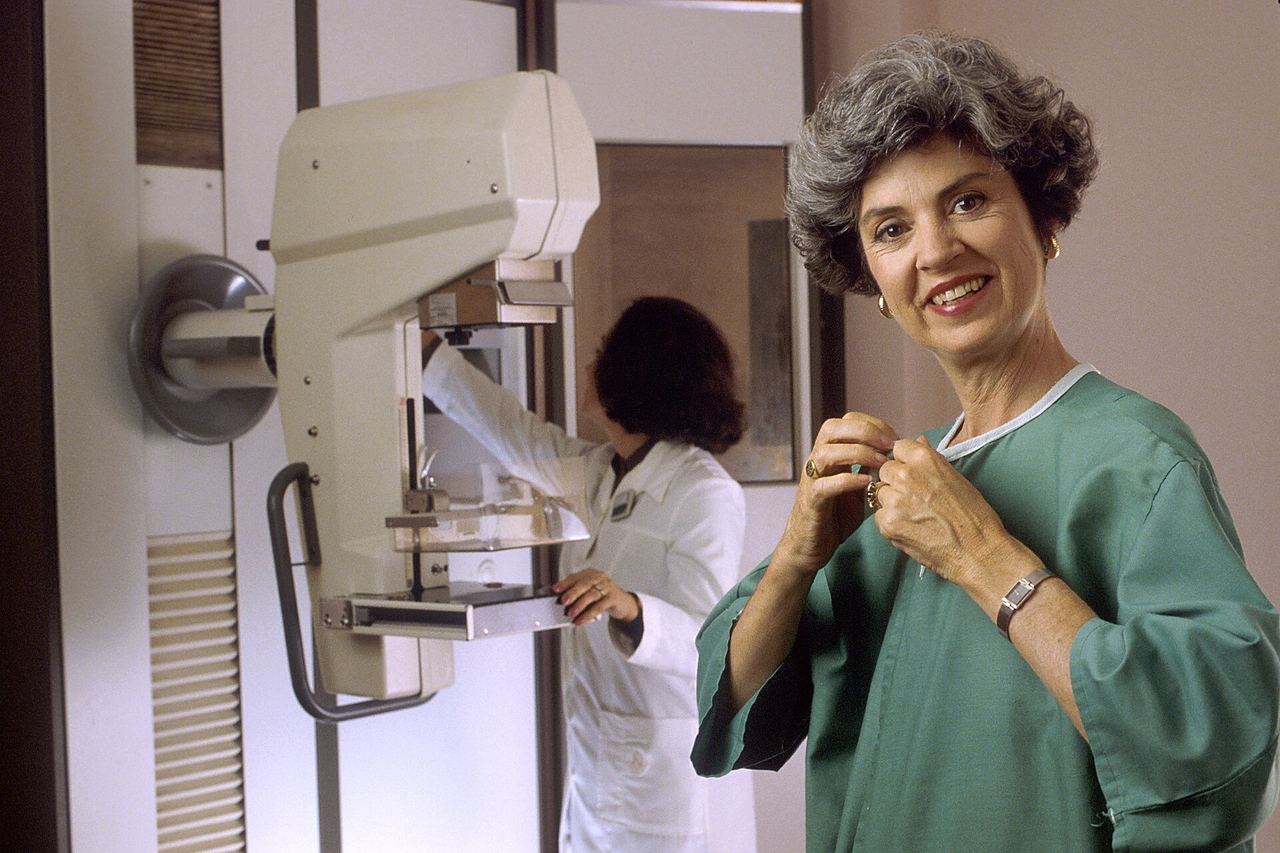
Photo Credit
Image courtesy of © Bill Branson, National Cancer Institute, public domain, via Wikimedia CommonsAI is also listening. Ambient scribes use speech technology, and increasingly large language models, to turn a consultation into notes and letters while the doctor looks at the patient rather than the keyboard. NHS England published guidance on them in April 2025, and it is careful: clinicians must review and approve what the software writes before anything is acted upon.
The doctor’s eyes go back to the patient; the doctor’s signature stays on the notes.
From protein folding to new medicines
In 2024 the Nobel Prize in Chemistry went half to David Baker, for computational protein design, and half jointly to Demis Hassabis and John Jumper of Google DeepMind, for protein structure prediction. Their AlphaFold predicts the three-dimensional shape of a protein from its chain of amino acids.
Over some 60 years, biologists had determined the structures of more than 190,000 proteins by experiment; the AlphaFold Database, run with EMBL’s European Bioinformatics Institute, holds 200 million predictions: six decades of painstaking laboratory work, outnumbered roughly a thousand to one.
Shape matters because a drug works by fitting a protein, like a key in a lock. Knowing the lock does not make the key, and the most closely watched test of AI drug design so far is rentosertib, from Insilico Medicine, which the company describes as the first investigational drug whose target and molecule were both found with generative AI.
Its 12-week phase 2a trial in 71 patients with idiopathic pulmonary fibrosis, a scarring disease of the lungs, was published in Nature Medicine in June 2025.
On the highest dose, patients’ forced vital capacity, a measure of how much air the lungs can expel, rose by an average of 98.4 ml, against a fall of 20.3 ml on placebo, and side effects were mostly mild to moderate. It is an encouraging early result in a small trial, not a cure: larger studies must follow before any regulator decides. AI can shorten the search for a medicine; it cannot yet skip the slow, careful work of proving it safe.
The questions worth asking
Bias is the first. In 2019 a study in Science by Ziad Obermeyer and colleagues examined an algorithm widely used in American hospitals to decide who received extra care. It used past health spending as a stand-in for illness, and because less had been spent on Black patients with the same conditions, it judged them healthier than they were.
Correcting the bias would have raised the share of Black patients flagged for extra help from 17.7 to 46.5 per cent. The data had learned the inequality, and repeated it.
Error and accountability follow. The World Health Organization’s 2024 guidance on large AI models in health warns that they can produce false, biased or incomplete statements, and that doctors and patients alike can fall into “automation bias”, trusting the machine because it is a machine. When software errs, who answers?
NHS England’s own guidance on AI scribes leaves the treating organisation responsible for the patient’s care, and calls the question of liability “complex and largely uncharted”.
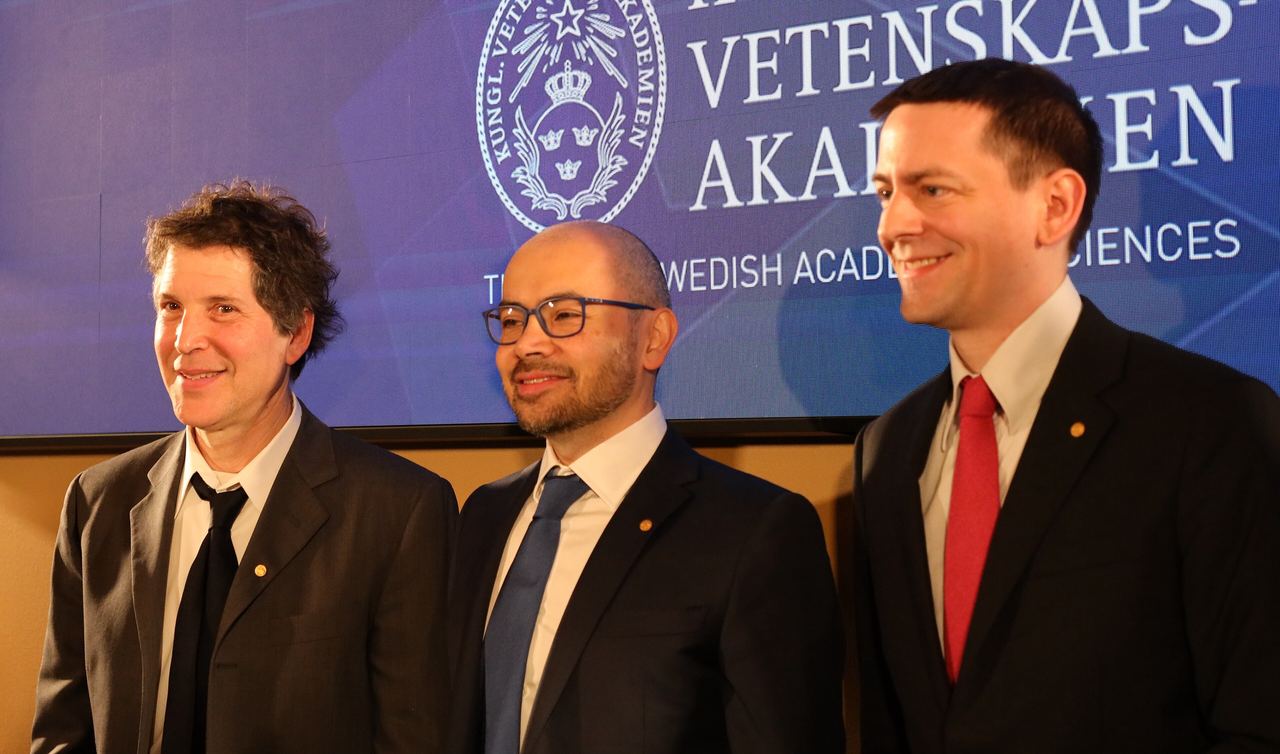
Photo Credit
Image courtesy of © Jennifer 8. Lee, CC BY-SA 4.0, via Wikimedia CommonsThen there is cost, and with it fairness. If a robotic operation costs more without improving the result, every extra pound is a pound not spent elsewhere; if an AI reader lets one radiologist do the work of two, the savings could reach patients who are still waiting. Which of those futures arrives depends less on the machines than on the trials that test them and the people who decide how they are used.
What it means for patients
For now, the practical advice is simple. If a robotic operation is offered, ask how many the surgeon and the hospital have performed, and what the evidence shows for your procedure in particular. If AI has helped to read your scan, it is reasonable to ask how it was checked by a person. The best of this technology is not replacing doctors. It is giving them sharper eyes, steadier hands and, if the trials deliver, more time.
Why it's on our list
- How robotic surgery really works
- Da Vinci, Versius and Hugo
- AI in breast screening and stroke care
- AlphaFold and AI-designed drugs
- Bias, error, accountability and cost
Location
The map comes from Google Maps, which sets its own cookies once it loads.
More in depth
 ScienceAI and wildlife: the machines that listen for the wildCamera traps, whale codas, ranger dashboards and satellites: how AI is changing conservation.
 ScienceShould we edit life? The ethics of genetic engineeringFrom Dolly to CRISPR cures, gene drives and mammoths: the questions behind the science.
 ScienceTraditional, alternative and modern medicine: where they meetArtemisinin, aspirin and acupuncture: what tradition gave medicine, and what the evidence says.