The Observatory
Shift work for humanoids: who is really on the factory floor
Atlas, Figure, Digit, Apollo, Optimus and NEO: where each robot works and what it can do today.
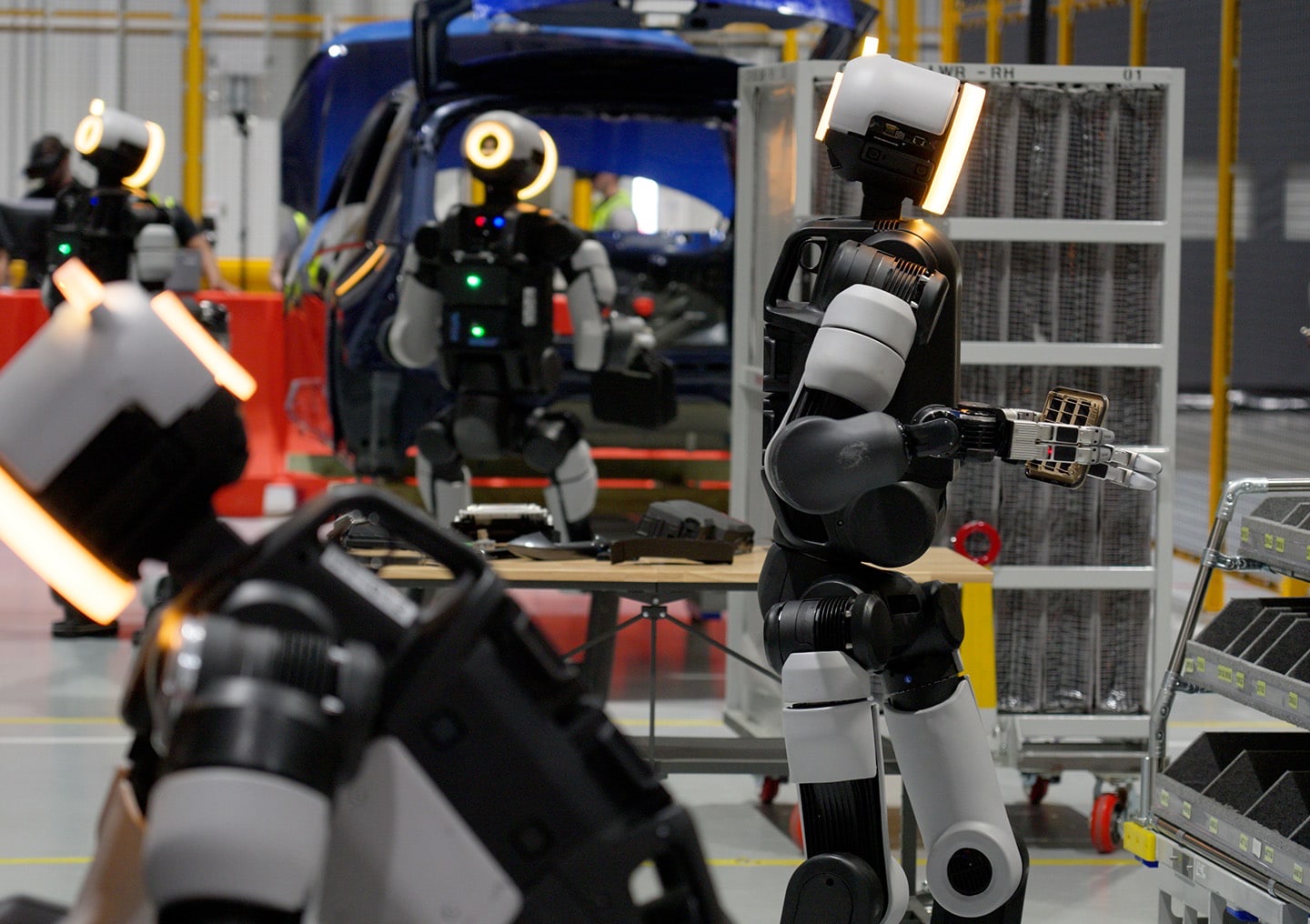
Photo Credit
Image courtesy of © Boston DynamicsHumanoid robots have left the trade-show stage for car plants, warehouses and a few test homes. Which ones are working, which are being trained and which are only announced? Here is each robot’s status, where it works, and what its maker says its hands, eyes and learning can do, checked against the companies’ own releases and filings in November 2026.
On the line and in the warehouse
Outside Savannah, Georgia, Atlas robots are learning the car trade. Boston Dynamics opened its Robotics Metaplant Application Center on Hyundai Motor Group’s Metaplant America campus in September 2026, a training centre where the robots sort and order parts into the sequence an assembly line needs. Status: in testing. The company says all its 2026 Atlas deployments went to this centre and to Google DeepMind.
Figure has the longest factory record among the newcomers. In November 2025 it reported that its Figure 02 had spent 11 months at BMW’s Spartanburg plant in South Carolina, running 10-hour shifts on weekdays, loading sheet-metal parts onto a welding fixture to a 5 mm tolerance every 84 seconds, and contributing to the production of more than 30,000 BMW X3s. Status: a completed deployment.
Figure also admitted that the forearm was its top hardware failure point at BMW, and redesigned the wrist electronics for its successor. It is a rare company blog that includes a confession. Figure 03 arrived in the same plant in June 2026 to demonstrate logistics work (status: in testing), and by April 2026 Figure said its own factory had delivered more than 350 of them, building one an hour.
Agility Robotics’ Digit is the most established warehouse worker. Status: in use. In October 2026 Agility said Digit had moved more than 100,000 totes for GXO in Georgia under an agreement that began in June 2024, and had logged more than 65,000 hours of real work. It also lists the industrial supplier Schaeffler, Toyota Motor Manufacturing Canada and the e-commerce company Mercado Libre as customers.
Apptronik’s Apollo is in pilots. In February 2026 the company named Mercedes-Benz, GXO Logistics and Jabil as partners and said Apollo moves components, sorts items and assembles kits alongside people, powered by Google DeepMind’s Gemini Robotics. In July 2026 UBTech said its distributor for the German-speaking countries had bought several dozen Walker S2 robots, some working in ROSSMANN logistics centres in a long pilot.
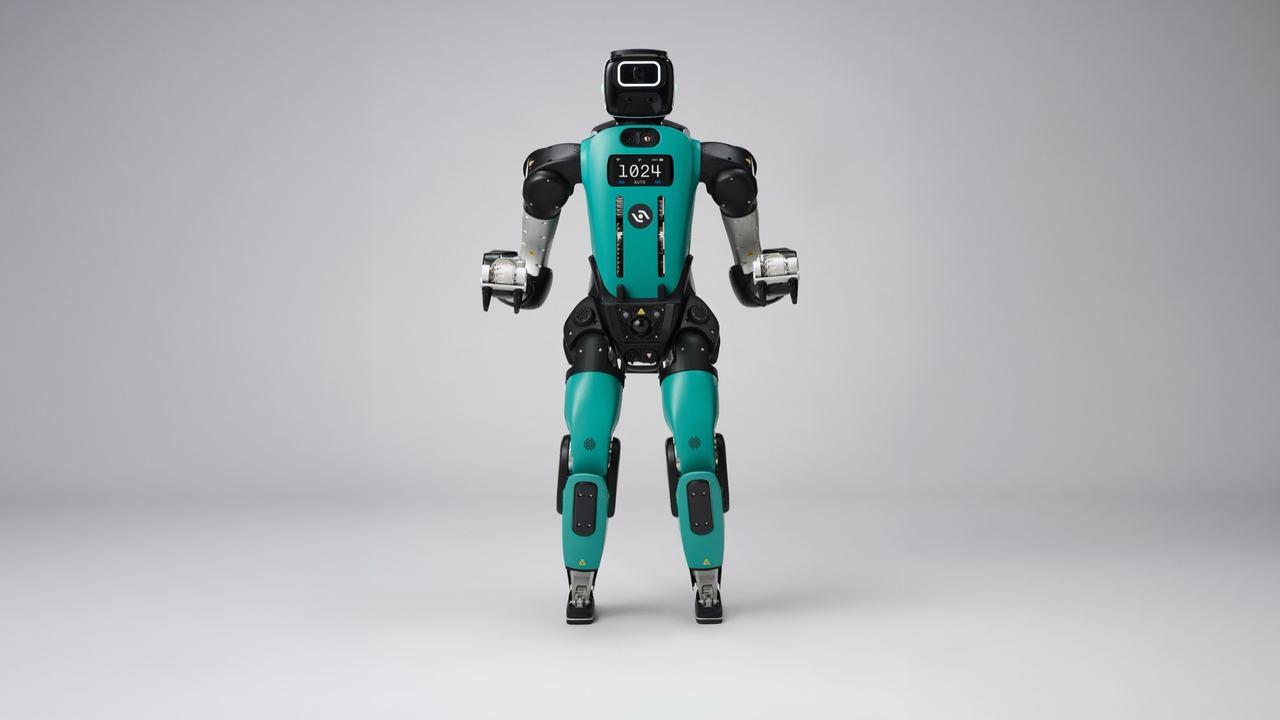
Photo Credit
Image courtesy of © Agility RoboticsTesla’s Optimus has moved from stage to factory. In its second-quarter 2026 update Tesla said the first robots from its new Fremont line would go to an “Optimus Academy” to collect training data. Its third-quarter update, published in October 2026, says production began on high-volume lines and calls them “the first production-quality bots that we have manufactured”. Status: early production; we found no external deliveries published.
It is a rare company blog that includes a confession.
In China, XPeng announced from Guangzhou on 8 September 2026 that its IRON humanoid had walked off its production line, with more than 80 per cent of core processes automated; mass production is targeted for the end of 2026 (status: announced). Unitree lists its G1 humanoid at $13,500 on its own shop, which makes it one of the very few humanoids you can simply order online today.
Hands, eyes and learning
The hand is where the money goes. Figure says each fingertip of Figure 03 can feel forces as small as three grams, and each palm carries its own camera. 1X gives its NEO 22 degrees of freedom per hand, waterproof to IP68; XPeng gives IRON 21 per hand and 76 across the body; Atlas has 56 in all. Every figure here is the maker’s own, and none has yet been tested against the others on the same job.
Learning is the other promise. Figure describes its Helix 02 model as “pixels-to-actions”, steering hands, arms, torso and feet from what the cameras see, and adjusting when a part arrives out of place. Boston Dynamics says a task learned by one Atlas can be copied across the whole fleet. UBTech fits Walker S2 with stereo colour cameras in its head and says it can change its own battery in three minutes.
These are claims, carefully worded, and worth reading as such. A robot that learns from video still needs a human to set up its cell, check its work and fix its forearm, as Figure’s own account shows. The honest picture in November 2026 is of capable apprentices on long trials, not of finished workers, and the companies, to their credit, mostly describe them that way.
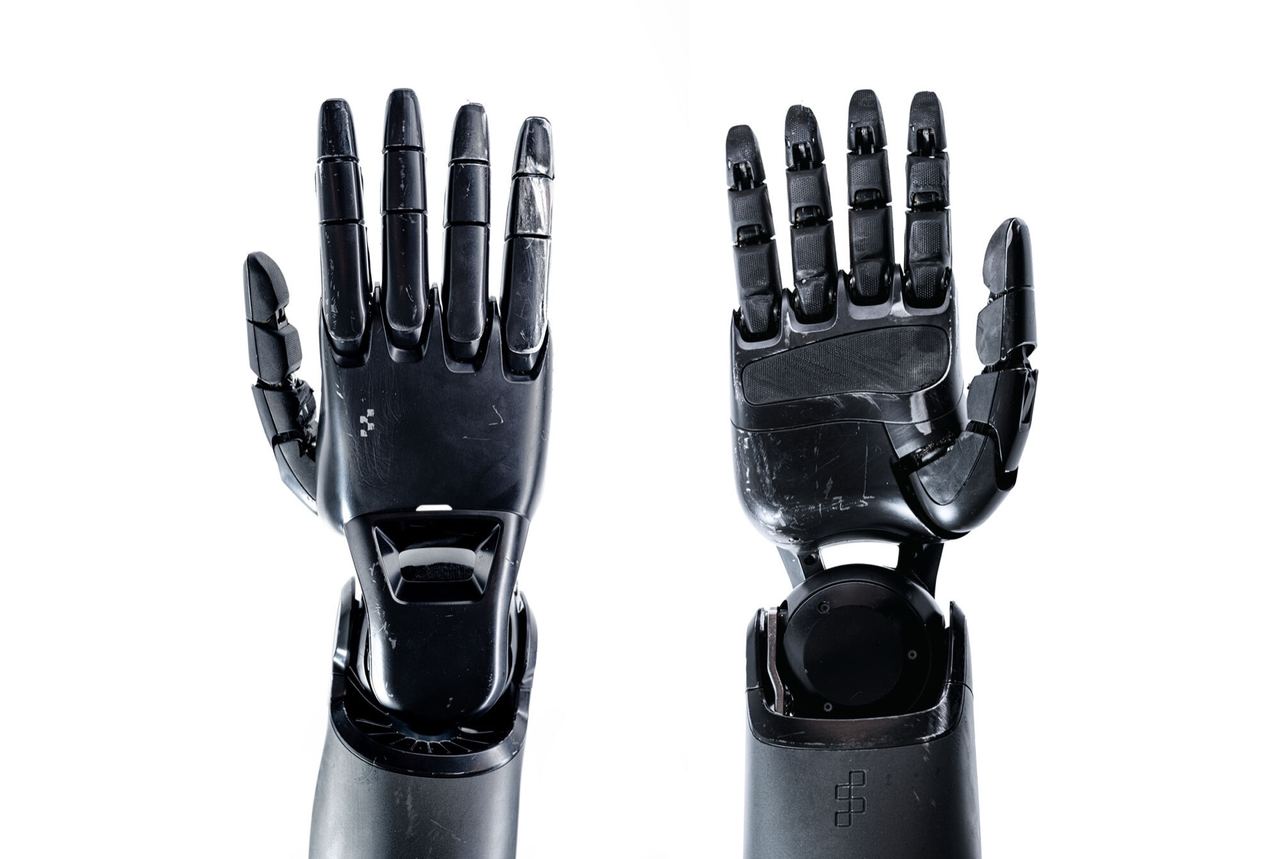
Photo Credit
Image courtesy of © Figure AIThe first robots for the home
The home is the hardest workplace of all. 1X opened orders for NEO in October 2025: $20,000 for Early Access, or a $499 monthly subscription that ships later, with deliveries mainly in the US in 2026. Its factory update says the first robots off the line are being tested in staff homes first. For chores NEO does not know, 1X says, you can book a human “1X Expert” to guide it remotely.
Our advice: read every robot story with its status in mind. In use means paid work at a named site; in testing means a pilot or training centre; announced means a date on a press release. On jobs and safety, the makers describe their robots taking on heavy, repetitive tasks such as moving totes and parts, and Agility designed Digit 5 specifically to work safely close to people.
Why it's on our list
- On the line and in the warehouse
- Hands, eyes and learning
- The first robots for the home
Location
The map comes from Google Maps, which sets its own cookies once it loads.
More in depth
 The ObservatoryThe robot will see you in 2027: what the makers promise, and whenFactory dates, home dates, prices and rent-or-buy: each maker’s published roadmap, dated.
 The ObservatoryWhen will robots become sentient? The honest answer is a questionIntelligence is not feeling: what Tesla, Hinton, Bengio, Kurzweil, Sheffield and Cambridge say.
 The ObservatoryTwenty minutes in the dark: the South Downs’ starlit skiesEngland’s second dark sky reserve, its hilltop sites, a royal observatory and the February festival.