The back story
The Royal Pavilion below stairs: kitchens, cooks and a king’s tunnel
Behind the domes: the Great Kitchen, a 100-dish banquet, a tunnel and the rooms visitors rarely see.
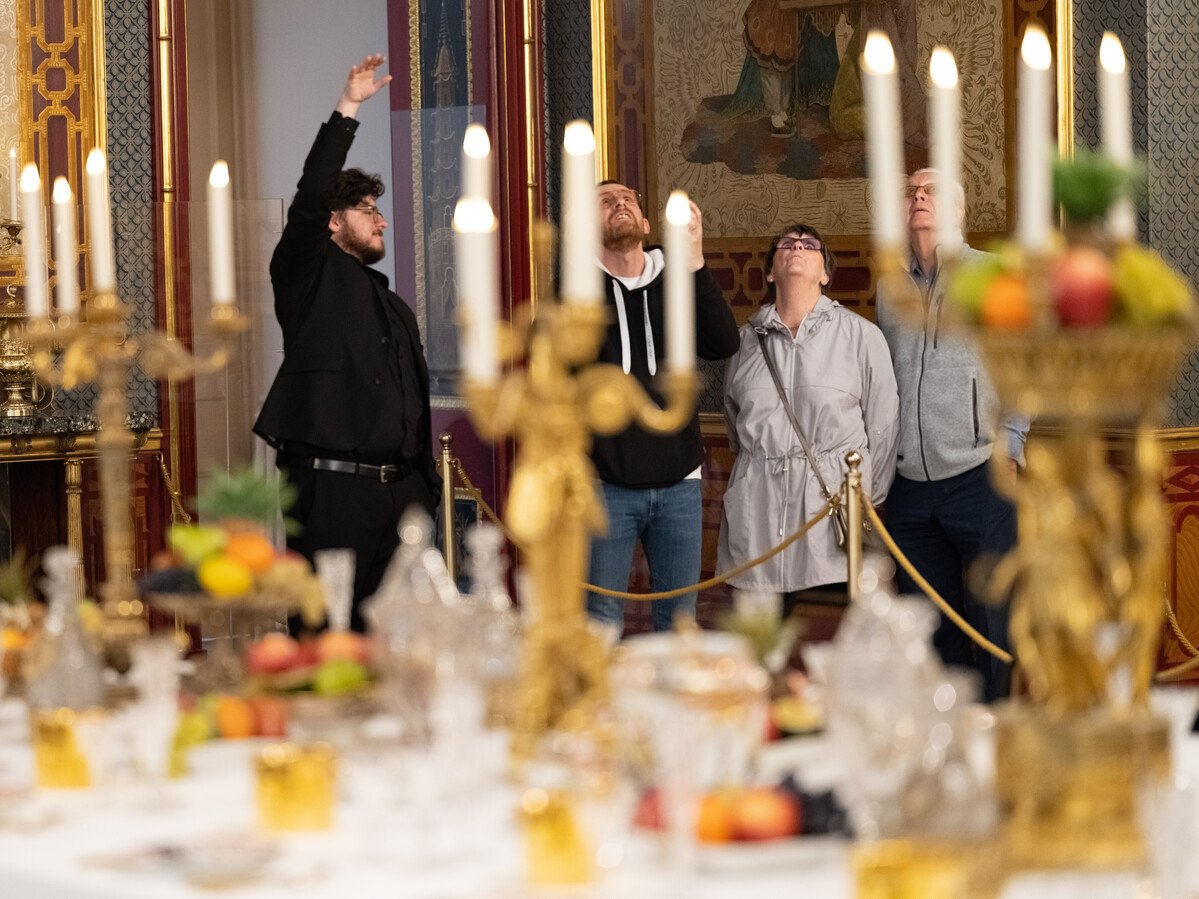
Photo Credit
Image courtesy of © Royal PavilionEveryone photographs the Royal Pavilion’s domes. Fewer people ask how the place actually worked: who cooked for a king with an appetite to match his palace, how the servants moved about unseen, and what happened to the building after the party ended. Below stairs is where the Pavilion keeps its best stories.
Between 1815 and 1823 John Nash turned a modest seaside villa into the fantasy of domes and minarets that now stands in the middle of Brighton. The state rooms got the dragons and the chandeliers. But some of the most remarkable work went into rooms that guests were never meant to see.
A kitchen built to impress
The Great Kitchen was among the first rooms to be completed, and it was one of the most technologically advanced kitchens of its day. Water was pumped in from a nearby well, a steam table kept dishes hot, and a huge smoke jack over the open fire turned five spits of roasting meat at once. Holding up the lofty ceiling are cast-iron columns crowned with painted copper palm leaves, a touch of the tropics even below stairs.
The gleaming copper pans on display today came from the Duke of Wellington’s London house. For a big banquet, the kitchen might prepare up to seventy separate dishes.
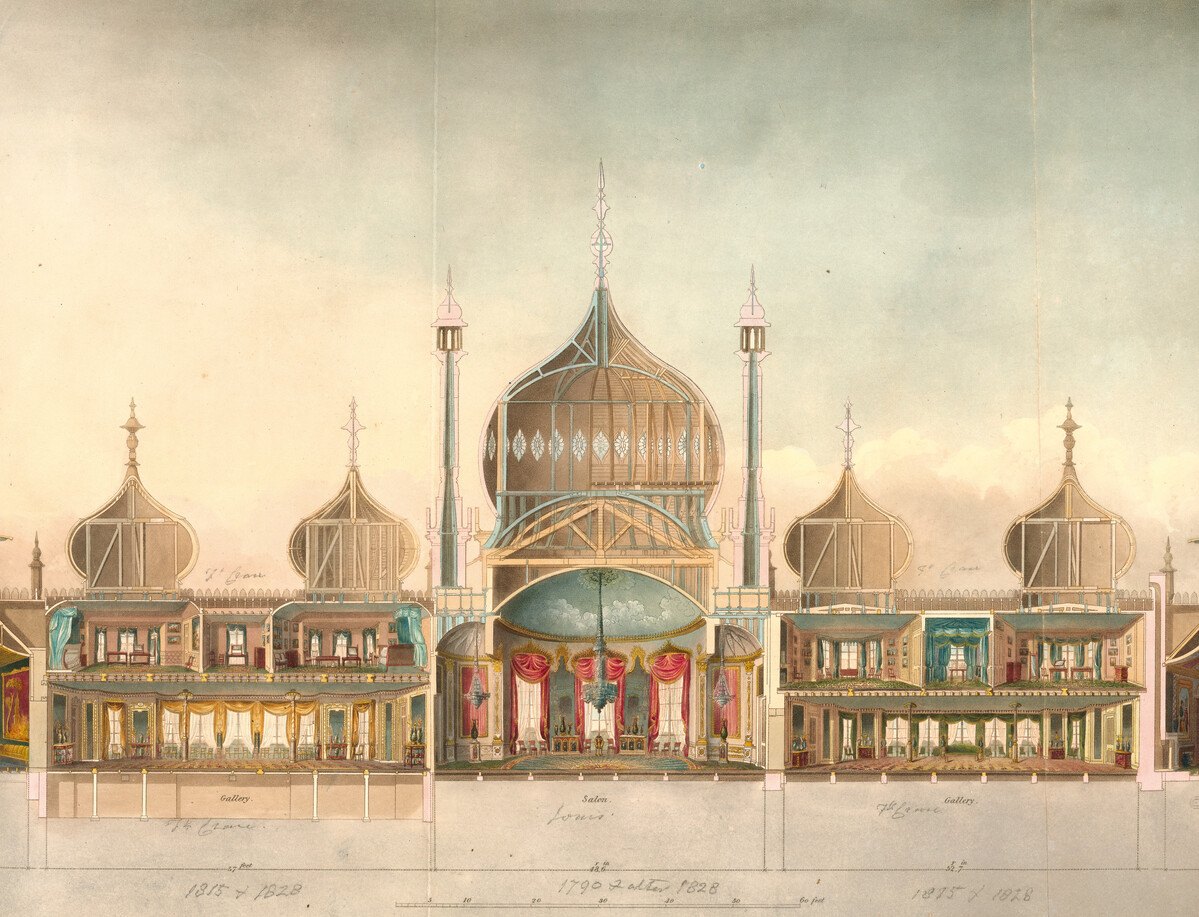
Photo Credit
Image courtesy of © Royal PavilionThe banquet
On 18 January 1817 it was asked for rather more. The Prince Regent entertained Grand Duke Nicolas of Russia, and the French chef Marie-Antoine Carême, the most famous chef of his age, produced a menu of over a hundred dishes: sturgeon’s head in champagne, partridge in jelly, pigeons in crayfish butter, a terrine of larks, rose ice cream, and a model of the Pavilion made in pastry.
Carême came to work for the prince in 1816 and went home to France the following year. A copy of that famous menu now hangs in the Great Kitchen, and is worth reading slowly, preferably after lunch.
Servants out of sight
A palace for pleasure needs an army of servants, and the Pavilion was designed so that guests hardly saw them. A warren of basement rooms and passages let staff move through the building unseen. Later a tunnel was dug from the basement to the royal stables and riding school, now Brighton Dome, so that the king, by then self-conscious about his size, could move around his estate without being stared at. The old story that it led to Mrs Fitzherbert’s house is a myth.

After the king
George IV’s successors were less enchanted. Queen Victoria found the Pavilion cramped and too public, and expecting it to be demolished, she had its decorations and furniture stripped out for other royal homes. In 1850 the town bought the building for £53,000. Victoria later sent many pieces back, in 1864 and again in 1899, and the long work of putting the rooms together again has continued ever since.
The kitchen was one of the first rooms Nash finished. A king who entertained like George IV knew where his priorities lay.
The Pavilion’s strangest chapter came in the First World War. From December 1914 to January 1916 it was a hospital for wounded Indian soldiers, and then, until 1920, a hospital for British soldiers who had lost limbs.
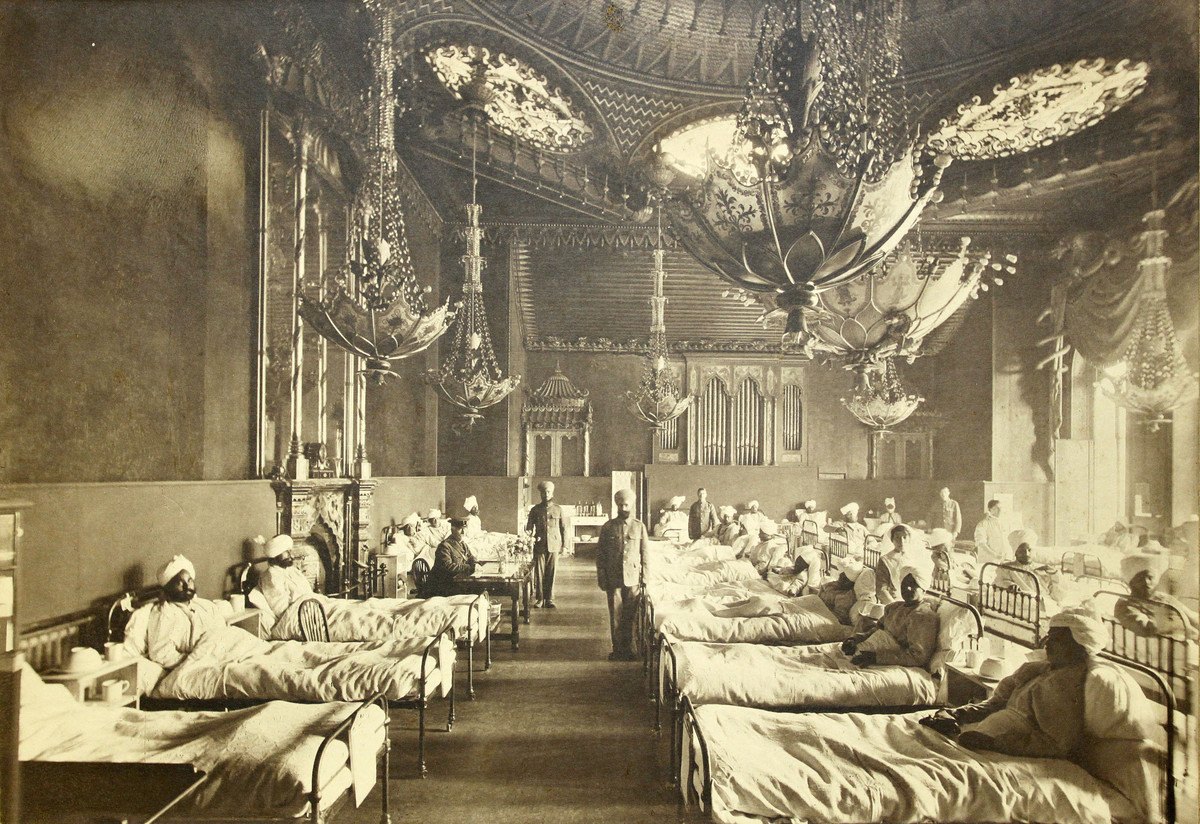
Photo Credit
Image courtesy of © Royal PavilionFire, storm and a garden
The twentieth century tested the building again. In 1975 an arson attack badly damaged the Music Room, which stayed closed for eleven years while it was painstakingly restored. In the great storm of 1987, a stone ball fell from a minaret through the newly restored ceiling.
Since October 2020 the Pavilion has been run by a charitable trust, the Royal Pavilion & Museums Trust, while the city still owns the buildings and collections. The next big project is outside: ‘A Garden Fit for a King’, backed by the National Lottery Heritage Fund, is restoring John Nash’s Regency garden; the main works began on 10 November 2026 and are scheduled to finish in late 2027.
Seeing it for yourself
The Great Kitchen is part of the normal visit. To go further, the museum runs guided basement and tunnel tours on set dates, taking in the servants’ rooms, a Second World War air-raid shelter and the tunnel to the old stables, where a panel of the Dome’s original 1867 wallpaper survives. Tours are for over-12s, involve steep stairs and low ceilings, and must be booked ahead on the museum’s website.
Questions and answers
Can you see the Royal Pavilion kitchen?
Yes. The Great Kitchen, with its palm-tree columns and copper pans, is part of a normal visit.
Can you tour the Royal Pavilion basement and tunnel?
Yes, on guided tours on set dates; they are for over-12s, involve steep stairs and must be booked ahead.
How much did Brighton pay for the Royal Pavilion?
The town bought it from the Crown in 1850 for £53,000.
Why it's on our list
- A kitchen built to impress
- The banquet
- Servants out of sight
- After the king
- Fire, storm and a garden
- Seeing it for yourself
Location
The map comes from Google Maps, which sets its own cookies once it loads.
More in depth
 The back storySake Dean Mahomed: the shampooing surgeon of BrightonFrom Patna to the Pavilion: the author and restaurateur whose seafront baths won two kings.
 The back storyMartha Gunn: the queen of the dippersBrighton’s most famous bathing attendant, who spent nearly 70 years helping visitors into the sea.
 Winter 2026–27Frost, fire and a dragon chandelier: the Royal Pavilion’s winterBlue chandeliers, dragon fire and Christmas banquets at the Royal Pavilion, until 10 January 2027.