The back story
Brighton Dome: horses, a hidden tunnel and Waterloo
From the Prince’s stables to a wartime hospital and ABBA’s big night, plus the secret tunnel.

Photo Credit
Image courtesy of © Images George Rex · CC BY-SA 4.0 via Wikimedia CommonsBrighton Dome is one of Britain’s great concert halls, but it was built for horses. Its story runs from a prince’s extravagant stables to a hospital for Indian soldiers, a Eurovision victory that launched a supergroup, and a tunnel under the garden that you can still walk through.
Most concert halls are built for music. Brighton Dome was built for horses, and it is all the better for it: few venues anywhere can match its great round hall or its back story.
Built for horses
In the first years of the nineteenth century, the Prince of Wales commissioned a stable block grander than most people’s houses, beside his seaside pleasure palace. The vast domed riding house and its stables were finished before the Pavilion itself took its final, extravagant shape.
The King’s tunnel
In 1821, by now King George IV, he had a tunnel dug beneath the garden from the Pavilion to his stables and riding school, so that he could come and go without being seen. By then the king was famously heavy, and privacy mattered. The story that he used it for secret visits to Maria Fitzherbert is, sadly, a myth.
From stables to stage
After the town bought the Royal Pavilion estate, the riding house was converted into a concert hall in 1867. In the 1930s it was remodelled in Art Deco style, the look of the gilded auditorium you see today. The Corn Exchange next door, once part of the same royal complex, became a hall in its own right.

Photo Credit
Image courtesy of © Tony Hisgett from Birmingham, UK · CC BY 2.0 via Wikimedia CommonsWar and a hospital
During the First World War, the Pavilion, the Dome and the Corn Exchange became a hospital for wounded Indian soldiers from the Western Front, one of the most remarkable episodes in the city’s history.
Few concert halls can claim they were designed for horses. Fewer still have a royal tunnel in the basement.
Waterloo
On 6 April 1974, the Dome hosted the Eurovision Song Contest, and a Swedish group called ABBA won with Waterloo. It was the start of one of the biggest careers in pop music, and Brighton has never quite let them forget where it began.
Going underground
You can still walk the king’s tunnel. Guided basement and tunnel tours lead through the Pavilion’s vaulted servants’ quarters and a Second World War air-raid shelter, then follow the tunnel to the old stables. Tours last about 45 minutes, run on set dates and must be booked ahead; low ceilings and dim light come with the territory.
Questions and answers
Can you visit the Royal Pavilion tunnel?
Yes, on guided basement and tunnel tours that must be booked ahead; they last about 45 minutes.
When did ABBA win Eurovision in Brighton?
On 6 April 1974, at Brighton Dome, with Waterloo.
Was Brighton Dome built as a concert hall?
No. It was built as the Prince of Wales’s riding house and stables, and became a concert hall in 1867.
Why it's on our list
- Built for horses
- The King’s tunnel
- From stables to stage
- War and a hospital
- Waterloo
- Going underground
Location
The map comes from Google Maps, which sets its own cookies once it loads.
More in depth
 The back storyThe Goldstone: a stone, a ground and a retail parkWhy Albion’s old ground was named after a rock that a farmer buried to keep the tourists out.
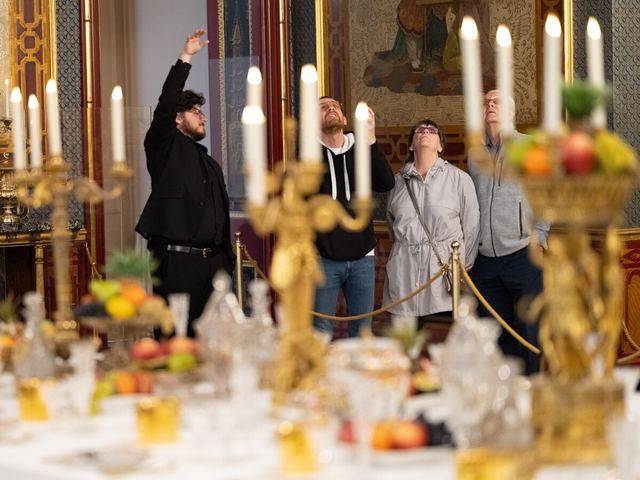 The back storyThe Royal Pavilion below stairs: kitchens, cooks and a king’s tunnelBehind the domes: the Great Kitchen, a 100-dish banquet, a tunnel and the rooms visitors rarely see.
 The back storySake Dean Mahomed: the shampooing surgeon of BrightonFrom Patna to the Pavilion: the author and restaurateur whose seafront baths won two kings.