History
The history of AI: from Turing to ChatGPT
Turing, Dartmouth, ELIZA, two AI winters, Deep Blue, AlphaGo, transformers and the ChatGPT era.
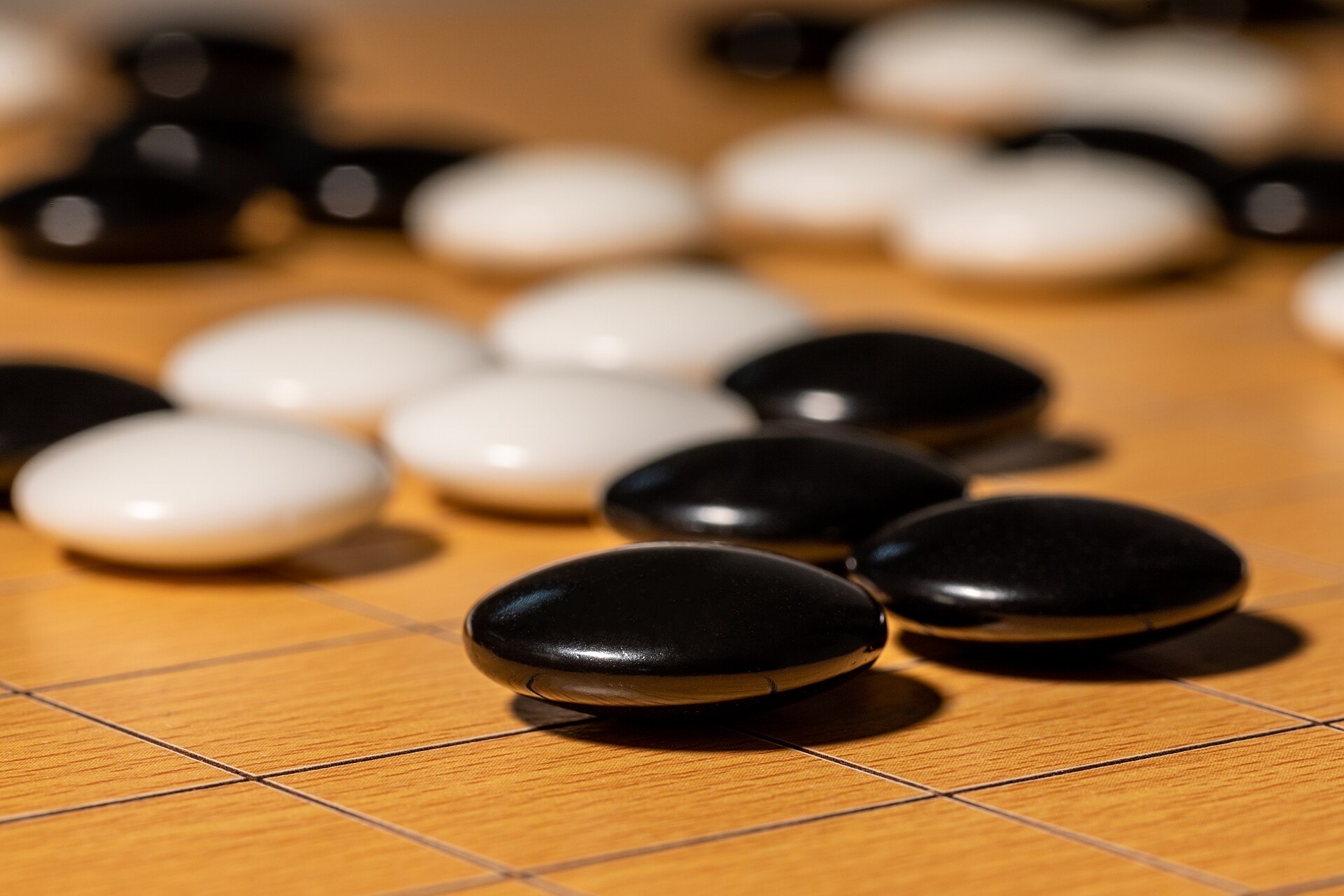
Photo Credit
Image courtesy of © Dietmar Rabich (CC BY-SA 4.0), via Wikimedia CommonsFor seventy years artificial intelligence was the technology that was always twenty years away: promised, funded, abandoned and promised again. Then, within a decade, it beat the world at Go and started holding conversations. Here is the story from Alan Turing’s 1950 question to the race now under way, and the real answer to why AI kept stalling, and then suddenly did not.
A question in a philosophy journal
In October 1950 the philosophy journal Mind published a paper by an English mathematician that asked: “Can machines think?” Alan Turing, who had spent the war breaking German naval codes at Bletchley Park, found the question too vague, so he replaced it with a game. If a judge could not tell a machine’s typed conversation from a person’s, the argument was over. He called it the imitation game; everyone else calls it the Turing test.
Turing even predicted that by the end of the century such a machine would be technically possible, a forecast that ran late but not by as much as his critics assumed. He also answered an objection raised a century earlier by Ada Lovelace, that a machine could never originate anything. He was born in 1912 in Maida Vale, London, in a nursing home that later became the Colonnade Hotel; a blue plaque marks it. He died in 1954, aged 41.
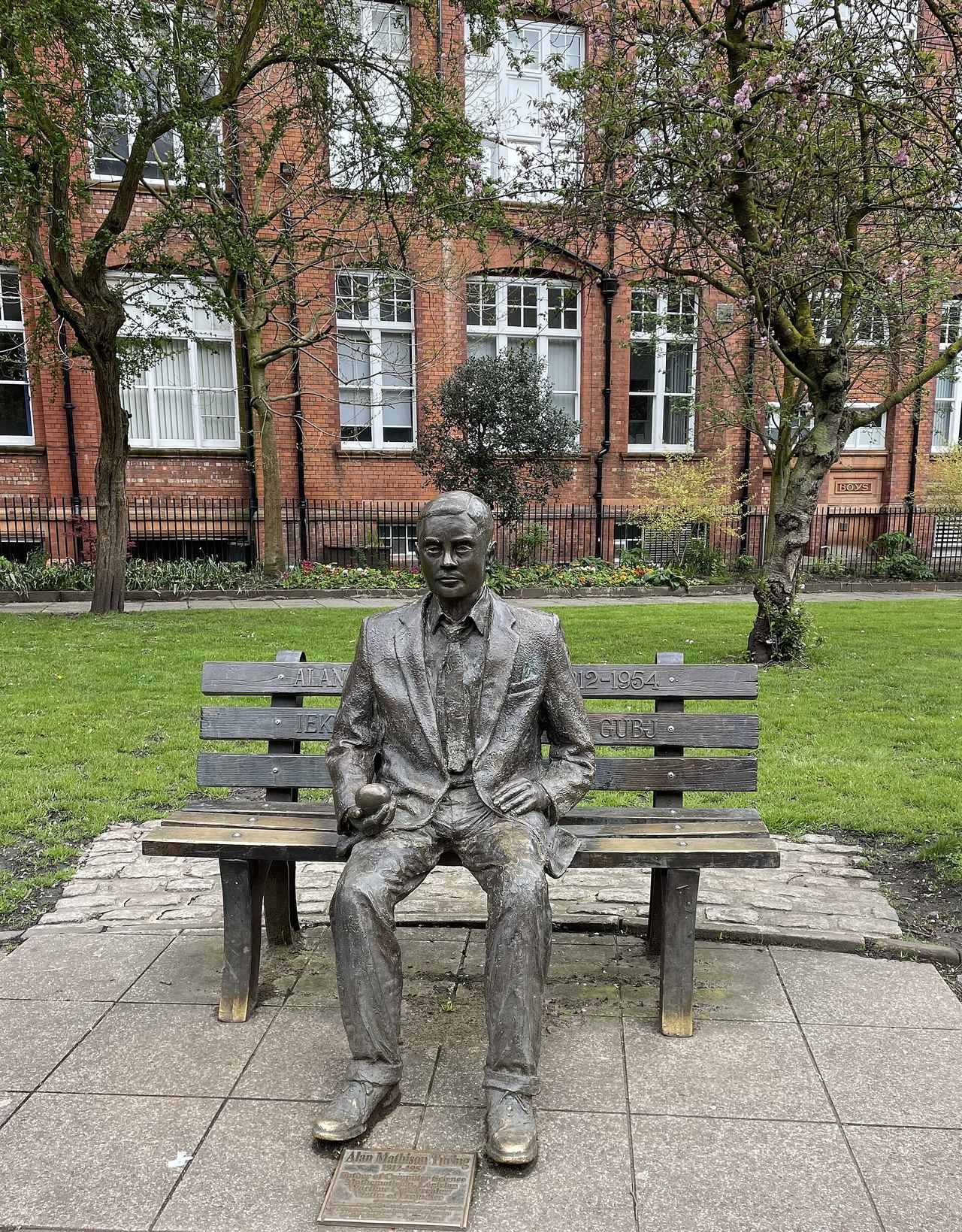
Photo Credit
Image courtesy of © Eirian Evans (CC BY-SA 2.0), via Wikimedia Commons1956: ten men, one summer, a new name
On 2 September 1955 four scientists, John McCarthy, Marvin Minsky, Nathaniel Rochester and Claude Shannon, proposed “a 2-month, 10-man study of artificial intelligence” at Dartmouth College in New Hampshire the following summer. The proposal is credited with introducing the term. They believed significant progress could be made in a summer. The field has spent the seventy years since discovering just how long a summer can be.
ELIZA: the first chatbot, and the first warning
Between 1964 and 1967, at MIT, Joseph Weizenbaum wrote ELIZA, named after Eliza Doolittle in Pygmalion. Its most famous script, DOCTOR, played a psychotherapist by reflecting the user’s words back as questions. It understood nothing, and Weizenbaum said so. Yet his own secretary reportedly asked him to leave the room so that she and ELIZA could talk in private. The tendency to see a mind in a mirror is still called the ELIZA effect.
Why AI kept stalling
Early AI ran into the same wall again and again. Its programs were rules written by hand, and the real world has more exceptions than any team can write down. The computers were feeble and data was scarce. An apocryphal tale from machine translation sums it up: “the spirit is willing but the flesh is weak”, sent into Russian and back, returned as “the vodka is good but the meat is rotten”. True or not, it captured the problem precisely.

Photo Credit
Image courtesy of © Daderot (CC0), via Wikimedia CommonsFunding followed the disappointment. In 1969 a change in US law pushed the defence research agency DARPA towards mission-oriented projects instead of open-ended research, and in 1973 the British mathematician Sir James Lighthill reported on the “utter failure” of AI to reach its “grandiose objectives”. Money dried up on both sides of the Atlantic. The first AI winter had set in.
The 1980s brought a thaw in the form of expert systems, rule-books for narrow jobs. The first commercial one, XCON, configured computers for Digital Equipment Corporation and was estimated to have saved it $40 million in six years; by 1985 corporations were spending over a billion dollars on AI. Then, in 1987, the market for specialised AI hardware collapsed, and the early systems proved too costly to maintain. Winter number two.
1997: the machine beats the champion
IBM’s Deep Blue lost its first match against the world chess champion Garry Kasparov in Philadelphia in 1996, 4–2. In the 1997 rematch in New York it won 3½–2½, the first defeat of a reigning world champion by a computer under tournament conditions. It was a triumph of brute calculation rather than learning, which is exactly why it did not end the argument. The chessboard had been conquered; the world beyond it was untouched.
In 2011 IBM went on television. Its Watson system, named after the company’s founder, beat two of the greatest champions of the quiz show Jeopardy!, Ken Jennings and Brad Rutter, and took the $1 million first prize. It answered in natural language, at buzzer speed. Its underlying software was called DeepQA, though, in a nice irony, it did not use the deep neural networks about to change everything.
2012: two graphics cards and a bedroom
The breakthrough came from an idea most of the field had written off: neural networks that learn from examples rather than follow rules. Geoffrey Hinton had championed them for decades at the University of Toronto. In 2012 his students Alex Krizhevsky and Ilya Sutskever entered AlexNet in the ImageNet image-recognition challenge and won by more than 10 percentage points, an eternity in that contest.
AI did not stall for lack of genius. It was waiting for three things that arrived together: oceans of data, cheap computing power and a better idea of how to learn.
AlexNet was trained on two Nvidia GTX 580 graphics cards, chips designed for video games, in Krizhevsky’s bedroom at his parents’ house. That detail explains why AI stopped stalling. The internet had produced the data, gaming had produced cheap parallel computing, and neural networks finally had enough of both to work. In 2018 Hinton, Yoshua Bengio and Yann LeCun shared the Turing Award for deep learning.
2016: move 37
Until October 2015 no program had beaten a professional Go player on a full board without a handicap. In March 2016, in a five-game match at the Four Seasons Hotel in Seoul, DeepMind’s AlphaGo beat Lee Sedol, one of the strongest players in the game’s history, four games to one. Its 37th move in the second game, a stone placed where no professional would think to put it, was called “creative” and “unique” by commentators.
Lee won the fourth game with move 78, hailed as a “divine move”, and remains the only human to have beaten AlphaGo in its 74 official games. In November 2019 he retired, saying that with the rise of AI he could never be the top player. Few retirements have been so unsettling. DeepMind’s AlphaFold went on to predict the shapes of proteins, and in 2024 Demis Hassabis and John Jumper shared half of the Nobel Prize in Chemistry for it.
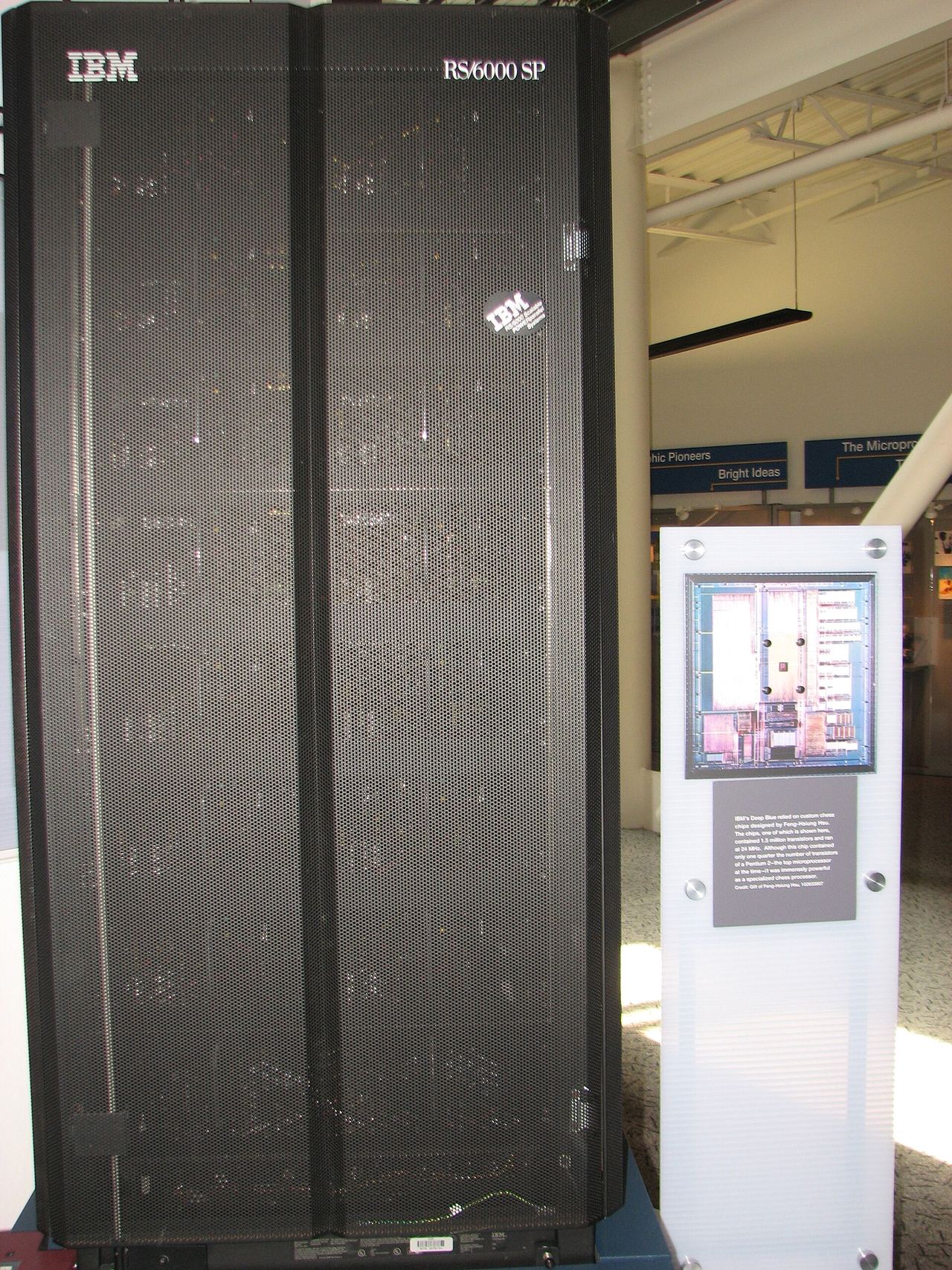
Photo Credit
Image courtesy of © Erik Pitti (CC BY 2.0), via Wikimedia Commons2017: attention is all you need
In June 2017 eight researchers at Google published a paper whose title borrowed from the Beatles: “Attention Is All You Need”. It introduced the transformer, a design that lets a model weigh every word in a passage against every other, and it scales beautifully with more data and computing power. The T in GPT stands for it. All eight authors later left Google, to join other companies or found their own.
OpenAI’s GPT-3, released in 2020, had 175 billion parameters, ten times more than the largest comparable model before it, and could produce essays, poems and computer code from a short prompt. The lesson of the decade had become clear: bigger models trained on more text kept getting better, often in ways their makers had not predicted. Scale, it turned out, was not just a quantity but a method.
30 November 2022: ChatGPT
OpenAI released ChatGPT on 30 November 2022. It gained a million users in five days and 100 million in two months, the fastest-growing internet application in history until then. By February 2026 it had 900 million weekly active users. Seventy-two years after Turing’s paper, ordinary people were holding typed conversations with a machine. The imitation game had left the philosophy journal for the kitchen table.
The race since
The years since have been a sprint. GPT-4 arrived on 14 March 2023; Anthropic released Claude that same month; Meta’s Llama, published in February 2023, made model weights available to researchers; Google announced Gemini on 6 December 2023. In January 2025 the Chinese company DeepSeek launched its R1 model with openly licensed weights. Each lab describes different strengths, and new versions now arrive in months, not years.
The pioneers of 1956 hoped for progress in a summer; their successors ship it by the season.
Photo Credit
Image courtesy of © Geekerwan (CC BY 3.0), via Wikimedia CommonsThe great debate
The pioneers now disagree about where this leads. In May 2023 Hinton left Google to speak freely about AI’s risks, and he and Bengio were among hundreds of experts who signed a one-line statement saying the risk of extinction from AI deserves the same priority as pandemics and nuclear war. LeCun has called such claims “preposterous”, and has argued that today’s language models lack memory, planning and an understanding of the physical world.
In 2024 Hinton shared the Nobel Prize in Physics with John Hopfield for the discoveries that enable machine learning with neural networks, and used the moment to call for urgent research into AI safety. In late 2025 LeCun left Meta to found a company building “world models”. The fathers of deep learning, in other words, agree on its power and disagree on its future, which is perhaps the most human thing about it.
Where to see it
Our advice: in Manchester, Turing sits on a bronze bench in Sackville Gardens, near the university where he worked on one of the earliest stored-program computers. In London, look for his blue plaque at the Colonnade Hotel in Maida Vale. In Mountain View, California, the Computer History Museum displays Deep Blue. Bletchley Park, where his wartime codebreaking took place, is open to visitors.
Why it's on our list
- Turing’s question, 1950
- Dartmouth and the birth of a name
- ELIZA and the AI winters
- Deep Blue, Watson and AlphaGo
- Deep learning, transformers and GPT
- ChatGPT and the race since
Location
The map comes from Google Maps, which sets its own cookies once it loads.
More in depth
 CompareClaude, ChatGPT, Gemini, Grok and DeepSeek: the AI assistants comparedFive AI assistants side by side, skill by skill: writing, code, research, privacy and price.
 AIAI at work: what it really changes, from inbox to itineraryHow AI helps with email, meetings, spreadsheets, code, research and travel, and where it slips.
 AICreative AI: the tools reshaping film, music, images and 3DAI for creators: video, images, music, voice, scripts, 3D and film, with the copyright questions.