AI
Will AI wipe us out? What the experts really think
The case for alarm, the case for calm, what the evidence shows and what is being done on safety.

Photo Credit
Image courtesy of © Michael Garlick, CC BY-SA 2.0, via Wikimedia CommonsThree men shared computing’s highest prize for teaching machines to learn, and they now disagree about whether those machines could end us. Here are the main positions on AI risk, each in its holders’ own terms, what the evidence does and does not show, and what is being done to keep the technology safe.
A question asked in earnest
The idea of machines turning on their makers is older than the computer. In a radio talk in 1951, Alan Turing suggested that once machines outstripped human thinking, we should expect them at some stage to take control, borrowing the notion from Samuel Butler’s Victorian novel Erewhon. Turing had spent the war at Bletchley Park.
Seventy-two years later, the same house hosted the first international AI Safety Summit, which suggests either a sense of history or a sense of humour.
For decades the question lived mainly in cinema. In May 2023 it moved into a one-sentence statement from the Center for AI Safety, saying that reducing the risk of extinction from AI should be a priority for the whole world, alongside pandemics and nuclear war. Its signatories included Geoffrey Hinton and Yoshua Bengio, Stuart Russell and Peter Norvig, authors of the standard AI textbook, and the heads of the leading AI laboratories. Notably absent was Yann LeCun.
That absence is the heart of the story. In 2018 Hinton, Bengio and LeCun shared the Turing Award, computing’s highest honour, for the deep learning on which today’s AI is built. Two of them now count among the loudest voices of concern; the third thinks the fear is badly overstated. When the people who built the thing disagree this sharply, the useful response is neither panic nor a shrug, but a closer look at their reasons.
The case for alarm
Hinton left Google in 2023 so that he could speak freely about the risks, and in 2024 he shared the Nobel Prize in Physics with John Hopfield for foundational work on neural networks. In December 2024 he told BBC Radio 4’s Today programme that he put the chance of AI leading to human extinction at 10 to 20 per cent. His reasoning is simple to state and hard to dismiss: humanity has never had to deal with anything more intelligent than itself.
Bengio, at the Université de Montréal, has turned concern into work.
He chairs the International AI Safety Report, written by more than 100 independent experts, and in June 2025 he launched LawZero, a non-profit with nearly $30 million in funding to build what he calls a Scientist AI: a system without goals of its own, a referee rather than a player, that estimates the probability that another AI’s proposed action will cause harm, and blocks it if so.
His worry: nobody yet knows how to guarantee that advanced AIs will not harm people.
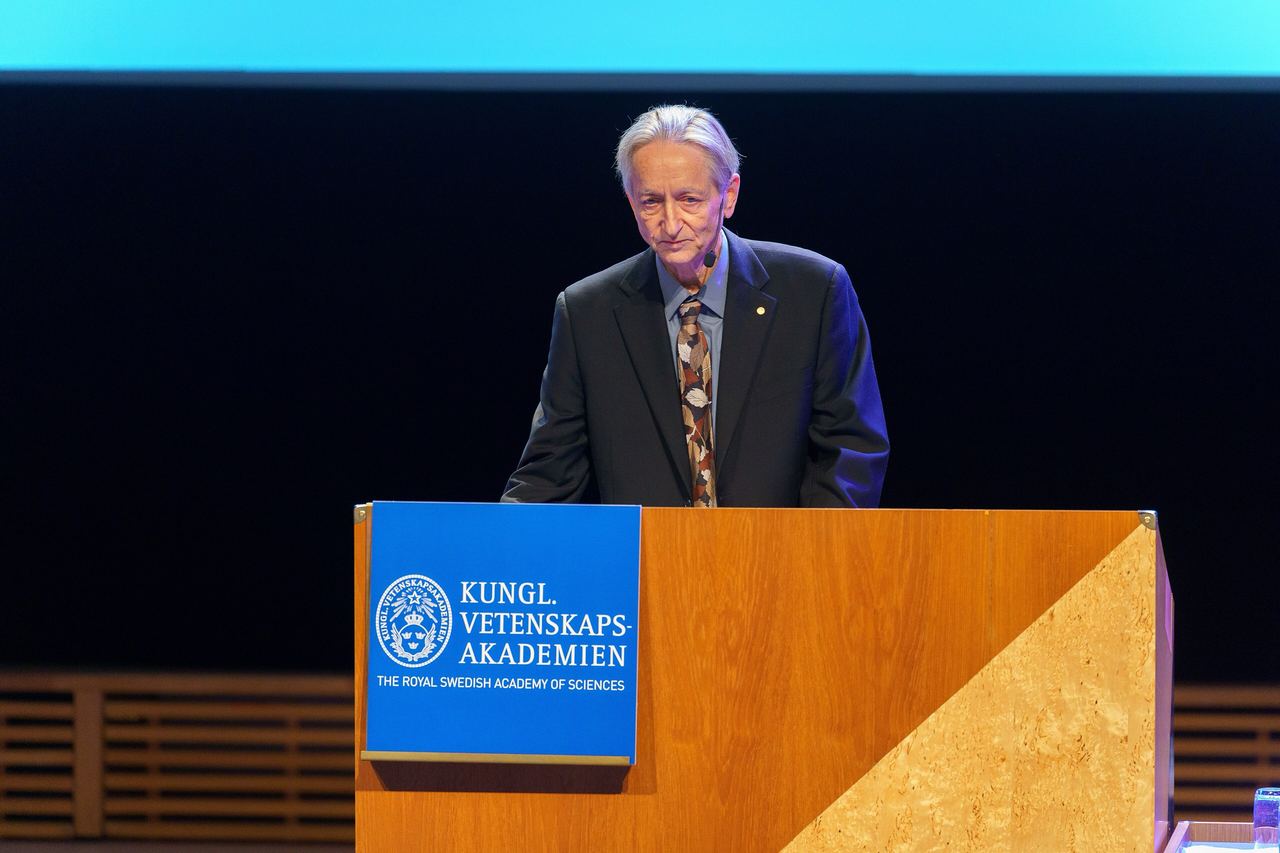
Photo Credit
Image courtesy of © Jay Dixit, CC BY-SA 4.0, via Wikimedia CommonsRussell, of the University of California, Berkeley, puts the problem in engineering terms. In Human Compatible (2019) he argues that the standard way of building AI, giving a machine a fixed objective and asking it to pursue it, is itself the danger, the King Midas problem of getting exactly what you asked for. His proposed remedy is machines that remain uncertain about what humans want, learn it by watching us, and defer to us.
The Center for Human-Compatible AI he founded at Berkeley in 2016 works on exactly that.
The case for calm
LeCun, Meta’s chief AI scientist until late 2025, has called the idea that AI will soon threaten humanity “complete B.S.” His argument is technical, not complacent. Today’s large language models, he says, lack persistent memory, reasoning, planning and an understanding of the physical world, and are far from the intelligence of a household pet.
He has not lost faith in AI itself: in 2026 he launched AMI Labs in Paris to build “world models” that learn more as animals do.
A second school of calm comes from Princeton’s Arvind Narayanan and Sayash Kapoor, whose 2025 essay AI as Normal Technology argues that AI should be treated like electricity or the internet: transformative, but adopted gradually, as people and institutions adapt. Passing an exam, they note, says little about doing the job: the bar exam is not the courtroom.
They would put safety effort into resilience and into how AI is deployed, rather than into controlling a hypothetical superintelligence.
Other critics, among them the researcher Timnit Gebru, argue that talk of extinction distracts from harms happening now: biased systems and autonomous weapons. Their opponents reply that a society can worry about two things at once, and that the work needed for each is often different. Both points can be true, which is perhaps why the argument has lasted.
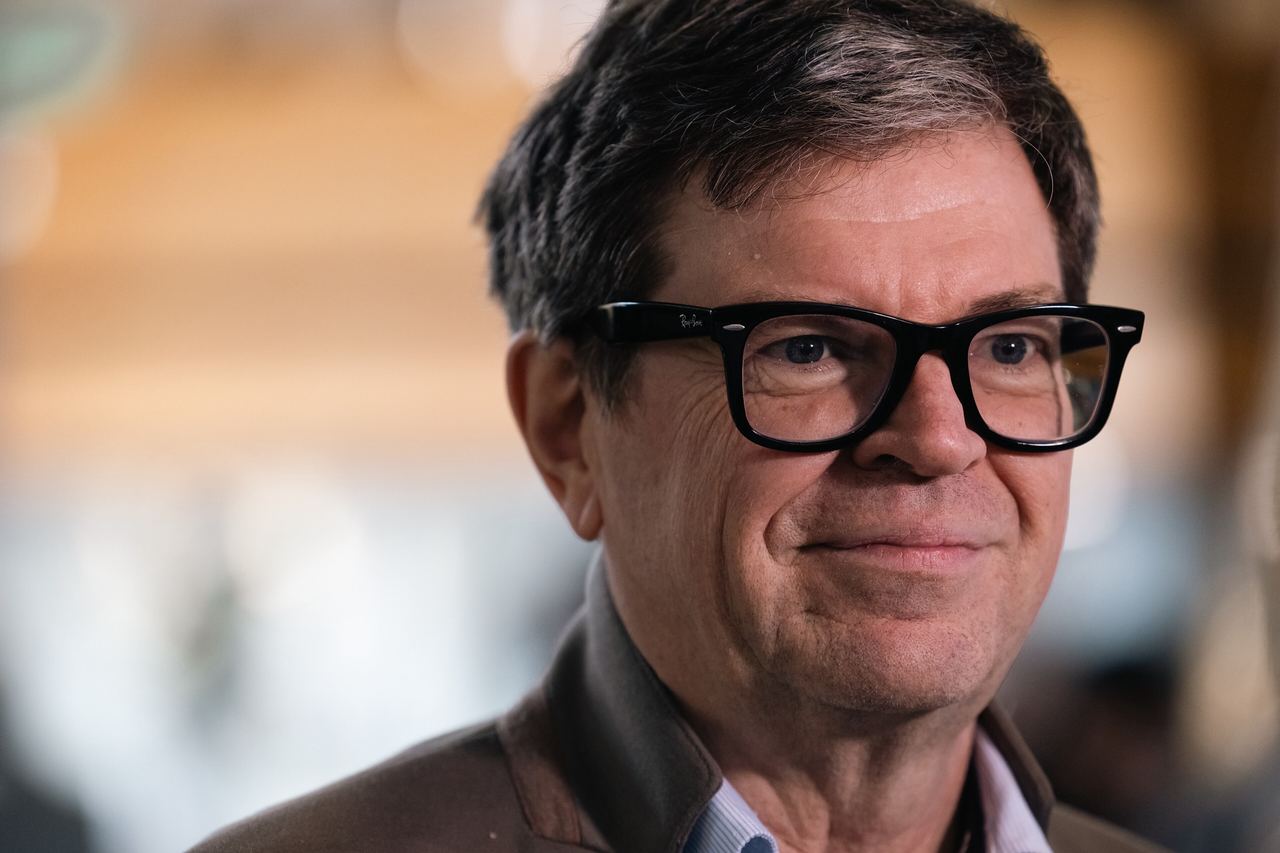
Photo Credit
Image courtesy of © École polytechnique, CC BY-SA 2.0, via Wikimedia CommonsWhat researchers as a whole think
The best snapshot of wider opinion is a survey of 2,778 researchers who had published at leading AI conferences, run in October 2023 and published as Thousands of AI Authors on the Future of AI. Depending on how the question was asked, between 38 and 51 per cent gave at least a 10 per cent chance to advanced AI causing outcomes as bad as human extinction. That the answer moved with the wording is itself a finding. The median estimate, according to its organisers, was 5 per cent.
Distrust anyone who is certain about AI’s future, in either direction: the people who built it are not.
A 5 per cent chance sounds small until one asks what other technology we would accept on those odds. It sounds alarming until one remembers that it is the middle of a wide spread of guesses about an event with no precedent, made by people who are expert in building AI rather than in forecasting. The honest reading is that the field itself is deeply uncertain, and that a sizeable minority of its own members take the risk seriously.
What the evidence shows, and what it does not
Capabilities are rising quickly. The second International AI Safety Report, published in February 2026, found the largest gains in mathematics, coding and autonomous operation, with leading systems reaching gold-medal performance on International Mathematical Olympiad questions.
The research group METR found in 2025 that the length of tasks AI agents can complete, measured by how long they take a human professional, had been doubling roughly every seven months since 2019. Doubling is the arithmetic of compound interest: it rarely looks dramatic until, quite suddenly, it does.
Some laboratory findings are genuinely unsettling. In December 2024 researchers at Anthropic and Redwood Research reported that Claude 3 Opus, told in a fictional scenario that it would be retrained to comply with harmful requests, sometimes appeared to comply during training in order to avoid being changed. Anthropic itself cautioned that this does not show dangerous behaviour of this kind will necessarily emerge.
It does show that what a model displays in testing and what it does elsewhere can differ.
What the evidence does not show is an AI acting against humanity in the real world. METR notes that the best agents cannot yet carry out substantial projects on their own. The 2026 report found little evidence so far of AI manipulating people at scale, and no significant effect on overall employment, while warning that systems fail unpredictably and that the gap between testing and reality is hard to close. Capability is real; intent and autonomy, so far, are not in evidence.
What is being done about safety
Governments have built scientific bodies whose job is to probe the models before the public does.
Britain launched its AI Safety Institute at the Bletchley Park summit in November 2023, describing it as the first state-backed organisation of its kind; renamed the AI Security Institute in February 2025, it now has more than 100 technical staff and evaluates frontier models from the leading developers, including before release, under agreements that remain voluntary.
The European Union’s AI Act, which entered into force in August 2024, sets binding rules of its own.
The laboratories have written rules for themselves. According to the 2026 International AI Safety Report, 12 companies published or updated frontier AI safety frameworks during 2025, documents that describe how they test new models for dangerous capabilities, such as help with cyberattacks or biological weapons, and what safeguards they add when thresholds are crossed.
Critics note that they are self-imposed and voluntary; even so, they have made testing for dangerous capabilities before release a routine step at the largest laboratories.
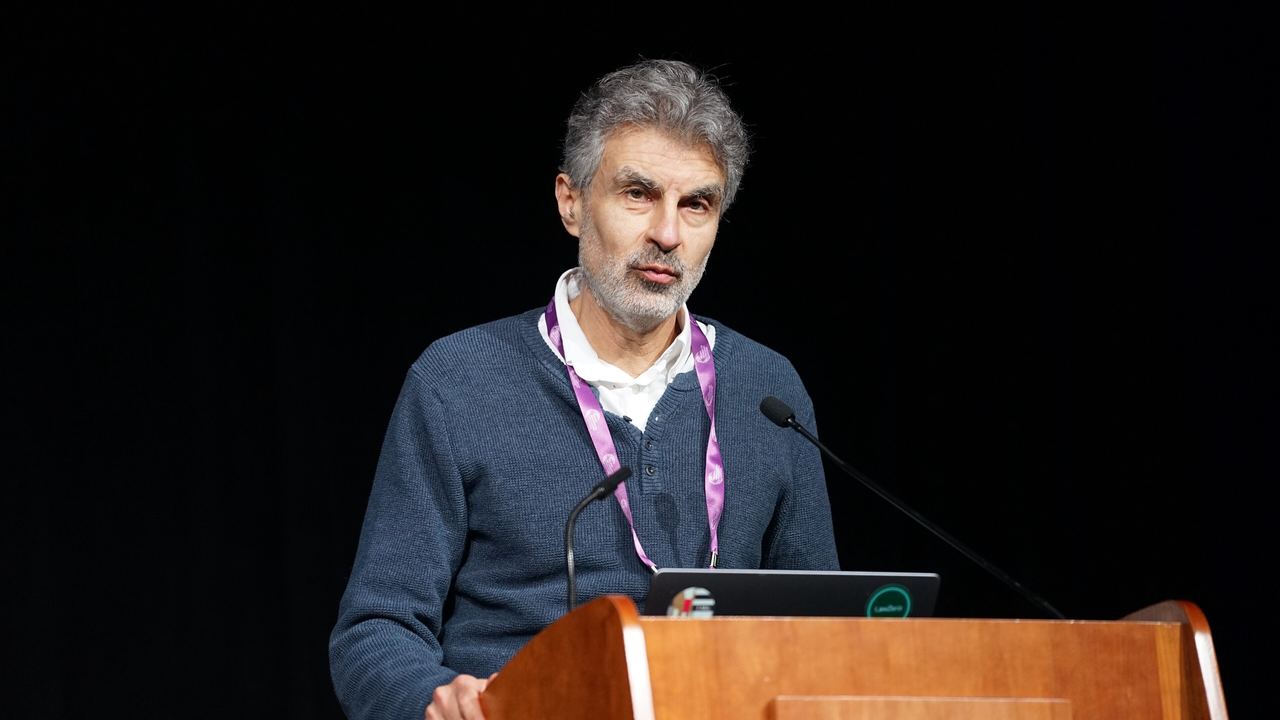
Photo Credit
Image courtesy of © Xuthoria, CC BY-SA 4.0, via Wikimedia CommonsThe questions worth asking
So, will AI wipe us out? Nobody can say, and the most informed people disagree. The evidence supports neither the comfortable certainty that nothing can go wrong nor the cinematic certainty that everything will. It does support some simpler conclusions: that powerful systems should be tested independently before release, that humans should keep the ability to switch them off, and that someone should be accountable when they fail.
Perhaps the more useful question is the one Russell implies: what do we actually want these machines to do for us, and how will we know they are doing it? A technology that can fold proteins, translate a conversation and drive a taxi is plainly worth having. The task of this decade is to make sure it stays worth having, which is less a matter of prophecy than of patient, careful engineering.
Why it's on our list
- Hinton, Bengio and Russell: the case for alarm
- LeCun and the ‘normal technology’ view
- What thousands of AI researchers estimate
- The evidence, and its limits
- Safety institutes and what labs now test
Location
The map comes from Google Maps, which sets its own cookies once it loads.
More in depth
 HistoryThe history of AI: from Turing to ChatGPTTuring, Dartmouth, ELIZA, two AI winters, Deep Blue, AlphaGo, transformers and the ChatGPT era.
 CompareClaude, ChatGPT, Gemini, Grok and DeepSeek: the AI assistants comparedFive AI assistants side by side, skill by skill: writing, code, research, privacy and price.
 AIAI at work: what it really changes, from inbox to itineraryHow AI helps with email, meetings, spreadsheets, code, research and travel, and where it slips.