Compare
Claude, ChatGPT, Gemini, Grok and DeepSeek: the AI assistants compared
Five AI assistants side by side, skill by skill: writing, code, research, privacy and price.

Photo Credit
Image courtesy of © Daoducquan, CC BY-SA 4.0, via Wikimedia CommonsAn AI assistant is no longer a clever search box: the best of them now read a contract, rebuild a spreadsheet and work a computer while you sleep. Here are the five leading families as their makers describe them in November 2026, compared skill by skill, with the limits left in.
Five families, one crowded autumn
This autumn the releases have come almost weekly. OpenAI introduced GPT‑6 Astra on 3 September and GPT‑6.1 Sol at the month’s end; xAI followed with Grok 4.7. Anthropic released Claude Opus 5.5 on 22 September and Claude Fable 5.2 on 9 November. Google completed its Gemini 4 family, Argon, Carbon and Hydrogen, by mid-November. Google names its models after elements and OpenAI after the heavens; nobody, so far, has named one after a deadline.
DeepSeek, the Chinese laboratory that startled markets in January 2025, published its V4 models in April as open weights, for anyone to download. So the question is no longer which assistant is cleverest; at this level, Anthropic itself says, benchmark gaps are a less reliable guide to real-world differences. What separates them is habitat: the apps each lives in, what it may touch, how it treats your data and what it costs.
Writing
Anthropic, Google and OpenAI all spent the autumn promising better prose, each in its own dialect. Anthropic says testers found Opus 5.5’s writing clearer. Google says Gemini 4 Argon writes better and answers more directly, with less hedging. OpenAI says GPT‑6 Astra follows a company’s voice, templates and design standards more closely.
The fair test is your own: give each the same brief, and keep the one whose first draft needs the fewest crossings-out.
Reasoning and logic
The flagships now think before they speak, as hard as you ask. Claude scales its thinking to an effort setting. Google says Gemini 4 Carbon spends more tokens than Argon to “explore thoroughly, reason deeply” and check its own work. ChatGPT Pro offers reasoning powered by GPT‑6 Astra, and Anthropic says Fable 5.2 is better at open-ended problems in physics and mathematics.
Deeper thought costs time and allowance, so save it for the knotty questions; asking a philosopher to check the bus times wastes everyone’s afternoon.
Coding
In coding, every maker claims the lead. Anthropic calls Opus 5.5 its strongest at agentic coding and keeps Fable 5.2 for the hardest work. OpenAI pairs GPT‑6 Astra with Codex; Google sends developers to Antigravity; xAI calls Grok 4.7 its frontier model for coding. A telling detail: GitHub Copilot’s menu lists Claude, GPT, Gemini and Grok models side by side. The professionals, it seems, have stopped choosing just one.
Research and browsing
All five search the web, and the leaders go further. ChatGPT and Gemini both offer Deep Research, which reads dozens of pages and returns a cited report, and ChatGPT now has a built-in browser. Claude searches the web on every plan, and Claude in Chrome lets paying users put it to work inside the browser. DeepSeek has opened its app’s search tools to developers.
Citations are a starting point, not a verdict: open the sources before you repeat them.
Images, voice and video
Here the families differ most. ChatGPT makes images, talks, and offers voice with video. Gemini makes images with Google’s Nano Banana models, talks through Gemini Live, and its paid plans make video in Google Flow. Grok has its own Imagine image and video models and a new voice model. Claude talks in a voice mode, in beta on every plan, but its visual work runs to designs, slides and documents rather than photographs or film.
Before choosing on this front, ask what you actually make: a slide deck, or a short film.
DeepSeek’s V4 arrived as a text model, without a multimodal version. OpenAI, meanwhile, has left the video business it helped to create: its Sora app closed in April 2026 and the developer service in September, a brisk exit for an app that once set the internet talking.
Long documents
How much an assistant holds in mind at once, its context window, decides whether it reads the whole contract or the first chapter. Every current Claude model takes a million tokens on Anthropic’s developer platform, roughly 555,000 words by Anthropic’s count. Google AI Pro brings a million-token window to the Gemini app; ChatGPT Pro’s largest is 400,000 tokens for reasoning. Grok 4.7 takes 500,000 through xAI’s API, DeepSeek V4 a million.
Photo Credit
Image courtesy of © TechCrunch, CC BY 2.0, via Wikimedia CommonsA long memory is not the same as a careful reader. Ask for page or clause references with every answer, and spot-check them.
Choose the assistant for the work you do most, and read its privacy settings before you paste in anything you would not post.
Working with files, apps and agents
The great change of 2026 is that assistants act as well as answer. OpenAI says GPT‑6 Astra can work everyday applications, even those with no programming interface. Claude runs scheduled tasks, connects to Microsoft 365 and works in Chrome; Anthropic says one Fable 5.2 experiment coordinated over 1,000 sub-agents for eight days. Gemini works in Gmail and Docs.
An assistant that can click send can also click the wrong send, so keep the confirmations on.
Privacy and your data
Read the settings before the brochure. ChatGPT’s plan page says conversations train OpenAI’s models, with an opt-out. Since 2025, Claude’s personal plans ask users to choose: chats used for training are kept for five years, otherwise for 30 days. Gemini lets you switch training and history off, though Google keeps chats for around two months and people review a sample. Claude’s business and developer services sit outside that choice.
DeepSeek’s privacy policy says it stores personal data in the People’s Republic of China, and offers a training opt-out only depending on where you live. Italy’s data protection authority ordered its app blocked there in January 2025, as it had briefly blocked ChatGPT in 2023. Developers can run DeepSeek’s open weights on their own servers, where nothing leaves the building.
Photo Credit
Image courtesy of © Village Global, CC BY 2.0, via Wikimedia CommonsMicrosoft, Meta and Mistral
Three more names are worth knowing. Microsoft 365 Copilot, powered by OpenAI’s models, added Anthropic’s Claude as an option in 2025, which makes it less a rival than a department store. Meta’s Muse Spark, released in April 2026, runs the Meta AI app and is a closed model, unlike Meta’s earlier Llama family. In Paris, Mistral publishes open-weight models, released Mistral Large 4 in October and is bringing its AI to Firefox with Mozilla.
The price of the paid tiers
Prices per month, as each maker lists them. Claude: Pro £18 ($20), or £15 ($17) billed annually; Max £90 ($100); Ultra £180 ($200). ChatGPT, as listed in Britain: Go £7, a plan that may carry advertisements; Plus £20; Pro from £89. Gemini: Google AI Plus £4.49, Google AI Pro £18.99, and Google AI Ultra from £79.99, or £189.99 for its largest allowance.
Grok’s plans come bundled with X benefits and with Cursor, the coding tool that SpaceX, now home to xAI, agreed to buy in June. They run from Plus at £7 ($8) through Premium at £26 ($30) and Super at £90 ($100) to Ultra at £180 ($200), with half-price first months on offer as we write. DeepSeek charges developers by use; its open weights cost nothing to download, though a model this size is costly to run.
Photo Credit
Image courtesy of © Jay Dixit, CC BY-SA 4.0, via Wikimedia CommonsThe verdict: which suits which job
For long documents, careful writing and coding agents, Claude is built for the work: Opus 5.5 as the daily driver, as Anthropic itself advises, and Fable for the hardest jobs. For the widest all-rounder, with images, voice and an agent that can work your desktop, ChatGPT covers the most ground. For anyone whose life runs on Gmail, Docs and Google storage, Gemini fits like a key in its own lock, at the gentlest entry price.
For readers who live on X and want one subscription for posting, chatting and coding, Grok’s bundle makes sense. For developers who want to own the machinery, DeepSeek’s open weights, which DeepSeek calls the best open-source model available, are the place to start. Many professionals will find they want two assistants, and that, rather than any leaderboard, is the clearest sign of how close this race has become.
Why it's on our list
- Five assistants, skill by skill
- Writing, reasoning, code and research
- Images, voice, video and long documents
- The privacy settings that matter
- Paid plans in pounds and dollars
- Which suits which job
Location
The map comes from Google Maps, which sets its own cookies once it loads.
More in depth
 AIAI at work: what it really changes, from inbox to itineraryHow AI helps with email, meetings, spreadsheets, code, research and travel, and where it slips.
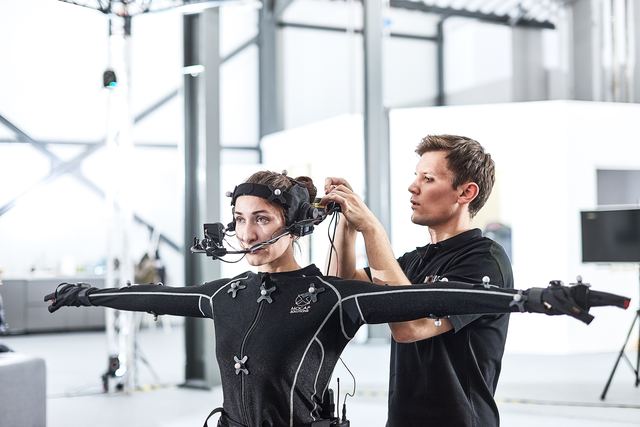 AICreative AI: the tools reshaping film, music, images and 3DAI for creators: video, images, music, voice, scripts, 3D and film, with the copyright questions.
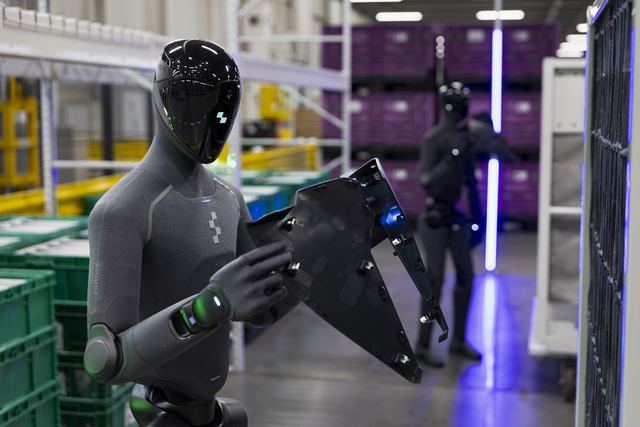 RoboticsHumanoid robots: proven, promised and on the payrollFigure, Atlas, Digit, Optimus and NEO: what humanoid robots really do today, and what is next.