Robotics
Humanoid robots: proven, promised and on the payroll
Figure, Atlas, Digit, Optimus and NEO: what humanoid robots really do today, and what is next.
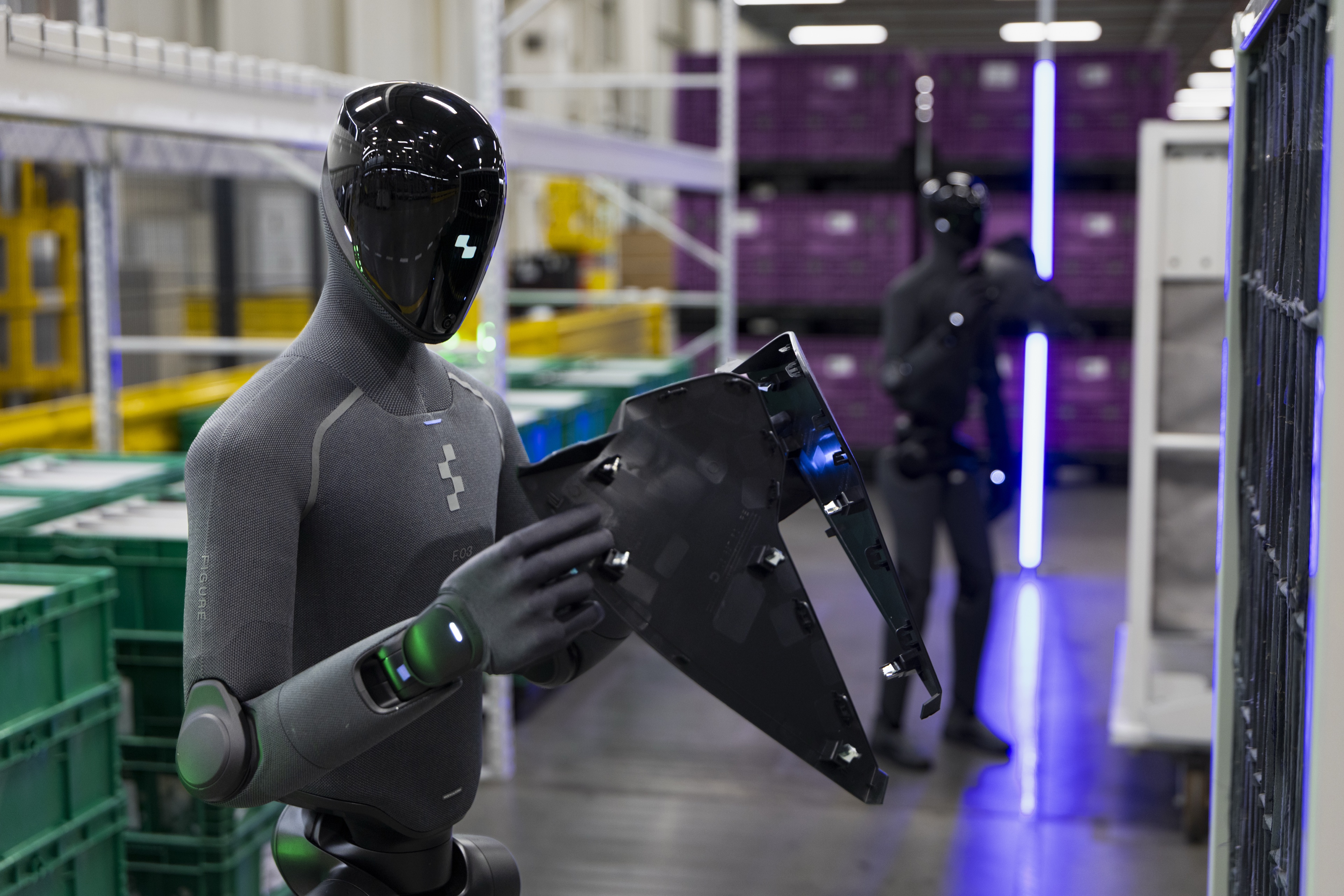
Photo Credit
Image courtesy of © BMW GroupFactories, warehouses and homes were all built around the human body, so a robot shaped like a person can, in theory, walk in and start work without anyone moving a wall. We look at which humanoids are genuinely on the payroll in November 2026, which are still on the stage, and what the difference tells us about the decade ahead.
Why build a robot shaped like us?
Every stair, shelf, door handle and trolley in a factory was sized for a person. A robot with two arms, two legs and a head of cameras can, in principle, use all of it as it stands, which is the whole seductive pitch of the humanoid. The questions worth asking are harder: what are these machines actually doing today, who has published proof, and which promises are still waiting for a delivery date?
The robots that already build your car
Robots have worked in car plants for 65 years; they simply never had faces. The first Unimate arm went to General Motors in New Jersey in 1961, lifting hot die-cast metal that no person wanted to touch. KUKA says its Famulus of 1973 was the first industrial robot with six electrically driven axes, and ABB says its IRB 6 of 1974 was the first all-electric, microprocessor-controlled commercial robot. Its control system ran on a single 8-bit Intel microprocessor.
The International Federation of Robotics now counts five million industrial robots in factories, more than double the figure of seven years ago, with over 600,000 installed in 2025 alone. FANUC has a contract to supply robots for every shop in Volvo Cars’ plants. In Toledo, Ohio, KUKA runs a body shop where 285 robots have built the body of every Jeep Wrangler sold since 2006. Nobody calls them humanoid, and nobody needs to.
So what is new?
Those orange and yellow arms are virtuosos of one task, repeated for years inside a safety cage. Change the part and an engineer reprograms the cell. The humanoid bet is that AI models trained on video, simulation and human demonstration can make a robot general: able to pick an unfamiliar part from a jumbled crate, or learn a new job by being shown rather than coded.
It is the difference between a pianola and a pianist, and nobody yet knows how good the pianist will become.
Figure at BMW: the best-documented deployment
The clearest evidence comes not from a stage but from a body shop: BMW’s plant in Spartanburg, South Carolina. BMW says Figure’s earlier robot, Figure 02, spent about ten months in the body shop inserting sheet-metal parts for welding, physically demanding work, and supported the production of more than 30,000 BMW X3s.
In June 2026 its successor, Figure 03, started a harder job in the logistics hall: picking unsorted parts from large containers and sorting them into trolleys in the order the assembly line needs them.
Figure says the robot runs on Helix 02, its own vision-language-action model, which turns camera pixels straight into movements of hands, arms, torso and feet. In its demonstration the robot shifts its footing to reach into a crate, copes with parts that have rotated or are half hidden, then switches from delicate placement to hauling a loaded metal cart.
Neither company has said how many robots work there, nor published performance figures, which is the number the whole industry is waiting for.
Atlas, Digit and Apollo
Boston Dynamics, whose robots made the backflip famous, unveiled the production electric Atlas in January 2026: 56 degrees of freedom, joints that rotate fully, a 50 kg lift and the knack of walking to a station to swap its own battery. It says every Atlas built in 2026 is already committed to its majority owner, Hyundai, and to Google DeepMind. Hyundai plans to put Atlas on parts sequencing at its Georgia Metaplant by 2028. The torso turns in ways no human spine would forgive.
Agility Robotics’ Digit, with its backward-bending, bird-like legs, has the longest commercial record. Working under a robots-as-a-service agreement at GXO’s warehouse in Flowery Branch, Georgia, it had moved more than 100,000 totes by November 2025. In October 2026 GXO said Digit would go to two more sites, in North Carolina and Tennessee, from early 2027.
Apptronik’s Apollo is at an earlier stage: Mercedes-Benz signed in 2024 to explore it for delivering kitted parts to the line, and has since invested.
Judge a humanoid by the hours it has worked, not the moves it has danced.
Tesla Optimus: what is confirmed, and what is claimed
Confirmed: in its third-quarter 2026 update, Tesla stated that Optimus production has begun on high-volume lines at Fremont, in space freed by retiring the Model S and Model X lines, and that the robots coming off them are ‘the first production-quality bots’ it has built. Earlier updates describe the Fremont line as designed for one million robots a year and a future Texas line for ten million.
Those are design capacities, not output; Tesla has not published production figures.
Claimed or targeted: a third-generation Optimus, which Elon Musk, Tesla’s chief executive, said in 2025 would probably be unveiled in early 2026, had not been publicly shown by mid-November. On the October 2026 results call he said he expected the remaining problems of design, reliability, endurance and AI to be solved around the end of 2027.
Demonstrated, with an asterisk: at Tesla’s 2024 ‘We, Robot’ event, Optimus robots poured drinks, and the programme’s head later said they were ‘human assisted to some extent’.
The robot that comes home
The boldest bet is domestic. 1X takes orders for NEO, a soft-bodied home humanoid weighing about 30 kg, at $20,000 or $499 a month, with first deliveries promised to US homes in 2026. 1X lists four hours of run time and says it is quieter than a modern refrigerator.
It is candid about the catch: for chores NEO cannot yet do, an owner can book a 1X expert to guide it remotely, which teaches the robot and admits a stranger, by camera, into the sitting room.
At the other end of the price scale, China’s Unitree lists its 1.32-metre G1 from US$13,500, with about two hours of battery, aimed largely at developers and researchers. Its own small print says the industry is ‘in the early stages of exploration’, a rare moment of modesty in a field fond of the grand reveal.
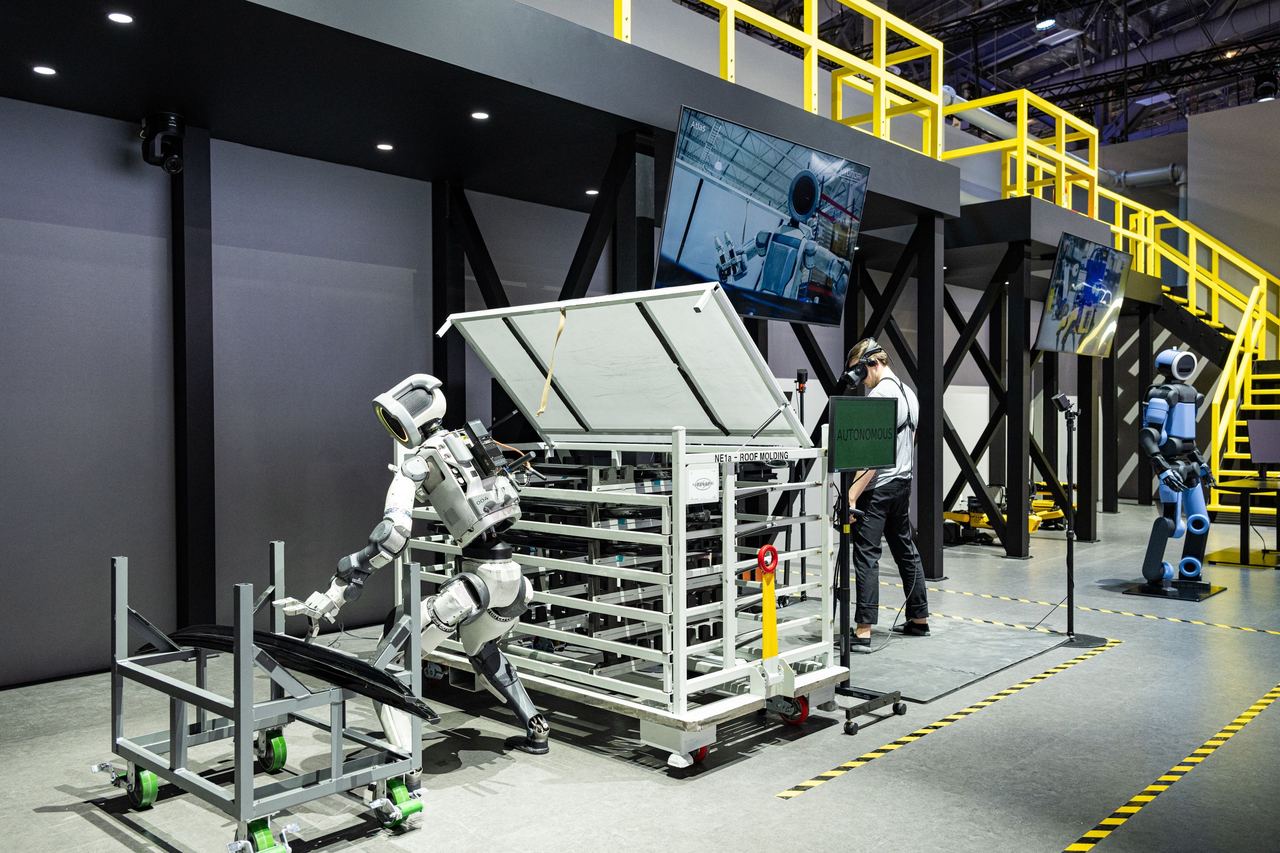
Photo Credit
Image courtesy of © Hyundai Motor GroupWhat do humanoids really change?
In volume, not much yet. No company has published evidence of humanoids working in the thousands on a production line; what is on record are pilots and early fleets, nearly all moving things from here to there, the job of a forklift or a junior warehouse hand. The shift is in cost of change.
If one model can learn sequencing at BMW and tote-moving at GXO, automating a new task becomes a training run rather than an engineering project, and that matters more than any backflip.
The open questions are the old engineering ones: hours between breakdowns, battery life, safety beside people without fences, and price per working hour. Tesla’s own list of unsolved problems is a fair summary of the sceptics’ case. The optimists’ case is equally plain: an ageing workforce, jobs that are dull or physically punishing, and AI that has improved faster than almost anyone forecast.
Both can be right at once, and the payroll, not the press release, will settle it.
What to watch next
Boston Dynamics plans to take Atlas to more customers from early 2027. Agility expects early-access deliveries of Digit 5 in the first half of 2027, with general availability targeted for the end of that year. Hyundai’s 2028 Metaplant date and Tesla’s Fremont ramp are the two tests of scale. Until then, the most useful figure on any humanoid’s spec sheet is the one most makers leave blank: hours of paid work.
Why it's on our list
- Robots already in car plants
- Figure 03 at BMW Spartanburg
- Boston Dynamics’ electric Atlas
- Tesla Optimus: confirmed vs claimed
- 1X NEO, the robot for the home
- What humanoids really change
Location
The map comes from Google Maps, which sets its own cookies once it loads.
More in depth
 AISelf-driving cars: who is really behind the wheelWaymo, Tesla, Zoox, Baidu and Wayve: where to ride without a driver, and what is still promised.
 AIAI and everyday life: what changes for youPhones, driverless taxis, homes, jobs, learning and travel: how AI helps, and how to use it well.
 AIWill AI wipe us out? What the experts really thinkThe case for alarm, the case for calm, what the evidence shows and what is being done on safety.