Objects of Desire
Sixty miles at fourteen miles an hour: Brighton and the beautiful machine
A veteran run born of a law, Goodwood in period dress, two drives and the oldest electric railway.

Photo Credit
Image courtesy of © London to Brighton Veteran Car RunWhy does a seaside town matter so much to people who love cars? Because the motor car’s freedom in Britain was celebrated with a drive to Brighton, and the city has been a finishing line ever since. From the Veteran Car Run to Goodwood, the coast road and Volk’s little railway, here is the story, checked against the organisers’ own pages in November 2026.
The run that celebrated a law
Every November, at sunrise, more than 400 veteran cars set off from Hyde Park and point their brass lamps towards the sea. The London to Brighton Veteran Car Run, organised by the Royal Automobile Club, calls itself the world’s longest-running motoring event, and its finish on Madeira Drive is where Brighton’s long affair with beautiful machines is easiest to see.
The run remembers a change in the law. Under the Red Flag Act of 1865, someone had to walk ahead of any mechanically propelled vehicle; on 14 November 1896 the Light Locomotives on the Highway Act removed the walker altogether and raised the limit for light vehicles from 4 mph to 14 mph. The Motor Car Club celebrated with the Emancipation Run, 60 miles from London to Brighton.
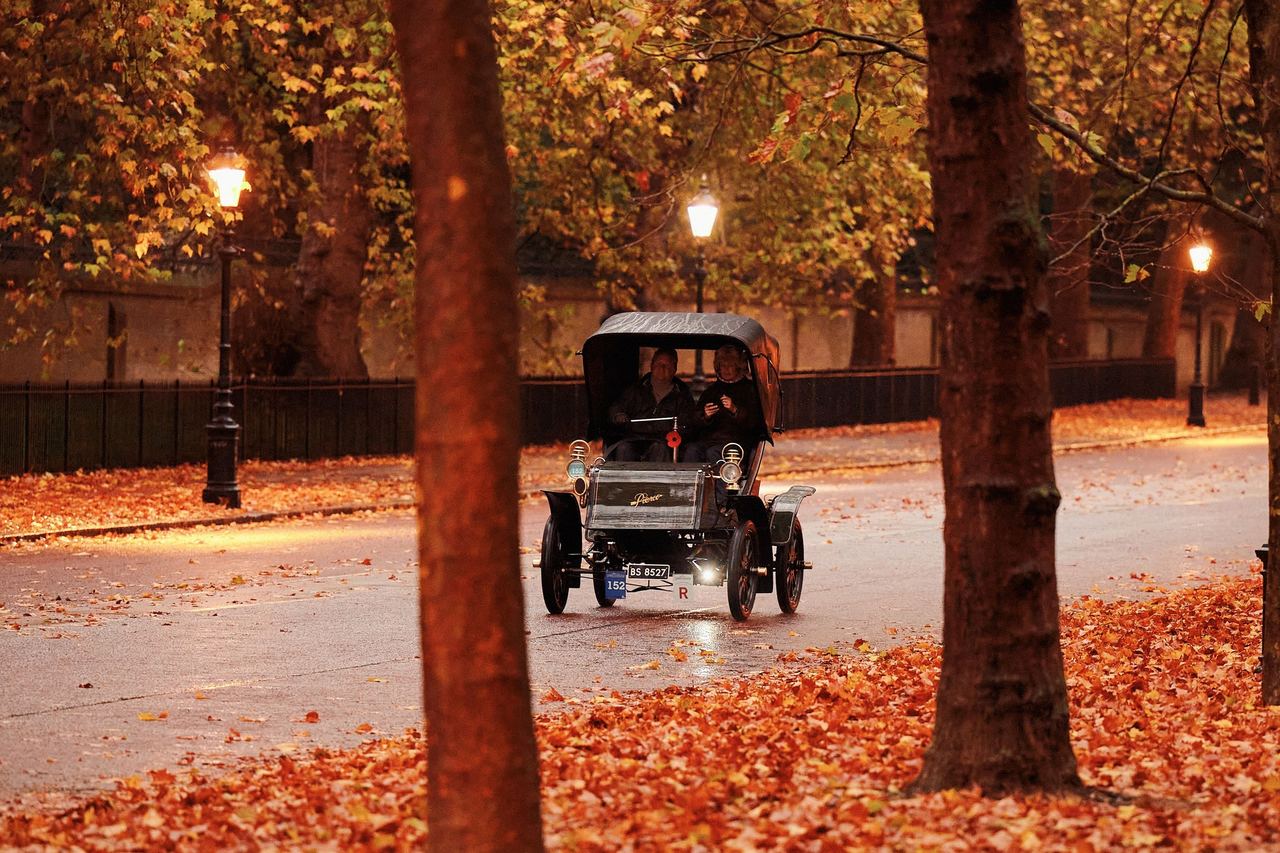
Photo Credit
Image courtesy of © London to Brighton Veteran Car RunIt is worth pausing on what that law meant. Until then, the motor car was legally a slow parade with an escort; the Act turned it into transport. The run’s own history makes the point that Britain had lagged the continent, where no such restrictions had existed, and that the new law gave a British motor industry a firm base at last.
The celebration became an annual run until 1903, when the limit rose to 20 mph; with nothing left to celebrate, the run’s history notes, it simply stopped, perhaps the only motoring event ever cancelled for want of a grievance. Today a car must have been built before 1 January 1905 and carry a Veteran Car Club dating certificate. Here, unlike most of the seafront, nobody lies about their age.
Goodwood, in period dress
West along the coast, near Chichester, the Goodwood estate turns speed into theatre three times a year. The Members’ Meeting opens the season in spring (10–11 April 2027); the Festival of Speed follows in July (15–18 July 2027), its 1.16-mile hillclimb the centre of the action since the first festival in 1993.
The Revival, held each September at the Goodwood Motor Circuit, which opened in 1948, is the one with a wardrobe. Goodwood says there is no pressure to dress up, but many guests embrace the spirit of the 1940s, 50s and 60s, from a scarf or hat to head-to-toe period dress. The 2027 Revival runs from 17 to 19 September.
Here, unlike most of the seafront, nobody lies about their age.
Two drives and an electric railway
You need no grid slot to enjoy the roads around the city. East of the Marina the A259 follows the clifftops through Rottingdean and Peacehaven to Newhaven and Seaford, then crosses the Cuckmere at Exceat, by Seven Sisters Country Park, on its way to Eastbourne. North of the city, Devil’s Dyke and Ditchling Beacon both have National Trust car parks on top of the Downs, with wide views over the Weald.
Brighton’s first great machine needed no petrol at all. Magnus Volk opened his electric railway along the seashore on 4 August 1883, and its supporters call it the world’s oldest operating electric railway. It runs in season between Aquarium and Black Rock; in winter it rests, rather more gracefully than most of its contemporaries.
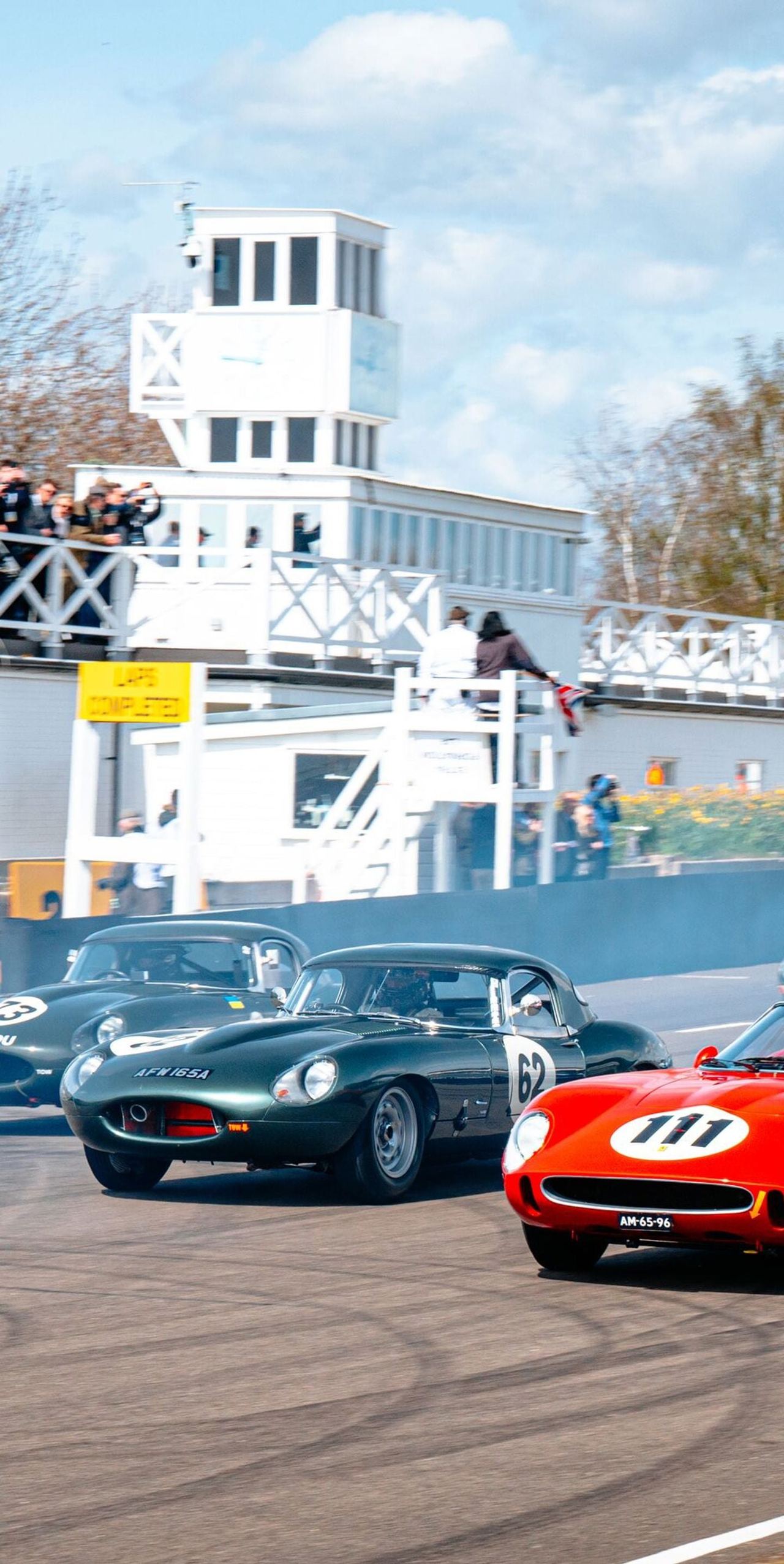
Photo Credit
Image courtesy of © GoodwoodVolk had a bolder idea in the very month the motor car was freed. His Brighton and Rottingdean Seashore Electric Railway opened in November 1896 with a single car, Pioneer, nicknamed Daddy Long Legs, which stood on four legs 23 feet long so it could run through the sea at high tide. A great storm wrecked it a few days later; it reopened in 1897 and ran until 1901.
Our advice: on run day in November, take a place on Madeira Drive near the finish, where the cars arrive one by one through the day, and check veterancarrun.com for the 2027 date before you book a room.

Photo Credit
Image courtesy of © mattbuck (category) · CC BY-SA 4.0 via Wikimedia CommonsWhy it's on our list
- The run that celebrated a law
- Goodwood, in period dress
- Two drives and an electric railway
Location
The map comes from Google Maps, which sets its own cookies once it loads.
More in depth
 Objects of DesireA concert hall built for horses: Brighton’s sound, from the Dome to the record racksRoyal stables turned concert hall, a Victorian club on the beach, an indie record shop and hi-fi.
 Objects of DesireThrough the lens: the camera in Brighton, from a Hove pump house to the Clock TowerEarly film in a Hove pump house, a camera shop by the Clock Tower and a showroom up the A23.
 Objects of DesireStucco, a secret tunnel and a royal loo: the houses Brighton built to be looked atKemp Town’s crescents, Hove’s cream terraces, restored Victorian arches and a tower that moves.