Compare
Headsets compared: Apple Vision Pro, Galaxy XR, Meta Quest 3 and Meta Ray-Ban Display
Vision Pro, Galaxy XR, Quest 3 and Meta Ray-Ban Display: films in flight, work in the hotel room.
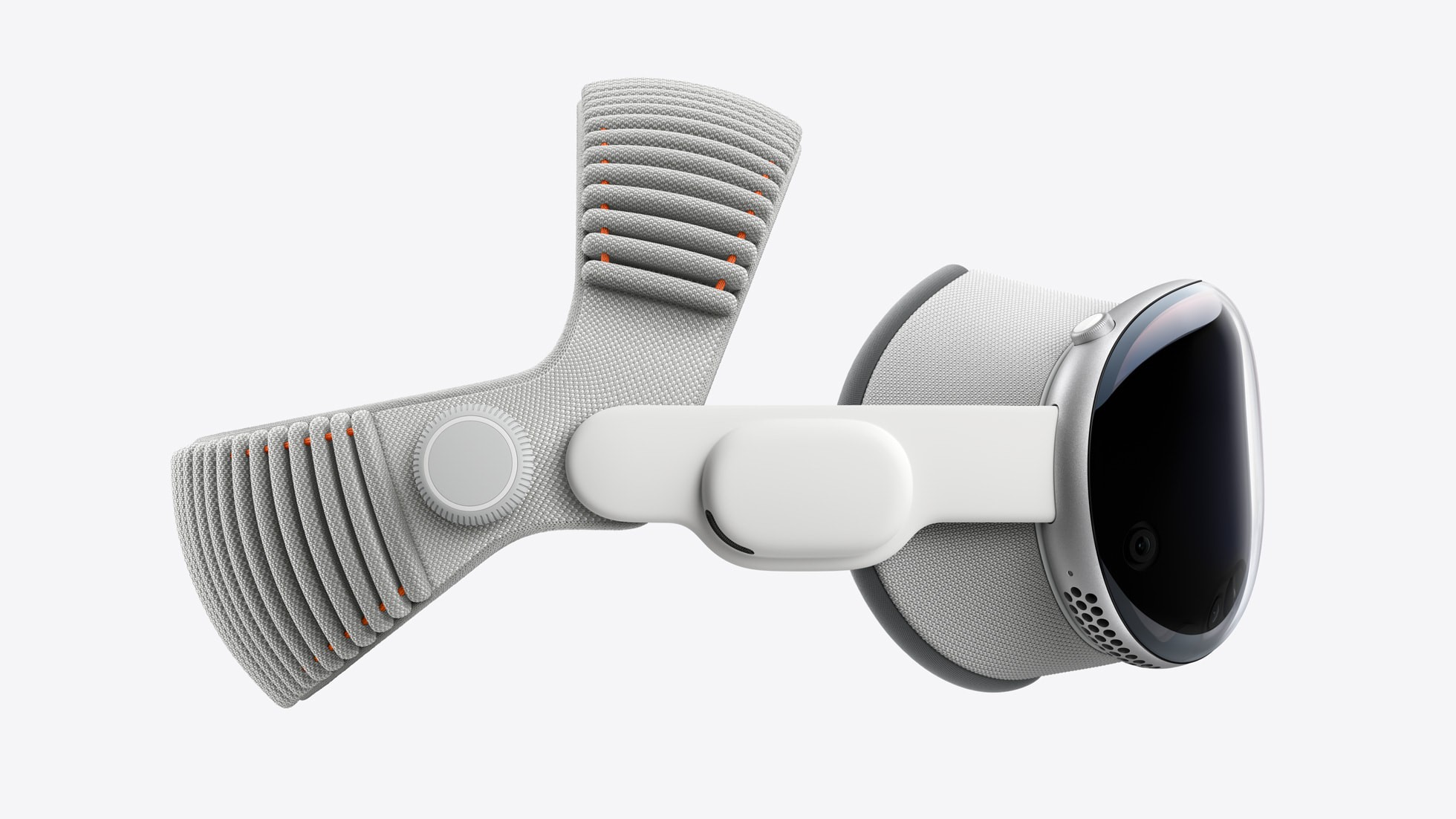
Photo Credit
Image courtesy of © ApplePut on a headset in seat 2A and the cabin disappears behind a cinema screen of your choosing. Apple’s Vision Pro now has competition from Samsung’s Galaxy XR and Meta’s Quest 3, while Meta’s Ray-Ban Display glasses take a lighter route altogether. Here is how they compare for films on a flight and work in a hotel room, on weight, battery, picture and price.
The private cinema in your carry-on
The promise of a headset is simple and rather wonderful: the in-flight entertainment becomes a screen as wide as a cinema, and the hotel desk grows as many monitors as the work requires. The catch is equally simple. These are heavy, pricey and short on battery, and wearing one on a plane still draws looks from the neighbours. Here is what each does best.
Apple Vision Pro
Apple upgraded Vision Pro last autumn with its M5 chip, and it remains the benchmark. Its two displays share 23 million pixels, more than a 4K television for each eye, at up to 120Hz. Films can play on a screen that appears up to 100 feet wide, and Apple’s Immersive films put you on stage or on a ski slope. Travel Mode keeps the picture steady on a train, in a car or, in Apple’s words, at 30,000 feet.
Comfort has improved with the new Dual Knit Band, whose lower strap hides tungsten weights as a counterbalance, a trick borrowed, in spirit, from the grandfather clock. The headset still weighs from 750 g, plus a 353 g battery pack in your pocket. Apple quotes up to 2.5 hours of general use and up to 3 hours of video, and it works while charging. Vision Pro starts at £3,499.
Vision Pro vs Samsung Galaxy XR
Samsung’s Galaxy XR, built on Google’s Android XR, reached the UK this summer as the first headset of its kind on sale here, and costs roughly half as much as Vision Pro: from £1,699. Its micro-OLED displays carry 27 million pixels between them, more than Apple’s, and it weighs 545 g with its forehead cushion, plus a 302 g battery. Samsung quotes up to 2 hours of general use and 2.5 hours of video.
It beats Apple on pixels and weight, then, and pays in battery: half an hour shorter by either measure.
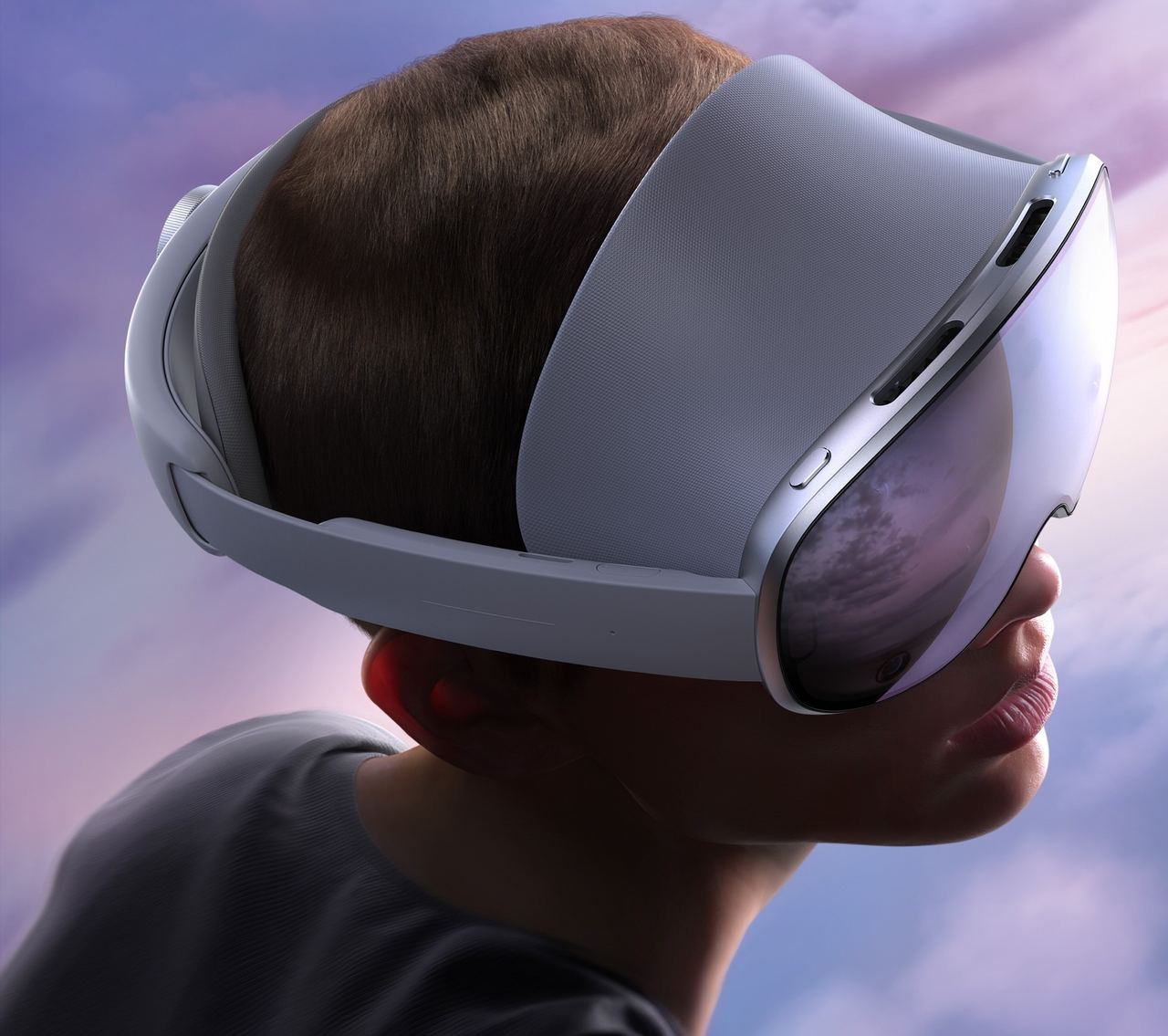
Photo Credit
Image courtesy of © SamsungIts talent is Google. Gemini can explain what you are watching, Google Maps flies you over your next destination in 3D, and in passthrough mode you can circle anything in the room with your hand to search for it. YouTube’s library of 180- and 360-degree films comes built in. For an Android household it is the natural choice, and a remarkably capable one for the price.
Vision Pro vs Meta Quest 3
Meta’s Quest 3 is the affordable way in, though Meta raised its prices in April: the 512GB model now costs £549.99. It weighs 515 g with no separate battery, and its LCD screens show 2064 by 2208 pixels to each eye. Reviewers measured around two hours a charge. Games are its home ground, and with no cable running to a battery in your pocket, you are free to spin round and meet them.
Pack the headset for the film, not the flight: two or three hours is all any battery here will give you.
For films on a flight the Quest 3 is perfectly pleasant, though its picture lacks the inky blacks of the micro-OLED headsets. In a hotel room it doubles as a games console that needs no television. The Quest 3S is cheaper still, from £319.99.
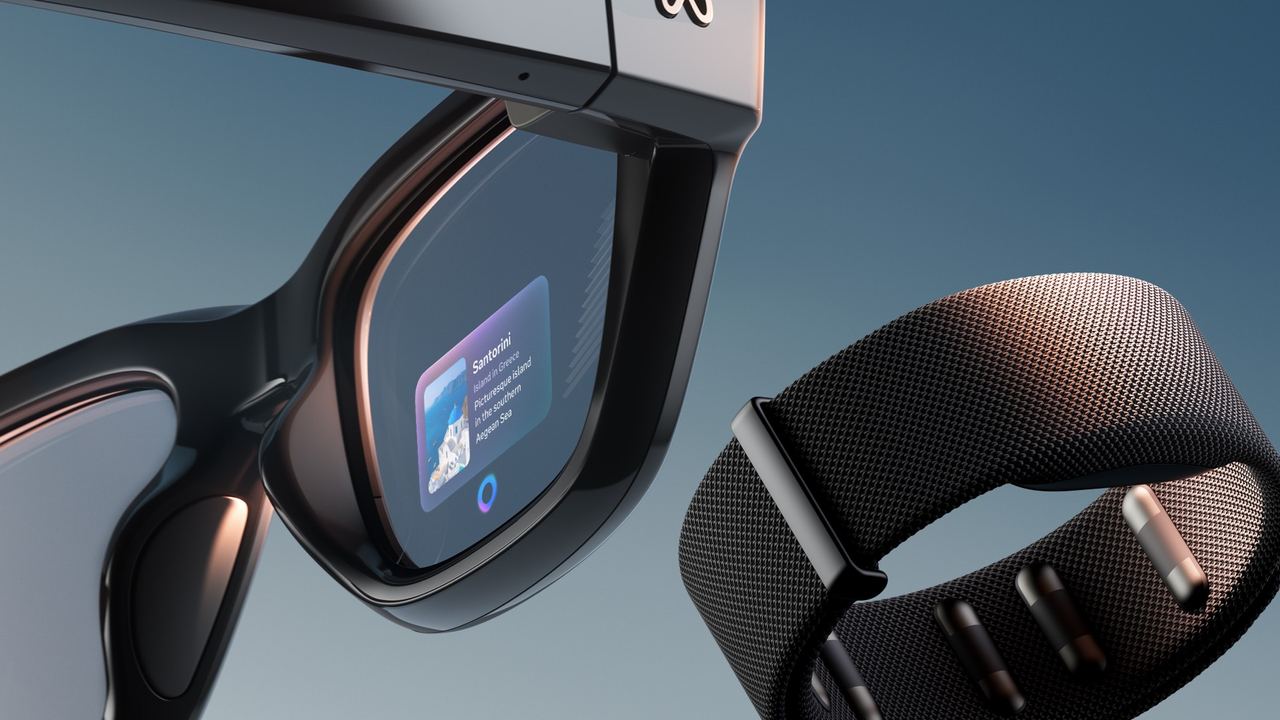
Photo Credit
Image courtesy of © MetaVision Pro vs Meta Ray-Ban Display
Meta Ray-Ban Display is not a headset at all, which is precisely its appeal. These are Ray-Ban frames with a small display inside the lens, showing messages, photographs, live captions, translations and walking directions that now point to landmarks rather than street names. They went on sale in the UK on 23 September from £749, and from $799 in the US, in Black or Sand.
They are controlled by the Meta Neural Band, a wristband that reads the tiny electrical signals of your finger muscles. It is woven from Vectran, the material Meta notes was used on the crash pads of the Mars rover, which seems more than enough for a commute. The glasses last up to six hours of mixed use, 30 with their folding case, and the band up to 18 hours.
Coming soon: Meta VR Glasses
Meta has announced Meta VR Glasses for spring 2027 at $1,299.99. At about 100 g they are five times lighter than a Quest 3, with a 5K micro-OLED display and the battery moved into a clip-on puck. If they deliver, the headset may finally become something you would wear in public.
The verdict
For the finest films in flight and the most convincing virtual office, Vision Pro is still in a class of its own, and still priced like it. Galaxy XR gives most of that experience for half the money, with Google’s apps woven through it. Quest 3 is the one to buy for games, or simply to try the idea. And for messages and directions without looking down at a phone, Meta Ray-Ban Display is the most wearable piece of the future on sale today.
Why it's on our list
- Apple Vision Pro with M5 and Travel Mode
- Samsung Galaxy XR, now on sale in the UK
- Meta Quest 3: the affordable way in
- Meta Ray-Ban Display: a screen in your glasses
- Coming soon: Meta VR Glasses
Location
The map comes from Google Maps, which sets its own cookies once it loads.
More in depth
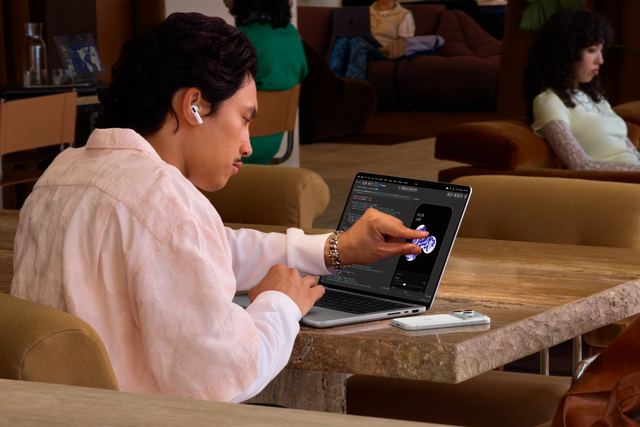 CompareLaptops compared: the new MacBook Pro and its rivalsThe new touchscreen MacBook Pro against the finest Windows laptops for travel, figure by figure.
 CompareiPhone Pro vs the rest: the 2026 camera phones comparediPhone 18 Pro against Galaxy S26 Ultra and Pixel 11 Pro: cameras first, then screens and prices.
 CompareTablets compared: iPad Pro, iPad Air, Galaxy Tab S12 Ultra and Surface ProiPad Pro, iPad Air, Galaxy Tab S12 Ultra and Surface Pro: for the plane, the hotel desk and drawing.