The Observatory
Twenty minutes in the dark: the South Downs’ starlit skies
England’s second dark sky reserve, its hilltop sites, a royal observatory and the February festival.
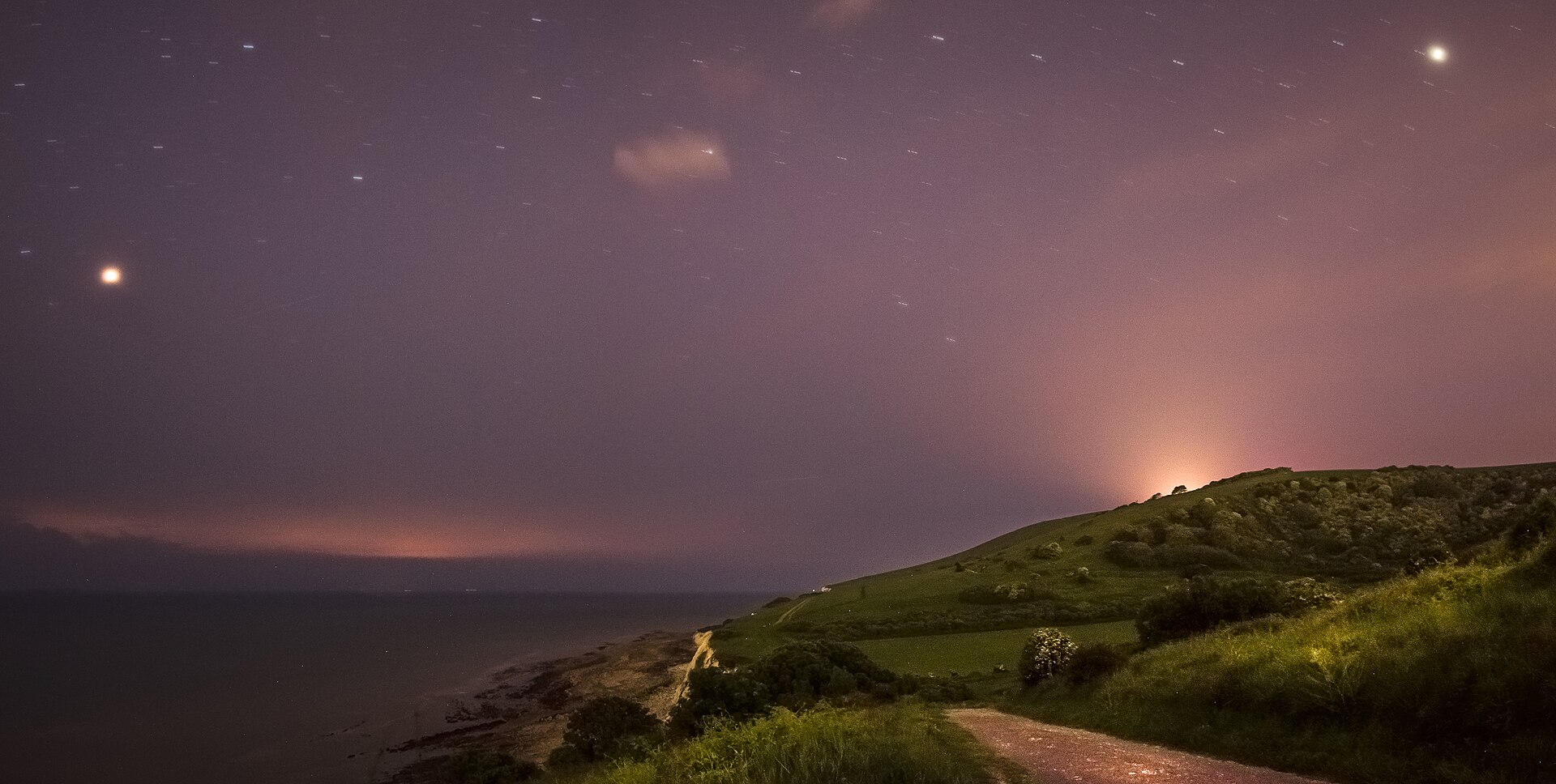
Brighton has a national park at its back door, and the night sky counts it as a reserve. Here is how to find the stars on the South Downs, from the Dark Sky Discovery Sites and the February festival to the old royal domes at Herstmonceux and the city’s astronomy club, checked against the National Park Authority’s and the observatory’s own pages in November 2026.
A reserve on the doorstep
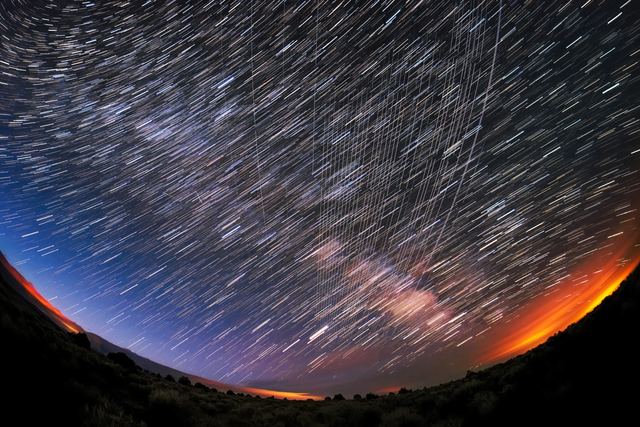
On a clear, moonless night on top of Ditchling Beacon, the city behind you shrinks to an amber smudge and the sky fills in like a photograph slowly developing. On 10 May 2016 the International Dark-Sky Association named the South Downs National Park an International Dark Sky Reserve; the National Park Authority says it was the second in England, is now one of only 25 in the world, and marks its tenth anniversary in 2026.
The award rests on legwork rather than luck. The Authority’s team took more than 25,000 individual sky-quality measurements across the Downs, a kind of Ordnance Survey of the dark, and found that 66 per cent of the park has skies where the Milky Way is visible on clear, dark nights. At designation, the reserve’s darkest core covered 418 km², inside a wider peripheral zone of 1,104 km².
What makes it unusual is the company it keeps. The Authority calls the park a haven for stargazing in the busiest part of the UK, and counts around 2,700 streetlights inside it, which local lighting authorities are gradually replacing to meet dark-sky standards; its draft Local Plan adds specific lighting requirements for developers. Few reserves have to negotiate with quite so many lamp-posts.
Where to look up
The Authority lists ten Dark Sky Discovery Sites, none of them its own property, chosen for open views and parking. Three are close to Brighton: Devil’s Dyke and Ditchling Beacon, the highest point in East Sussex, with 360-degree views, both on the Downs just north of the city; and Birling Gap on the Seven Sisters cliffs, where the sky runs down to the sea. None offers overnight camping, so park only in the car parks, never on the verges.
The Authority’s beginner’s guide keeps it simple. Check the phase of the Moon first, since stargazing is best when it isn’t visible. Switch off torches, put your phone away and give your eyes about 20 minutes to adjust; if you need light, a red one keeps your night vision. Bring a blanket or mat to lie on, warm layers, snacks and a flask, and an app such as Stellarium to put names to what you see.
Domes, a festival and a club
Royal astronomy once came to Sussex for the same reason you might. The Observatory Science Centre at Herstmonceux explains that London’s smoky air and bright lights had left Greenwich unable to study faint objects in the night sky. The move was announced in April 1946 and began in 1947, and by 1958 the Royal Greenwich Observatory was fully up and running at Herstmonceux, under the green domes that still stand there today.

In 1990 the decision was taken to move the observatory again, to Cambridge, but the domes stayed. Today the Science Centre opens at weekends and in school holidays, with stargazing evenings on its historic telescopes and, when the clouds win, a planetarium show and talks instead. The Isaac Newton Telescope was dismantled in 1979 and has stood on an extinct volcano on La Palma since 1984, well clear of the Sussex drizzle.
Few reserves have to negotiate with quite so many lamp-posts.
Every February the Authority’s South Downs Dark Skies Festival fills the park with star- and moon-gazing, night walks, talks and storytelling. The 2027 festival runs from Thursday 11 to Sunday 21 February, with the Moon as its theme, a new Dark Skies quiz and a month-long astrophotography exhibition on Brighton Seafront. The full programme is due in January, and any event can be cancelled at short notice for weather.
Between festivals, Brighton Astro, which calls itself Brighton and Hove’s astronomy club, holds a monthly talk at Wagner Hall on Regency Road, open to all with no prior knowledge needed; there is no formal membership, but you sign up through its Meetup page, as space is limited. Its next talk, on Thursday 3 December 2026, is “Galaxies: Collisions, Cannibals and the Cosmic Web”, and the conversation often moves on to a pub.
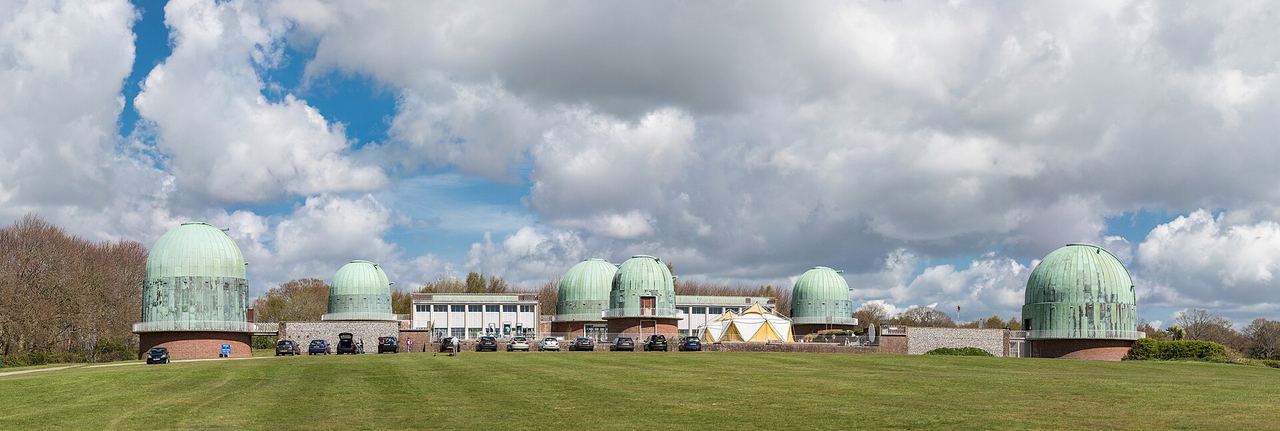
Photo Credit
Image courtesy of © Diliff · CC BY-SA 3.0 via Wikimedia CommonsOur advice: pick a clear night with no Moon, ideally in the long evenings of winter, and drive up to Ditchling Beacon or Devil’s Dyke with a flask and a blanket. Stand with your back to the city for twenty minutes before you decide what you can see; the Milky Way, like most Brighton regulars, turns up a little later than advertised.
Why it's on our list
- A reserve on the doorstep
- Where to look up
- Domes, a festival and a club
Location
The map comes from Google Maps, which sets its own cookies once it loads.
More in depth
 The ObservatoryAutocomplete with ambitions: artificial intelligence in plain EnglishHow today’s AI is trained, where it shines, where it slips, and the questions worth asking.
 The ObservatoryEarthset, and the long road back to the MoonArtemis II’s record flight, a rehearsal in Earth orbit, and the many roads to the lunar south pole.
 The ObservatoryPearls on a thread: the satellites that wired the skyStarlink, OneWeb, Amazon Leo and China’s networks: internet from orbit, and the night sky’s cost.