Gaming
Gaming tech explained: ray tracing, DLSS, VRR and the cloud
Ray tracing, DLSS and FSR, frame generation, VRR, HDR, 4K/120 and cloud gaming, decoded.
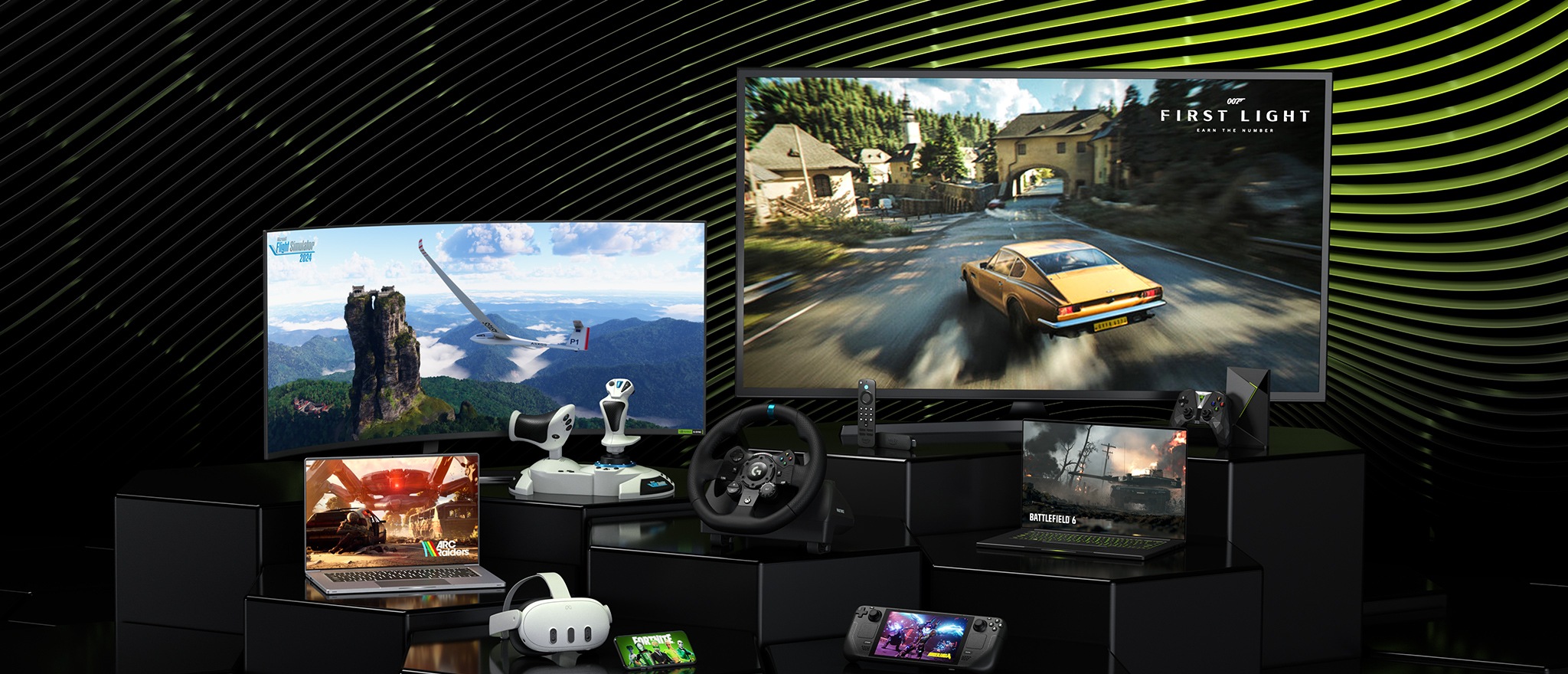
Photo Credit
Image courtesy of © NVIDIAGaming has grown a vocabulary to rival a wine list, and like a wine list it rewards a little knowledge. Here, in plain English, is what the words on the box really mean, why each one matters, and which consoles, graphics cards and services do what, so you can ask the right question before you spend.
Ray tracing: light that behaves
For decades, games faked their lighting, painting shadows and reflections on like stage make-up. Ray tracing does it properly: it follows rays of light as they bounce off surfaces, so a puddle reflects the neon sign actually above it and a shadow softens with distance as it should. It is costly to compute, which is why consoles and graphics cards now carry dedicated hardware for it.
The PS5 Pro, Sony says, casts rays at double, at times triple, the speed of the standard PS5.
Why should anyone who is not a gamer care? Because light is how we read a scene. A ray-traced room at dusk simply looks lived in, and once you have seen the difference it is hard to unsee. PlayStation 5, Xbox Series X|S and the graphics cards of recent years all support it, and Nintendo’s Switch 2 carries dedicated ray-tracing cores in its NVIDIA chip, which tells you how mainstream the idea has become.
Path tracing: the Pixar method
Path tracing is ray tracing taken to its logical end: instead of a few chosen effects, every light in the scene is simulated, bouncing from surface to surface. It is how animated films are made; Finding Dory, in 2016, was the first Pixar film rendered with its path-tracing system. In Cyberpunk 2077’s Overdrive mode, every light is simulated, sometimes hundreds in one scene, with two bounces as the developer’s balance of beauty and speed. For now it is a PC luxury that asks for the most powerful graphics cards.
Upscaling: DLSS, FSR and PSSR
The great trick of modern gaming is to draw fewer pixels and let AI fill in the rest. NVIDIA’s DLSS renders each frame at a lower resolution and uses a trained AI model, now a second-generation transformer, to output a sharper, higher-resolution picture; the aim is the clarity of native 4K for a fraction of the work.
AMD’s FSR 4 is its machine-learning answer for Radeon RX 9000 cards, and Sony’s PSSR does the job on the PS5 Pro, rebuilt in 2026 from the same Sony and AMD research as FSR 4.
Upscaling is also how a handheld punches above its weight. Switch 2 uses DLSS through the Tensor cores in its custom NVIDIA chip, part of how it sends a 4K picture to the television when docked. The question to ask of any console or card is not only how many pixels it draws, but how cleverly it fills in the ones it does not.
Frame generation: the clever forgery
Frame generation goes a step further: rather than sharpening frames, it invents new ones between those the graphics card truly draws. On RTX 50 cards, DLSS multi frame generation can create up to five frames for every rendered one, and a dynamic mode adjusts the multiplier to suit the game and your screen. AMD’s FSR Redstone brought machine-learning frame generation to Radeon RX 9000 cards. The result, at its best, is motion that seems to glide rather than run.
The question to ask is what it does to response. Generated frames make motion smoother, but how quickly the game answers your hand still depends on the frames the card truly draws, which is why NVIDIA pairs frame generation with Reflex, its technology for keeping responsiveness in check. For a sweeping single-player adventure, it is a gift. For a competitive shooter, start from a high base frame rate before adding any forgeries to it.
Before you pay for a 120Hz console, check the television: without an HDMI 2.1 port, the extra frames have nowhere to go.
VRR: the end of tearing
Variable refresh rate cures an old irritation. A game’s frame rate wanders while a screen refreshes at a fixed pace, and when the two fall out of step the picture tears or stutters. With VRR the screen waits for each frame, like a partner following your lead, so the image stays whole and motion feels even.
PS5 has supported it since an April 2022 update, on HDMI 2.1 VRR televisions and monitors; Xbox Series X lists HDMI VRR among its features; on Switch 2 it works on the handheld screen through NVIDIA G-SYNC.
HDR: light with headroom
High dynamic range widens the gap between the darkest shadow and the brightest highlight, so the sun glints rather than glows politely and a torch in a cave actually dazzles. It depends as much on the screen as on the console: a bright OLED or Mini LED makes HDR sing, while a dim panel merely puts the label on the box.
Xbox Series X|S can game in Dolby Vision, and Samsung is working with Activision on HDR10+ GAMING for Call of Duty: Modern Warfare 4.

Photo Credit
Image courtesy of © Valve4K at 120: check the socket
Four-K at 120 frames per second is the console promise most often lost behind the television, defeated by the socket, not the silicon. PS5 and Xbox Series X can output it, but only into an HDMI 2.1 port, through an Ultra High Speed cable such as the one in the box, and often with a setting switched on in the television’s own menus.
Sony’s advice is to connect the console straight to the television, not through a receiver, and its troubleshooting checklist begins with the port, the cable and the TV settings.
Cloud gaming: a console in the sky
Cloud gaming runs the game on a powerful computer in a data centre and streams the picture to whatever you hold, much as a film streams. NVIDIA’s GeForce NOW Ultimate now runs on RTX 50-series servers and streams at up to 5K and 120 frames per second, or 360 frames on fast screens, to laptops, televisions and phones, and at up to 90 frames to a Steam Deck. It lets a thin laptop play like a heavy one, which is a very good trick indeed.
Xbox Cloud Gaming comes with Game Pass, though from November 2026 Ultimate members get 15 hours a month, Premium 10 and Essential five, with extra time sold separately. Sony streams PS5 games to PlayStation Portal with PlayStation Plus Premium. What every cloud service needs is a strong, steady connection, ideally wired or close to the router. Hotel Wi-Fi shared with a conference of four hundred is, sadly, not one.
Which hardware does what
In short: path tracing and the most advanced frame generation belong to the PC, above all NVIDIA’s RTX 50 series. The PS5 Pro is the console with Sony’s AI upscaler and its fastest ray tracing. PS5 and Xbox Series X bring 4K, 120 frames and VRR to the living room, while the Series S aims at 1440p. Switch 2 puts DLSS and ray-tracing hardware into a handheld. And the cloud lends much of it to a laptop in a hotel room, connection permitting.
Why it's on our list
- Ray tracing and path tracing
- DLSS, FSR, PSSR and frame generation
- VRR, HDR and 4K at 120
- Cloud gaming and what it needs
- Which hardware does what
Location
The map comes from Google Maps, which sets its own cookies once it loads.
More in depth
 GamingThe top 10 games right nowThe ten games selling hardest right now, and the new releases worth the wait this winter.
 GamingGrand Theft Auto VI: the making of a phenomenonFrom Dundee to Vice City: every GTA through the years, and why GTA VI is the launch of the decade.
 GamingFrom Space Invaders to Vice City: 50 years of video gamesFrom Pong to GTA VI: the consoles, computers and games that made fifty years of play.