The back story
Stanmer House: the Pelhams’ Palladian house in the park
How the Pelhams built a Palladian house at Stanmer in the 1720s, and how it came to the city.

Photo Credit
Image courtesy of © Rwendland · CC BY-SA 4.0 via Wikimedia CommonsStanmer House, the Grade I listed house at the heart of Stanmer Park, was built principally in 1722–27 for the Pelham family, later Earls of Chichester, to designs by Nicholas Dubois. In 1947 the estate was sold to Brighton, and the house is now a restaurant and events venue.
Before the Pelhams
Stanmer’s story begins long before the house. In 765 it was given to the canons and monks of St Michael, South Malling, and it belonged to the Church until the dissolution of the monasteries, when it passed to the Crown. The estate then changed hands many times: the Michelborne family owned the manor from 1615, and in 1700 it was sold to Peter Gott, Receiver General of Sussex.
A house by Nicholas Dubois
In the early 1710s the manor was bought by Henry Pelham of Lewes, and around 1721 he engaged the French-born Nicholas Dubois, Master Mason of the Office of Works, to build a new house on the site of the old one. The house went up principally between 1722 and 1727, incorporating part of the earlier building, at a cost of £14,000. Henry died in 1725, and his youngest brother, Thomas, saw it finished.
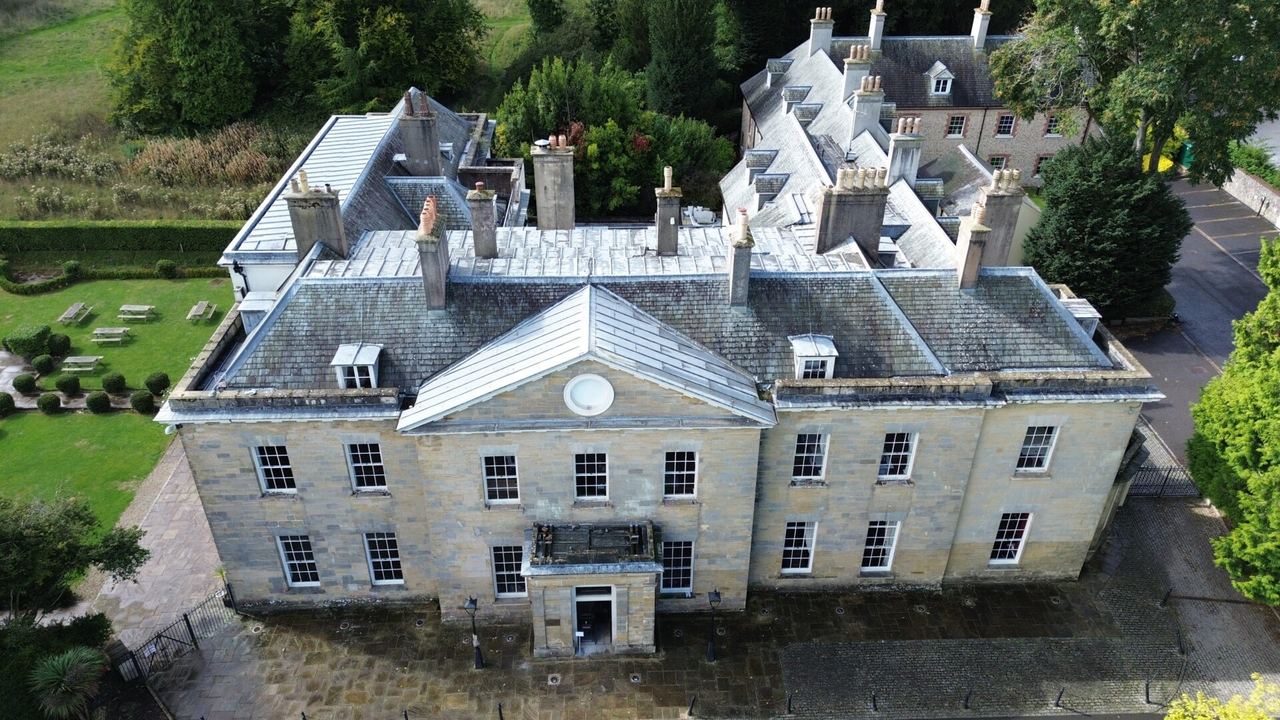
Photo Credit
Image courtesy of © Stanmer HouseDubois also laid out the gardens, kitchen gardens, ponds and a bowling green, and in 1726 Charles Bridgeman was called in, probably to advise on the planting. That same year Thomas Pelham, who had business connections in Constantinople, brought exotic trees and plants for the park from Turkey. By 1730 the rebuilding and landscaping were nearly complete.
The Earls of Chichester
Thomas Pelham died in 1737, and his son, Thomas II, inherited, coming of age in 1748; in 1801 he was created the first Earl of Chichester. He went on embellishing the park and, in 1775, commissioned James Wyatt to create the Drawing Room. In the 19th century the family rebuilt the church, in 1838, planted more woodland and added to the house, including an enclosed entrance porch and, around 1860, an extra bay and a library extension.
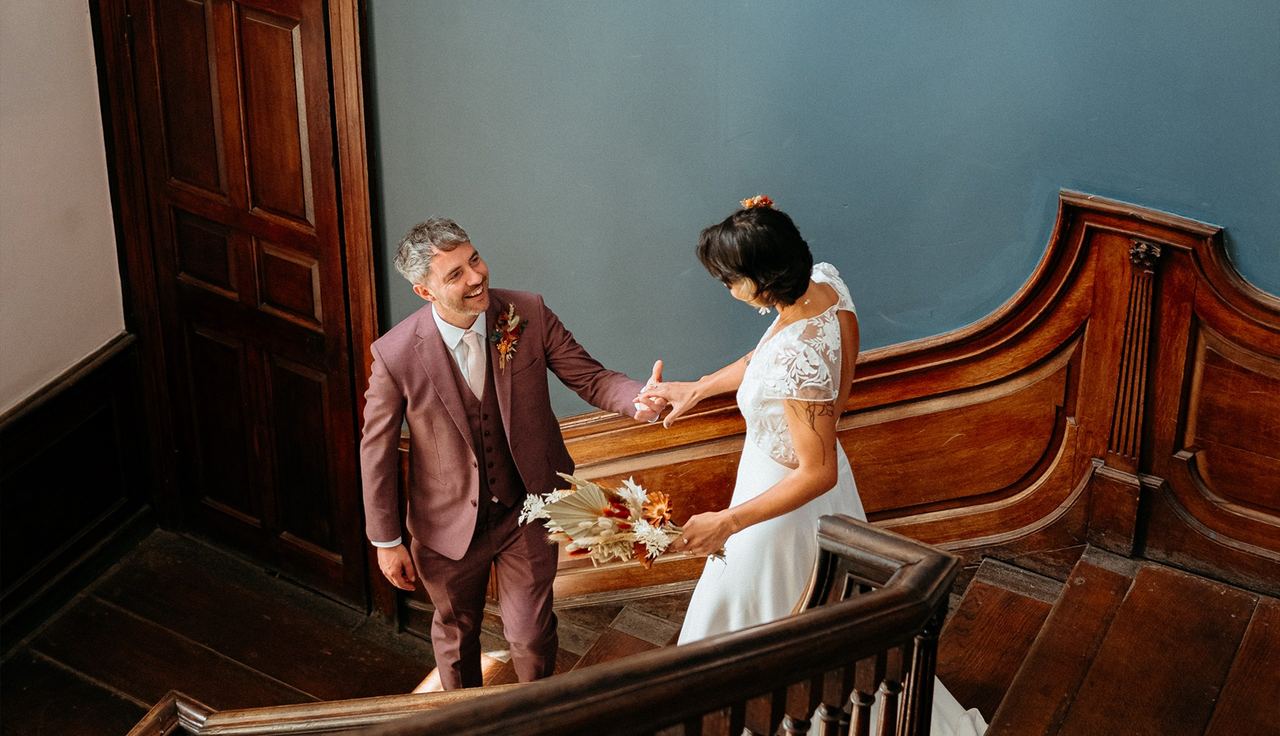
Photo Credit
Image courtesy of © Stanmer HouseInside the house
The house is of brick, faced with cream sandstone on its two principal fronts, with a pediment and a round window over the entrance. Inside, the 1720s entrance hall is plastered to imitate wooden panelling, and Dubois’s open-well staircase rises with Corinthian newels, a carved string and a wreathed handrail. Wyatt’s Drawing Room is richly neo-Classical, and the Dining Room of about 1735 ends in a screen of paired Corinthian columns.
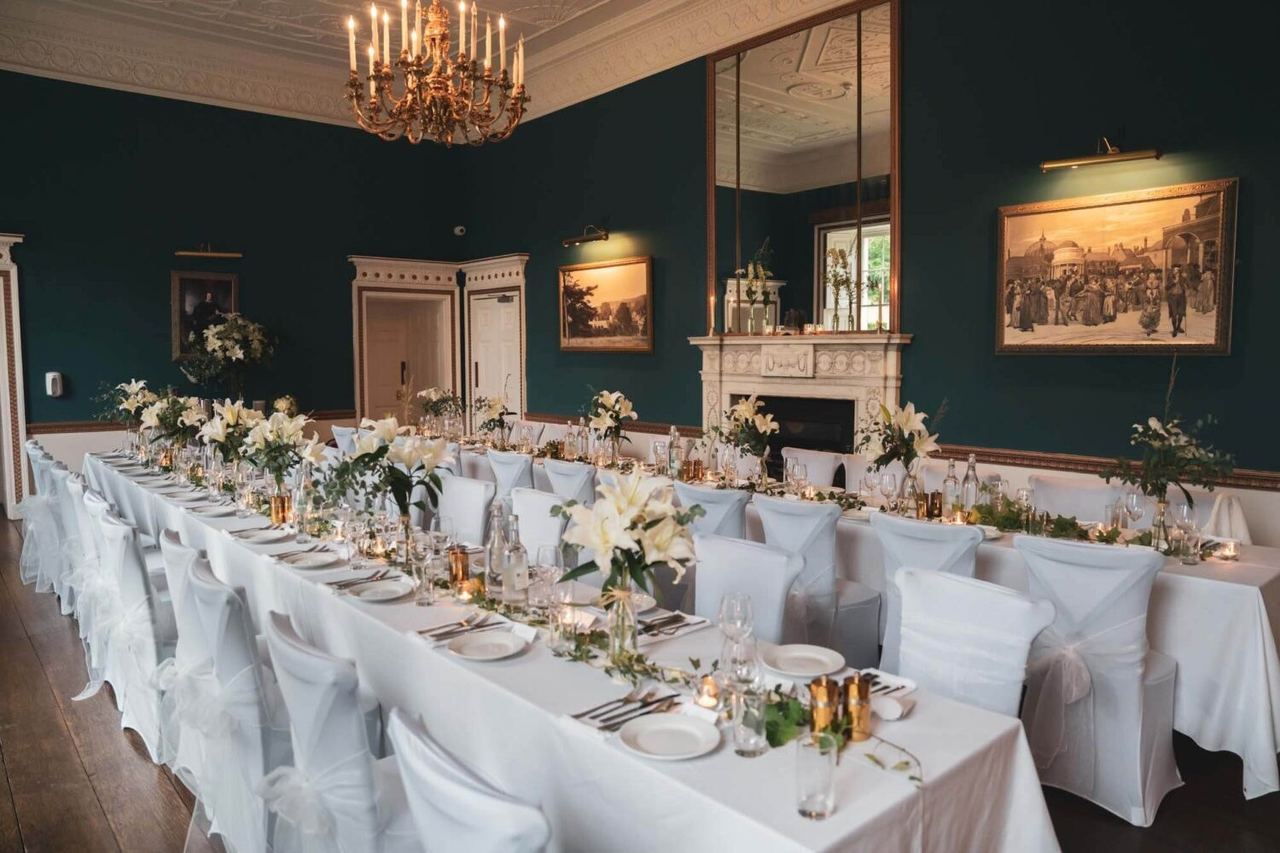
Photo Credit
Image courtesy of © Stanmer HouseWar, the city and today
In the Second World War the estate was requisitioned and parts were used as a firing range. In 1947 the Chichester estate sold Stanmer to Brighton for £225,000, and in 1954 the house was listed at Grade I; the park itself is on the national Register of Parks and Gardens at Grade II. Restored, the house is now a wedding and events venue, with a restaurant and coffee hatch open to visitors.
In 1947 the Chichester estate sold the Stanmer estate to Brighton for £225,000.
Our advice: come for Sunday lunch or afternoon tea at the house, then walk up to the church and the village pond, and on to One Garden Brighton, the walled garden.
Why it's on our list
- Before the Pelhams
- A house by Nicholas Dubois
- The Earls of Chichester
- Inside the house
- War, the city and today
What’s nearby
Distances from Stanmer House: the Pelhams’ Palladian house in the park are approximate, measured in a straight line (as the crow flies). Times are approximate too: walking at about 80 metres a minute, cycling at about 15 km/h and driving at typical city-traffic speeds. Traffic and routes vary.
Nearest railway stations
- FalmerRail0.5 mi11 min walk
Key sights
- Preston Park2.9 miCycle 19 minCar or taxi 17 min
- The North Laine3.3 miCycle 21 minCar or taxi 19 min
- Brighton Dome3.5 miCycle 22 minCar or taxi 19 min
- Royal Pavilion3.5 miCycle 23 minCar or taxi 19 min
- The Lanes3.6 miCycle 23 minCar or taxi 20 min
- Palace Pier3.8 miCycle 24 minCar or taxi 21 min
- Brighton i3603.9 miCycle 25 minCar or taxi 21 min
- Hove Lawns4.2 miCycle 27 minCar or taxi 22 min
Railway stations
- London Road (Brighton) station2.7 miCycle 17 minCar or taxi 16 min
- Preston Park station2.9 miCycle 19 minCar or taxi 17 min
- Brighton station3.2 miCycle 21 minCar or taxi 18 min
- Hove station3.9 miCycle 25 minCar or taxi 21 min
Location
The map comes from Google Maps, which sets its own cookies once it loads.
More in depth
 The back storyFrom Brighthelmstone to Brighton: a fishing town turned fashionable resortA fishing town turned England’s most fashionable resort: sea-bathing, a prince’s palace, the piers.
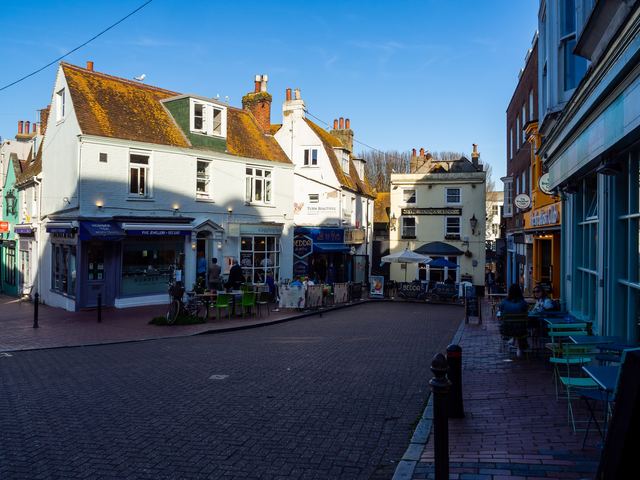 The back storyThe lost Lower Town of Brighthelmstone: the back storyThe fishermen’s town on the beach below the cliff, lost to the storms of 1703 and 1705.
 The back storyKemptown and PrideRegency terraces, St James’s Street and the heart of LGBTQ+ Brighton, with Pride every August.