The back story
The British Engineerium and the Goldstone engines: the back story
A Victorian waterworks in Hove, rescued in the 1970s and back in steam today.
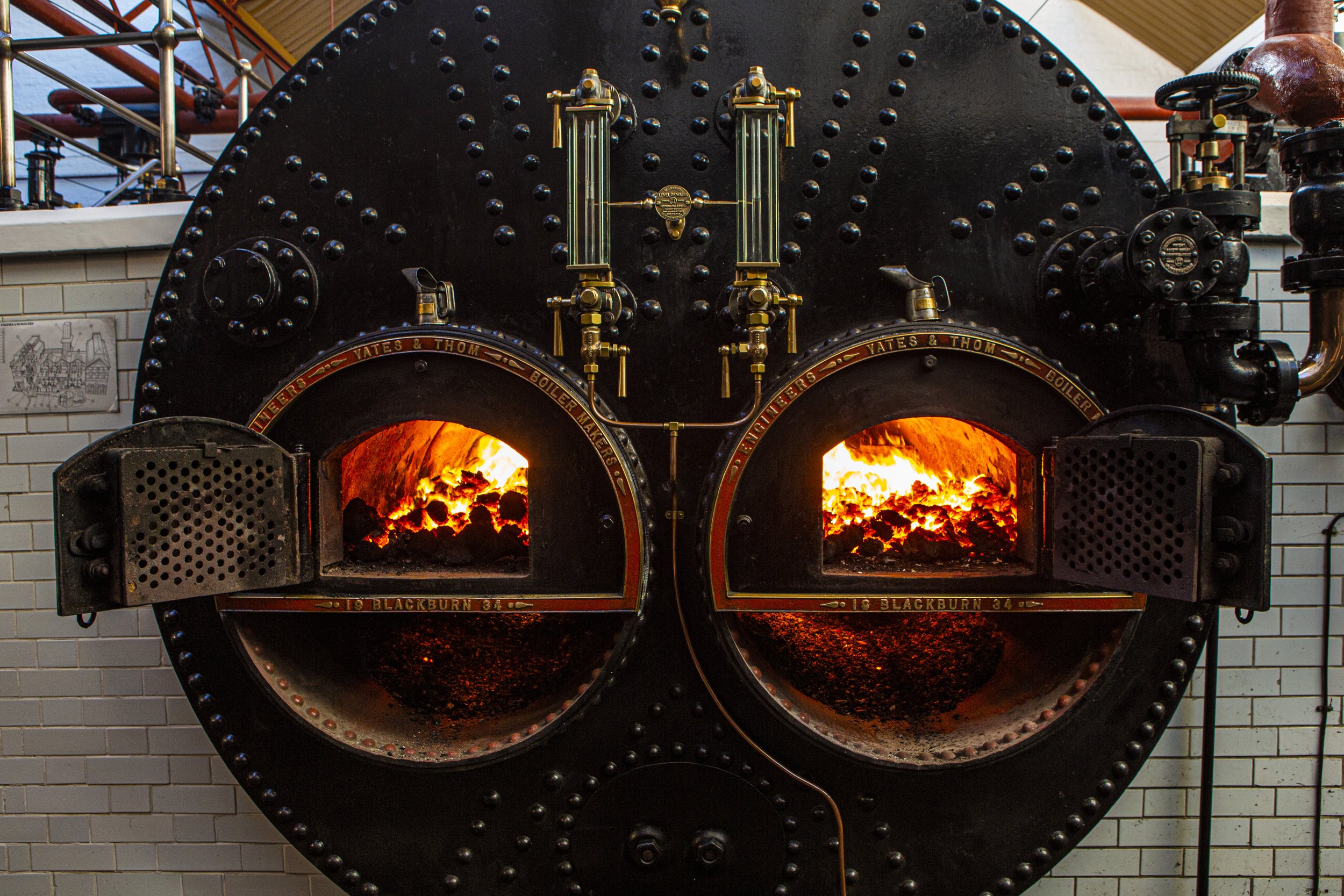
Photo Credit
Image courtesy of © The British EngineeriumThe Goldstone Pumping Station opened in Hove in 1866 to pump water for Brighton, Hove and Preston, and gained a second engine house in 1876. Rescued by Jonathan Minns, it opened as a steam museum in 1976 and became the British Engineerium in 1981. It closed in 2006, changed hands twice, and reopened in September 2024 with guided museum tours and Steam Up days.
Most towns hide their plumbing. Victorian Hove built a cathedral for it. The Goldstone Pumping Station, better known today as the British Engineerium, was built to keep a booming seaside town in water, and its engine house still looks less like a waterworks than a church that has taken up weightlifting.
Water for a boom town
On the advice of the great waterworks engineer Thomas Hawksley, the Brighton, Hove and Preston Constant Service Water Supply Company turned to the chalk at Goldstone Bottom, a shallow valley north of Hove. It bought the 3.5-acre site in 1862, and the station opened in 1866. The works changed hands in 1872, and in 1876 a second engine house was added on the west side.
Nobody was asked to settle for a shed. Historic England describes polychrome brickwork in yellow, red and blue-purple, and the detached chimney rises 95 feet (29 metres), dressed as a campanile. The station pumped about 2.6 million gallons (11.8 million litres) of water a day to some 18,000 houses.
The No. 2 engine
The star of the show is the No. 2 engine in the 1876 house, a Woolf compound rotative beam pumping engine by Eastons and Anderson of Erith. In a Woolf compound the steam works twice, first in a small high-pressure cylinder and then in a larger low-pressure one, which is how the Victorians wrung more water out of every ton of coal. The Mayor, Henry Abbey, set it running on 26 October 1876.
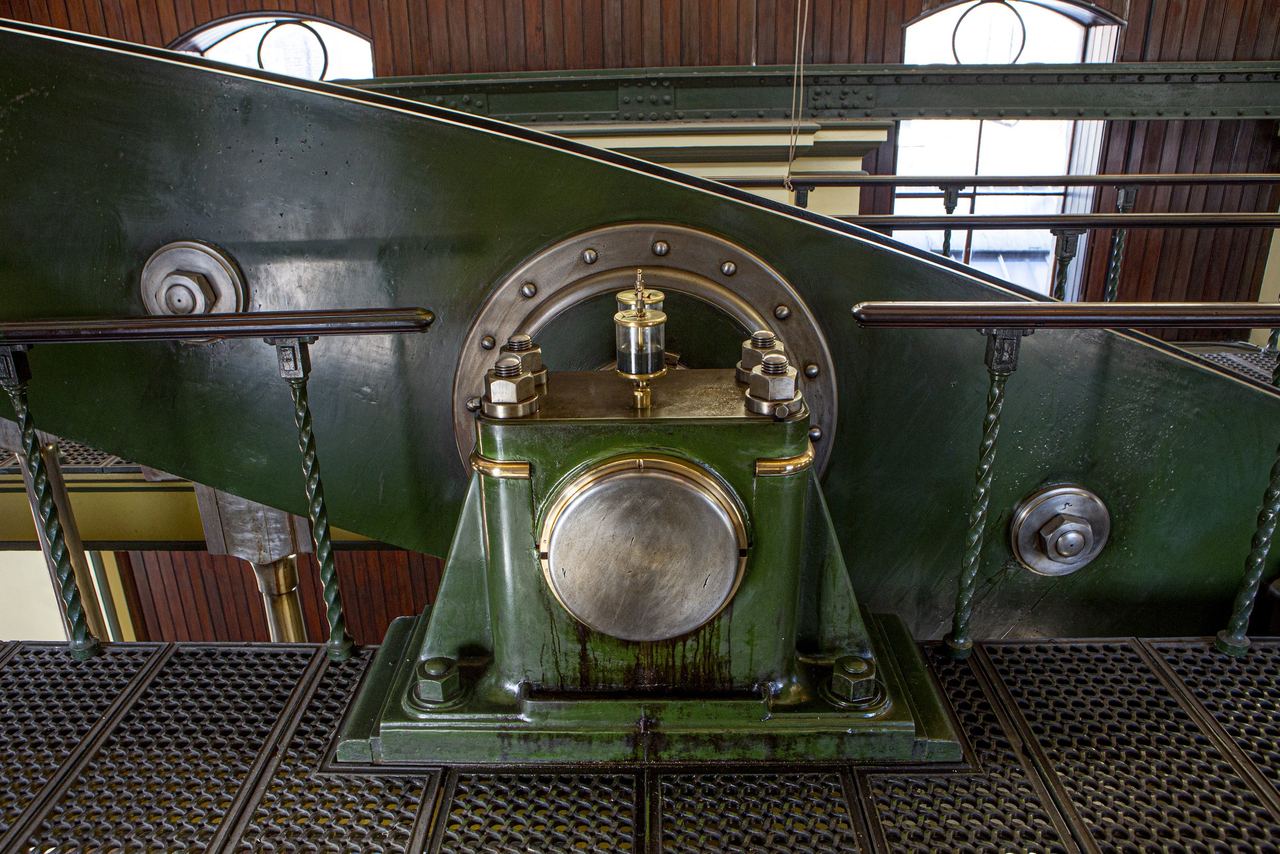
Photo Credit
Image courtesy of © The British EngineeriumIts two cylinders measure 28 by 64¾ inches and 46 by 96 inches, and its flywheel is 23 feet 6 inches across. Rated at 150 horsepower and turning at a stately 16 revolutions a minute, it lifted 125,000 gallons an hour through a total of 600 feet. It was never in a hurry, and it never needed to be.
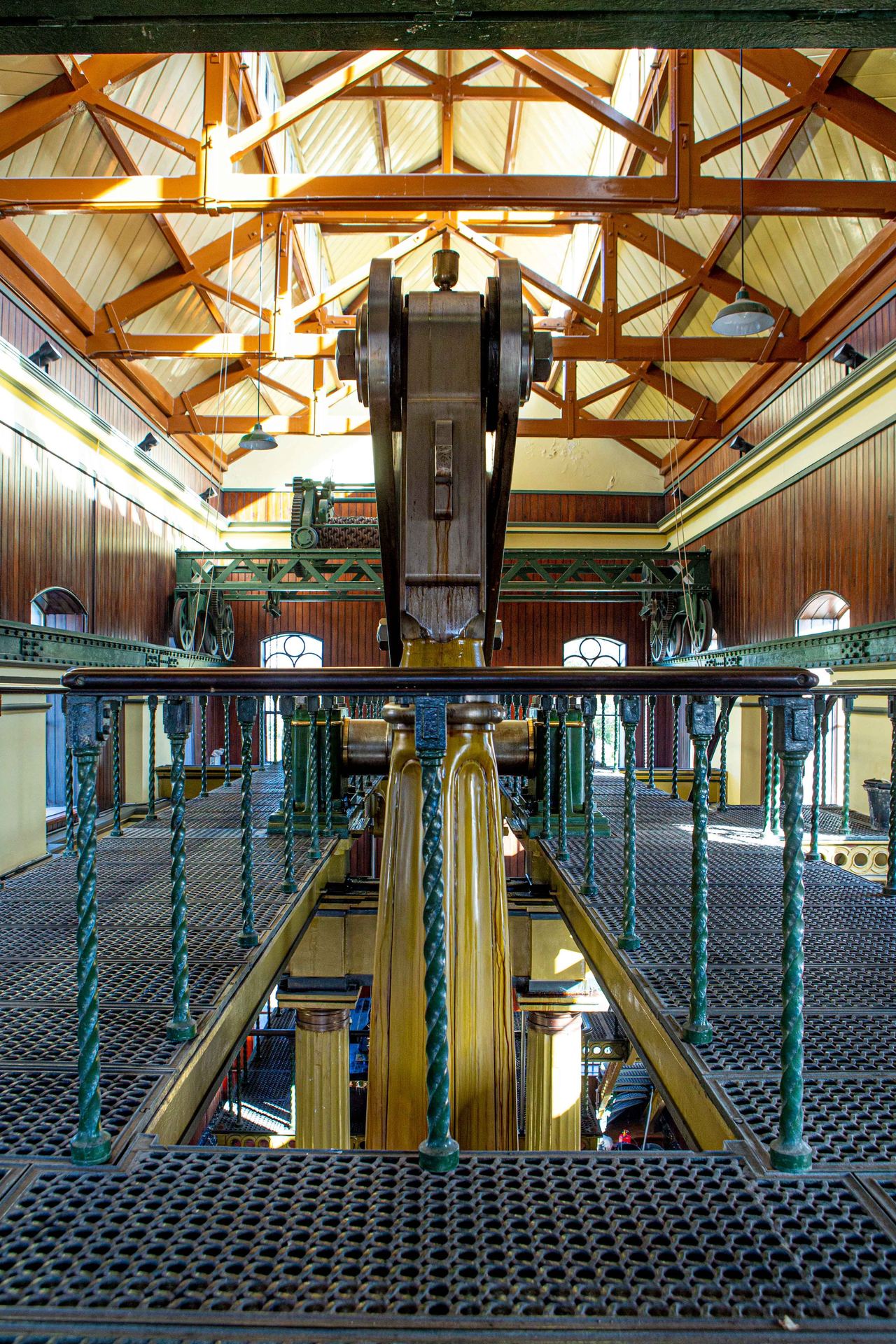
Photo Credit
Image courtesy of © The British EngineeriumBelow ground, a tunnel runs from the old coal shed to the boiler house, where Historic England lists four Lancashire boilers made by Yates and Thom of Blackburn in 1934.
Saved by Jonathan Minns
Electric pumps made the steam engines redundant. The No. 2 engine was taken out of service in 1952, and in 1971 the water department closed the station. That June the buildings were listed, and the engine and boiler house and the chimney are Grade II*. Jonathan Minns, a collector of steam engines and mechanical antiquities, rescued the near-derelict site, taking a lease from Southern Water in 1974.
The engines were restored and the station opened as the Brighton and Hove Engineerium in 1976, its official opening that October falling a century after the No. 2 engine first turned. In 1981 it became the British Engineerium. In its prime it showed some 1,500 exhibits, among them an 1802 model engine signed by Richard Trevithick, and it became the world’s only centre for teaching engineering conservation.

Its workshop restored a horse-drawn tram for the London Transport Museum, and in 1998 a museum in Vienna sent four rare static steam engines to Hove to be brought back to life.
Book a Steam Up tour, when the boilers are lit, then walk it off in Hove Park next door.
Lost years, new owners
Steam is expensive. Funding problems closed the museum in 2006, and Bonhams catalogued the collection to be sold in hundreds of lots, until the sale was called off at the eleventh hour: a property developer bought the buildings and the contents, reportedly for about £3 million in all.
Only two open days followed, in 2010 and 2012. Jonathan Minns died in 2013, an arsonist set fire to the chimney in 2015, and in 2018 the site was up for sale again. One famous exhibit has gone for good: the Corliss engine that won the grand prix at the 1889 Exposition Universelle in Paris was sold at Bonhams in February 2023.
In 2022 the site was bought by Luke Johnson, in partnership with a local resident, Paul Dolan. The halls were refitted for a second career, and the Engineerium reopened in September 2024. The engines now share the site with a 450-capacity event space, a dance studio and four therapy rooms, which is how a Victorian waterworks pays its way in the 21st century.
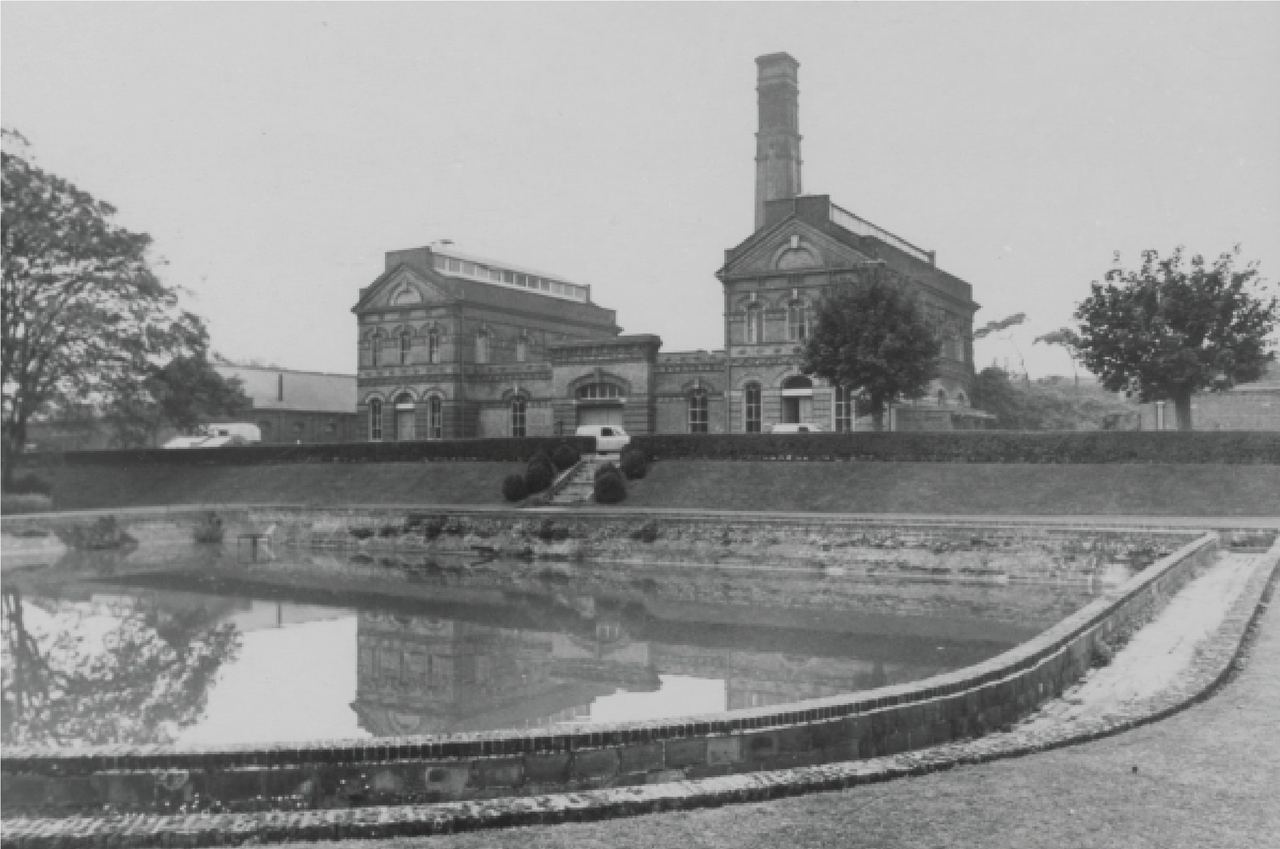
Photo Credit
Image courtesy of © The British EngineeriumVisiting today
This is not a drop-in museum. Visits are small-group guided tours of about an hour, booked ahead through the museum’s website, and on Steam Up days, held at least five times a year, the boilers are lit. Tours suit children over 8, and under-14s must come with an adult.
The Engineerium is on The Droveway beside Hove Park, a 20-minute walk from Hove station, with bus stops five minutes away on Nevill Road. Parking on site is limited, with Blue Badge bays by the chimney, and you can park for up to three hours in the streets around Hove Park.
Visitors enter through the coal tunnel to see the boilers. The ground floor of the event space is step-free, but its first floor is up stairs, so call 01273 555808 before you go if you need step-free access on the tour.
Our advice: book a Steam Up tour, when the engines are alive, and make a day of steam with a trip on the Bluebell Railway.
Why it's on our list
- Water for a boom town
- The No. 2 engine
- Saved by Jonathan Minns
- Lost years, new owners
- Visiting today
Location
The map comes from Google Maps, which sets its own cookies once it loads.
More in depth
 The back storyBrighton & Hove AlbionFrom the Seven Stars in 1901 to the Premier League and Europe: the club its fans saved.
 The back storySussex Cricket at HoveFounded in 1839, at Hove since 1872: Sussex, believed to be the world’s oldest professional club.
 The back storyBrighton Mitre Cycling Club: the back storyFounded at a Queens Road pub in 1894: records, Beacon hill climbs and how to join a Sunday ride.