Film
Quadrophenia and the Brighton weekend the cinema made its own
The 1964 bank-holiday clashes, The Who’s album, Franc Roddam’s film and a Lambretta in the museum.
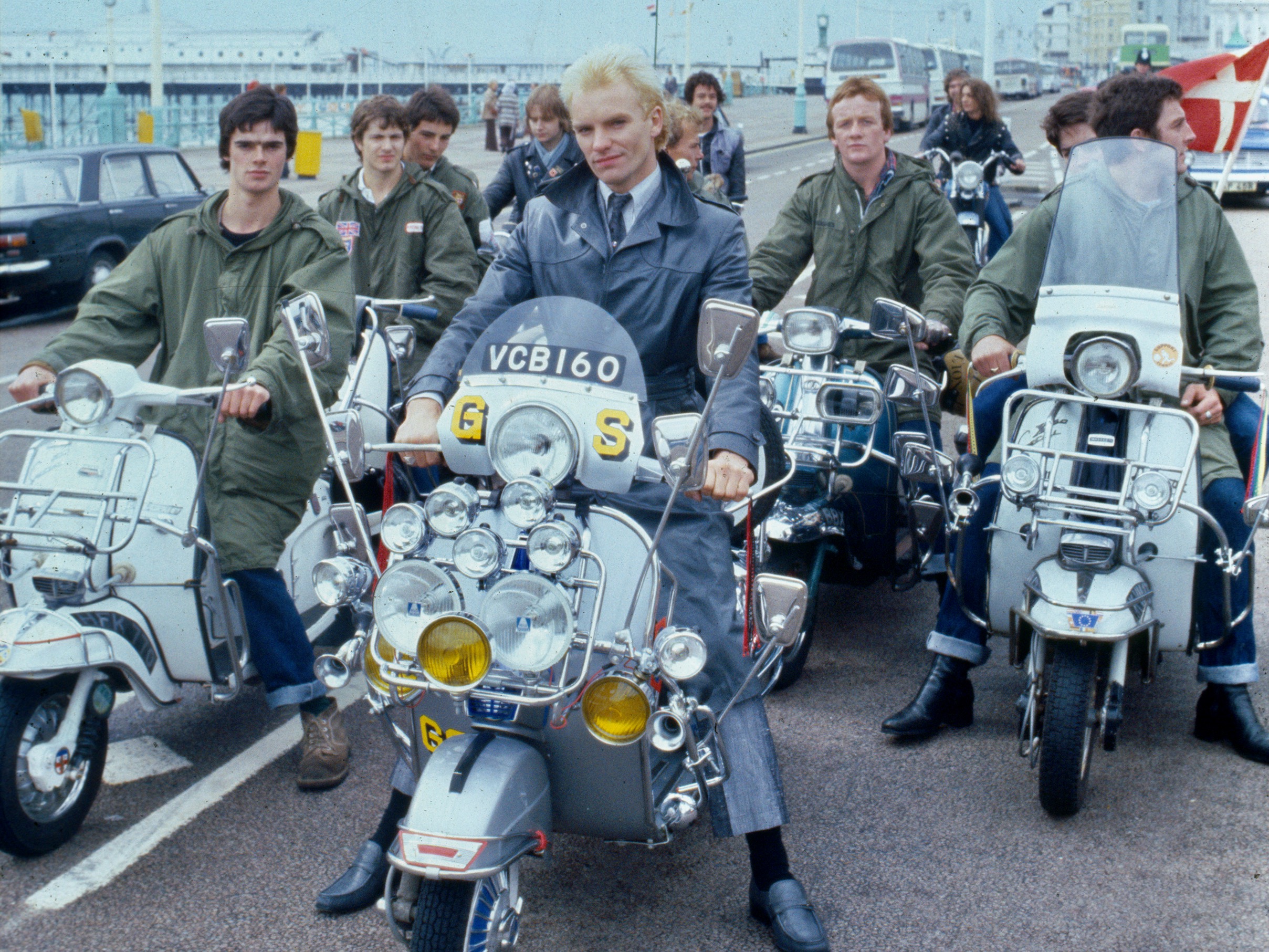
Photo Credit
Image courtesy of © Quadrophenia (1979) · Courtesy of the BFIMods and rockers clashed on Brighton’s seafront over the Whitsun weekend of 17 and 18 May 1964. The Who made Quadrophenia, a double album, in 1973; Franc Roddam’s 1979 film, with Phil Daniels as Jimmy Cooper, brought the story back to Brighton. Its East Street alley now carries the city’s blue plaque.
Start with the original Lambretta in Brighton Museum & Art Gallery’s Images of Brighton gallery. Then walk through the Lanes to East Street and on to the seafront by the Palace Pier. VisitBrighton points to a little alleyway off East Street as a location: Quadrophenia Alley, now signed with a city plaque and covered in visitors’ messages. See the film first, so you can tell the points on the map from the way the film joins them up.
The weekend came first
Over the Whitsun bank holiday of 17 and 18 May 1964, groups of mods and rockers fought in Brighton, around the beach and seafront near the Palace Pier. Scooters, motorbikes and clothes made the two tribes legible to photographers and readers, which also made them easy shorthand. There was violence, and the museum notes that the press exaggerated it hugely. The clothes and the machines outlived the fight by decades.

Photo Credit
Image courtesy of © Arild Vågen · CC BY-SA 4.0 via Wikimedia CommonsThe Saturday was quiet. The Sunday was not: by the museum’s count some 3,000 young people came into town, and windows and deckchairs were smashed along the front. The police had been braced for it since the Easter clashes at Clacton. Around 26 youths were arrested and sent to juvenile prison, and nothing on that scale happened in Brighton again.
Some of the evidence is still underground. Beneath Brighton Town Hall, the Old Police Cells Museum keeps the original cells of the town’s police station, and the prisoners’ graffiti on their walls includes marks left from the mods-and-rockers clashes of the 1960s. Visits are by guided tour only, about an hour long, on Thursdays, Fridays and Saturdays, led by volunteers and former police officers.
From record to film
The Who released Quadrophenia as a double album in 1973. The 1979 film, directed by Franc Roddam, turned it into a drama about Jimmy Cooper, played by Phil Daniels, with Leslie Ash and Philip Davis. The music carries Jimmy’s longing to belong, while the film keeps his day job, his clothes, his friendships and his disappointments in plain sight. The Brighton weekend is where all of it presses hard together.
Making the film, autumn 1978
Roddam, making his first feature, shot Quadrophenia in the autumn of 1978, fourteen years after the events it recalls. It was a Who production through and through: the band’s own company, The Who Films, made it; Roy Baird and the band’s manager, Bill Curbishley, produced it; and Roger Daltrey, John Entwistle and Pete Townshend are credited as musical directors. Keith Moon, the drummer, died on 7 September 1978, just as filming was about to begin. The film went ahead without him.
Brighton got the set pieces. Scooter clubs and mods from all over the country were invited down to fill the seafront, and one day of riot filming, Monday 2 October 1978, happened to be Sting’s 27th birthday. The alley was Leslie Ash’s first scene. The BBFC passed the finished film for cinemas on 19 March 1979, at just over two hours; it was premiered at the Plaza in London on 16 August 1979 and opened the next day.
Who played whom
Phil Daniels is Jimmy Cooper and Leslie Ash is Steph, the girl he wants. Around them ride the mods: Philip Davis as Chalky, Mark Wingett as Dave, Gary Shail as Spider and Trevor Laird as Ferdy, with Toyah Willcox as Monkey. Ray Winstone plays Kevin, Jimmy’s old friend, who turns out to be a rocker. Michael Elphick and Kate Williams are Jimmy’s parents, and Timothy Spall, Hugh Lloyd and John Altman turn up in smaller parts.

And then there is Sting, as Ace Face, the coolest mod on the front and the man on the chrome-laden scooter in our opening picture. The film saves its sharpest joke for him. Back in Brighton, Jimmy finds his idol in uniform at the Grand Hotel, a bellboy carrying other people’s luggage. “Bell Boy”, a song from the 1973 album, is on the soundtrack, and after that scene it never sounds quite the same.
The Lanes are tight and full of turns; the seafront gives space back all at once. The film lives in the moment between the two.
The soundtrack
Music From The Who Film Quadrophenia came out as a double album on Polydor on 5 October 1979. John Entwistle remixed a selection of the 1973 tracks, and the band added three songs the first album never had: “Get Out and Stay Out”, “Four Faces” and “Joker James”. The rest is the period itself: James Brown’s “Night Train”, Booker T. & the M.G.’
s’ “Green Onions”, The Ronettes’ “Be My Baby”, and “Zoot Suit” and “I’m the Face” by The High Numbers, the name The Who went by in 1964.

Photo Credit
Image courtesy of © Bex Walton · CC BY 4.0 via Wikimedia CommonsThe alley and the promenade
The location footage gives the clash a scale a studio could not fake. People bolt down a passage and spill out onto the open promenade, and it is that transition that still stops you on a walk: the Lanes tight and turning, the seafront suddenly wide and exposed. The film uses the movement to drag the private business of being young into a very public encounter.
Where to find the film today
Quadrophenia Alley runs between 10 and 11 East Street through to Little East Street. On 10 April 2023 the City of Brighton & Hove gave it a blue plaque, “Quadrophenia 1979 · Filming location for the iconic British film”, with Phil Daniels and Gary Shail among the crowd at the unveiling. East Street itself is where the riot spills into town and the mods run up against the police.

Photo Credit
Image courtesy of © Diliff, Papa Lima Whiskey (edit) · CC BY-SA 3.0 via Wikimedia CommonsCross to the seafront. Madeira Drive, running east from the pier, is where the mods arrive on their scooters, and the entrance of today’s Sea Life Brighton stood in for the outside of the ballroom. Along King’s Road, the Grand Hotel still welcomes guests behind the white Victorian front where Jimmy found Ace Face carrying bags.
The last scene is out of town, on the chalk cliffs of Beachy Head, near Eastbourne, where VisitBrighton counts Quadrophenia among the films the cliffs have starred in.
The mods come back every August
Since 2005, mods from all over the world have gathered on the seafront over the August bank holiday for the Brighton Mod Weekender, run by the New Untouchables. Hundreds of scooters line up near Volk’s Electric Railway, and the city council itself describes the scene as replicating the film. For the twentieth weekender, in 2025, the council’s Seafront Gallery by the i360 showed David Clarke’s photographs of the gatherings.
Why it keeps finding new audiences
The film arrived fifteen years after the clashes, so its first audience watched the 1960s through the eyes of a later generation. It has travelled on since, most recently as Quadrophenia: A Mod Ballet, which reached Sadler’s Wells in 2025. In Brighton the museum Lambretta is the quietest counterpoint: walk round it, think about why it was desired, and go back to the film with a sharper sense of what Jimmy hoped to become.
It keeps coming back to the big screen, too: the BBFC passed it for cinemas again in 1996 and in 2015. Each time a new crowd learns the same lesson Jimmy does, that a look can be borrowed for a weekend but a life has to be lived on Monday.
Our advice: come over the August bank holiday if you want the scooters and the parkas, and on a quiet weekday morning if you want the alley to yourself. Read the plaque, walk down to the sea the way the film does, and save Beachy Head for a clear day.
Questions and answers
Where is Quadrophenia Alley?
Between 10 and 11 East Street in central Brighton, running through to Little East Street. A blue City of Brighton & Hove plaque, put up in April 2023, marks it as a filming location.
Where was the end of Quadrophenia filmed?
On the chalk cliffs of Beachy Head, near Eastbourne, along the coast from Brighton.
Who played Ace Face in Quadrophenia?
Sting. In the film Jimmy finds his hero working as a bellboy at the Grand Hotel on King’s Road.
When do the mods come to Brighton?
Over the August bank holiday weekend, for the Brighton Mod Weekender, which has gathered on the seafront since 2005.
Why it's on our list
- The weekend came first
- From record to film
- Making the film, autumn 1978
- Who played whom
- The soundtrack
- The alley and the promenade
- Where to find the film today
- The mods come back every August
- Why it keeps finding new audiences
Location
The map comes from Google Maps, which sets its own cookies once it loads.
More in depth
 FilmBrighton Rock: the seaside city Richard Attenborough made ominousBoulting’s film put Greene’s Pinkie on the pier and in the Lanes. Much of it is still there to walk.
 The back storyBrighton on film: Brighton Rock, Quadrophenia and the Hove pioneersHove’s cinema pioneers, Brighton Rock, the Mods of Quadrophenia and Mona Lisa: Brighton on screen.
 Film peoplePhilip Bloom: the cameraman who taught Brighton Beach to see in the darkFrom 17 years at Sky News to Skywalker Ranch: the British cameraman who made Brighton Beach a star.