Tara’s notebook
Brighton’s Art Deco legacy
Embassy Court, the Ocean Hotel, Saltdean Lido and an airport: the coast’s 1930s glamour.
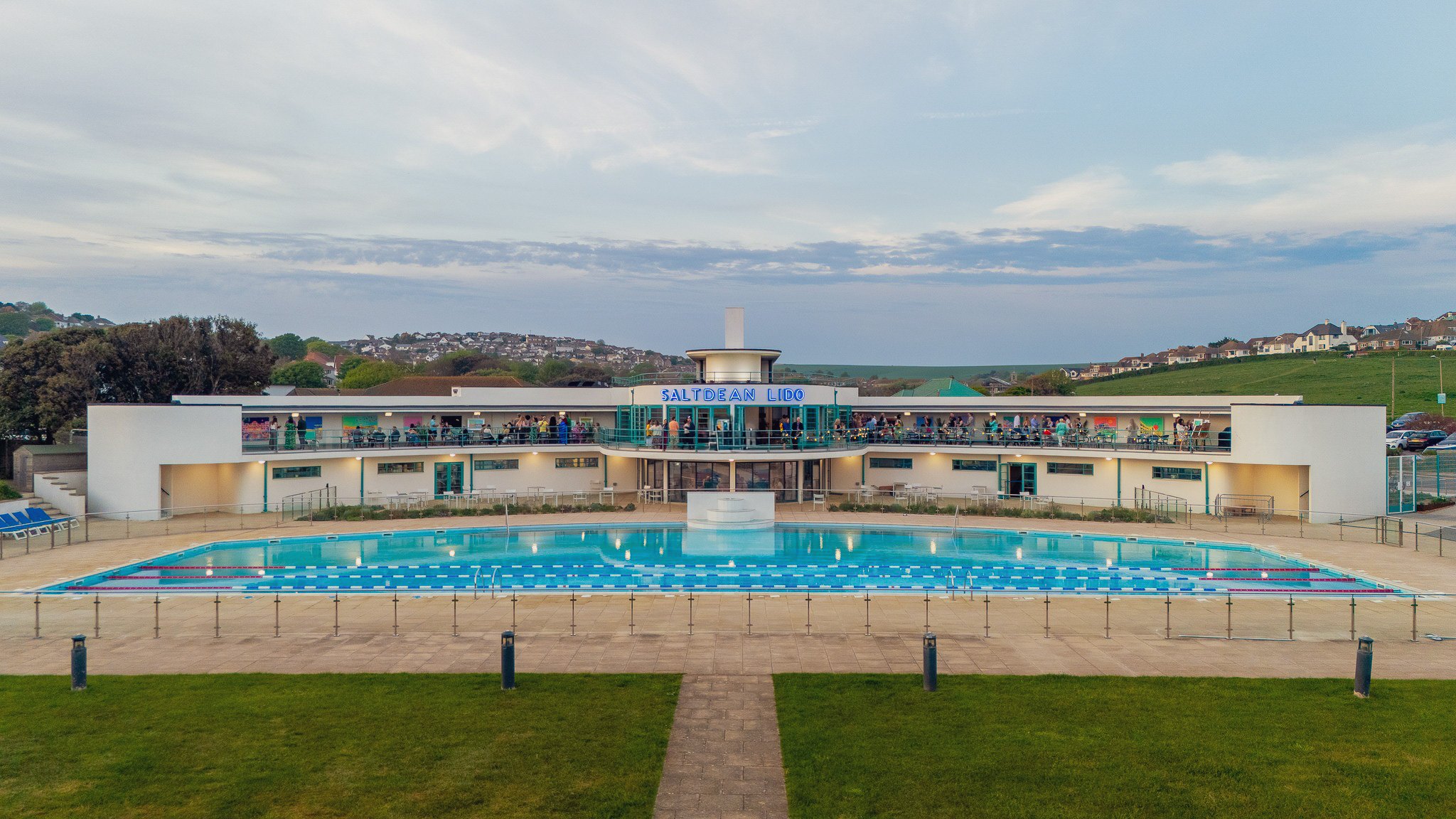
Photo Credit
Image courtesy of © Saltdean LidoBrighton is famous for its Regency stucco, but the 1930s left their mark too: white curves, porthole windows and buildings that look ready to put to sea. Tara de la Motte goes looking for the Art Deco along the coast, from a seafront block of flats to a lido and an airport terminal.
Ask most people to picture Brighton and they see Regency: cream terraces, bow fronts, the Pavilion’s onion domes. Walk the coast with your eyes up, though, and another century keeps breaking through. The 1930s gave Sussex a handful of buildings so sleek and white that they look less built than launched.
Ocean liners on dry land
Art Deco, and its streamlined seaside cousin, was the style of speed, sunlight and modern living. Its signatures are easy to spot once you know them: curved corners, horizontal bands of window, flat roofs made for sunbathing, and the odd porthole for good measure. On a coast that already lived for fresh air and sea views, it felt perfectly at home.
Embassy Court
Embassy Court, on the King’s Road at the Brighton–Hove boundary, is the boldest of them. The architect Wells Coates designed it for a developer, and it was completed in 1935: eleven storeys of luxury flats with wrap-around balconies, rising above its Regency neighbours like a ship moored among sailing barges. It was built to shock, and on a sunny morning it still does.
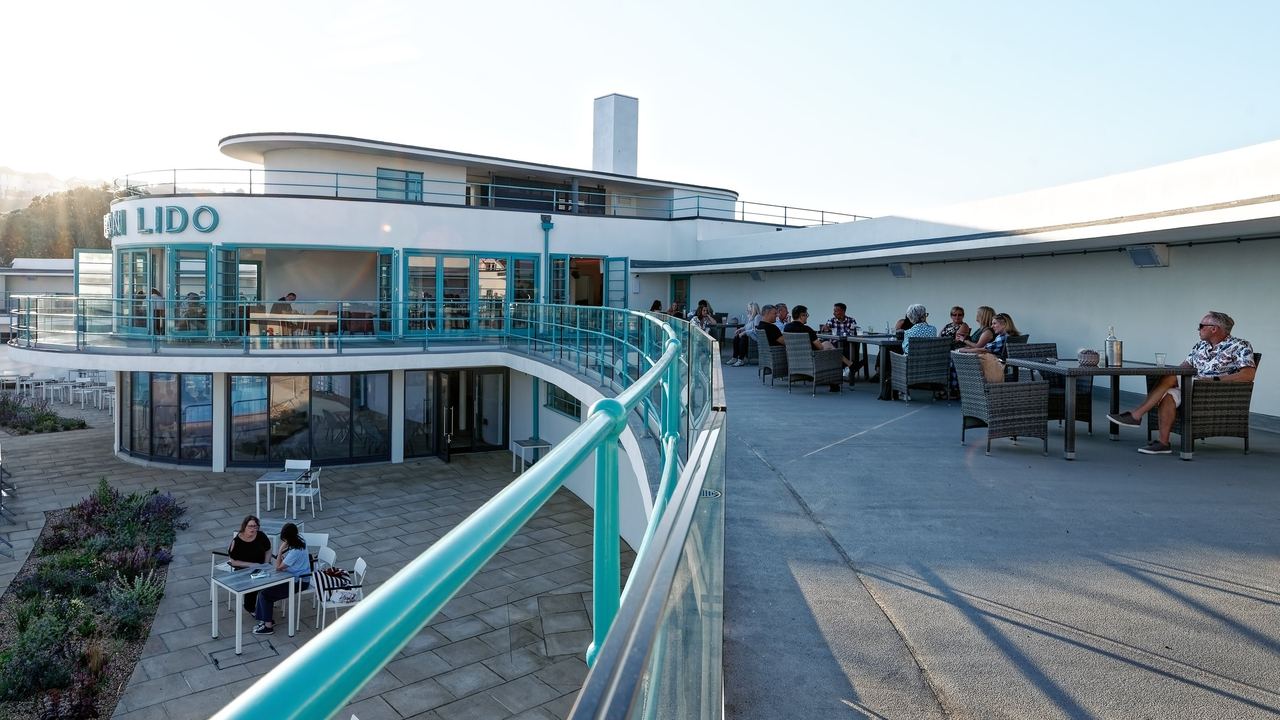
Photo Credit
Image courtesy of © Saltdean LidoIts middle age was unkind. By the 1990s the block was shabby, its concrete crumbling and its ownership tangled in disputes. Residents fought back, and in the mid-2000s a major restoration led by Conran and Partners brought it back to its original white. Today it is listed Grade II*, one of the most important modernist buildings on the south coast.
Marine Gate
At the other end of the seafront, on the clifftop at Black Rock, Marine Gate opened on 5 May 1939: eight storeys of flats designed by Wimperis, Simpson & Guthrie, built in a U-shape so that every flat could see the sea, with porthole windows for the bathrooms. Its neighbour was the gasworks, which made it a target in the war; it was hit several times between 1942 and 1944. Today it sits on the city’s Local List of Heritage Assets.
The Ocean Hotel, Saltdean
A few miles east, on the hill above Saltdean, stands the Ocean Hotel, designed by R. W. H. Jones and opened in 1938. Its long white front and stepped tower were made for holidaymakers who wanted their sea air served with style. Butlins ran it as a holiday hotel for decades, until it was sold in 1999.

Photo Credit
Image courtesy of © Hassocks5489 · CC0 via Wikimedia CommonsThe building, listed Grade II, has since been converted into apartments under the name Grand Ocean. When Tara first went to see it she came away talking about the foyer and the sweep of its staircase, and the outside alone is worth the detour.
Embassy Court was built to shock the neighbours, and on a sunny morning it still does.
Saltdean Lido
Down the hill, by the sea, is the same architect’s other masterpiece. Saltdean Lido opened in 1938, its crescent-shaped pool wrapped by a curving pavilion with long windows and sun terraces. Swimming was the fashionable sport of the decade, and every resort worth its salt wanted a lido.
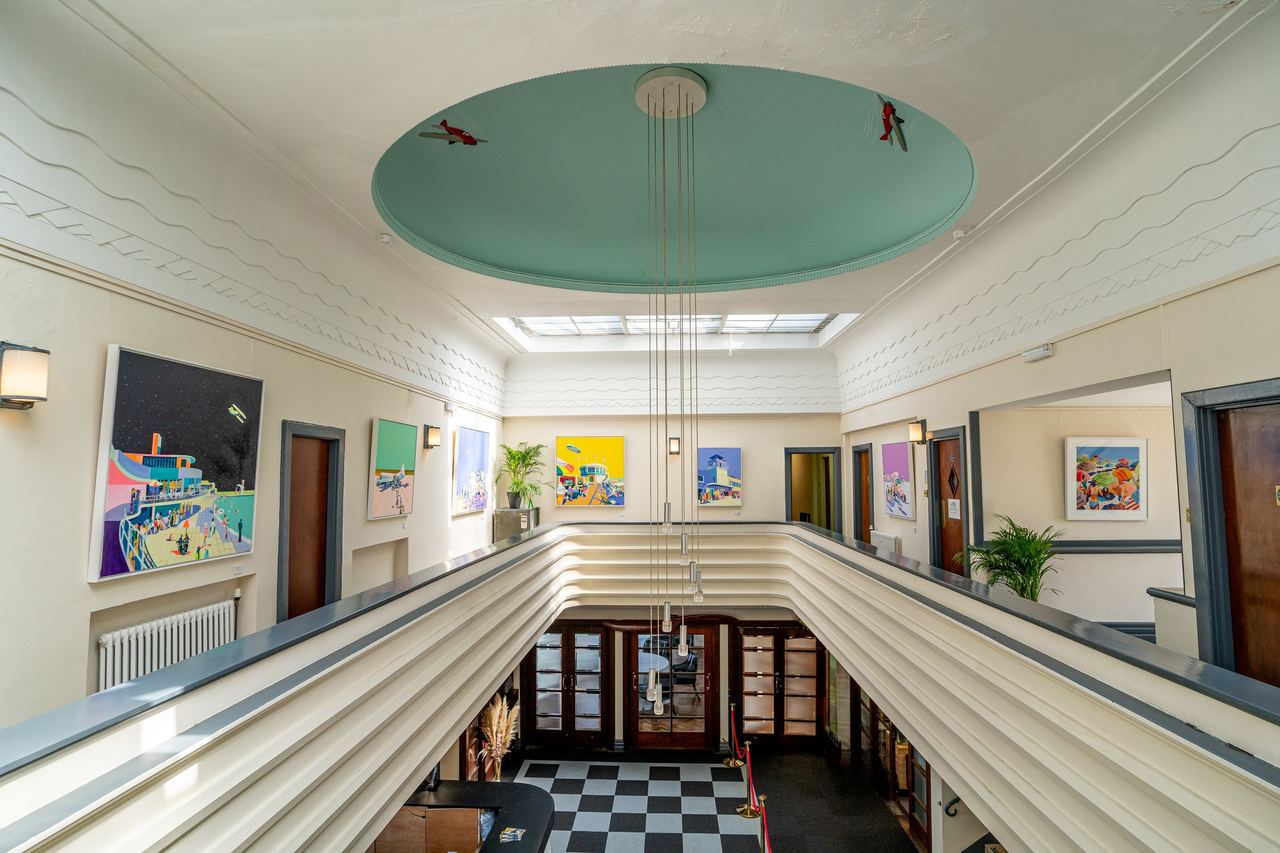
Photo Credit
Image courtesy of © Brighton City AirportThe lido has had near-death experiences of its own. Local campaigners saved it, it was upgraded to Grade II* in 2011, and a community company now runs it. In 2018 it was named one of English Heritage’s Seven Wonders of the English Seaside. You can swim there in season, and you should.
The airport at Shoreham
West of Brighton, Shoreham’s airport terminal opened in 1936, low, white and symmetrical, and has barely changed since. It has played the 1930s on television so often, including in Agatha Christie’s Poirot, that you half expect a man with a moustache to step out of a biplane. Its restaurant, with views across the runway, is open to anyone.
Bringing Deco home
If you love the look, you don’t need a seafront flat to borrow it. Deco interiors are about geometry and glamour: sunburst mirrors, chrome and walnut, frosted-glass lamps, and furniture with rounded corners. One good piece, a cocktail cabinet or a pair of shell-backed chairs, will do more than a room full of reproductions. And then take a walk along the seafront to see where the style looked most at home.
Questions and answers
Where is Brighton’s Art Deco architecture?
Embassy Court on the King’s Road, the Ocean Hotel and Saltdean Lido at Saltdean, and the airport terminal at Shoreham are the best known.
Can you visit Saltdean Lido?
Yes. It has a pool open in season, a gym, a café and a library; check its website for times.
Who designed Embassy Court?
Wells Coates. The block was completed in 1935 and is listed Grade II*.
Why it's on our list
- Ocean liners on dry land
- Embassy Court
- Marine Gate
- The Ocean Hotel, Saltdean
- Saltdean Lido
- The airport at Shoreham
- Bringing Deco home
Location
The map comes from Google Maps, which sets its own cookies once it loads.
More in depth
 Tara’s notebookInto the garden: a Sussex year, January to midsummerTara’s month-by-month notes for a Sussex garden, from snowdrops to the long evenings of July.
 Tara’s notebookAl fresco: making a room outdoorsHow to turn a garden, patio or balcony into an outdoor room for long summer evenings.
 Tara’s notebookThe kitchen: heart of the homePlanning a kitchen that works: layout, cabinetry, worktops and the pleasure of a well-made room.